
Electrical Metal Stampings — Conductivity You Can Verify
Electrical metal stamping for power distribution - copper and aluminum busbars, silver and nickel plated contacts, press-fit terminals and switchgear components stamped to ±0.005 mm positioning on 21 presses.
NDA ProtectedFast Quote ResponseSTEP, IGES, X_T, DWG
Trusted Tier-1 & OEM Standards:
CHALLENGES WE SOLVE
Electrical Stamping Challenges & Our Solutions
Four recurring electrical failure modes seen in incoming RFQs — and how each is prevented on our line.
01
Power distribution busbars
The Challenge
Contact-resistance drift from tolerance creep on terminal features causes intermittent failures in the field.
Our Solution
Held with 100% critical-dimension checks at press speed and plating-thickness verification per lot.
02
Electrical contacts
The Challenge
Tolerance stack-up across progressive stages drifts critical features out of spec lot by lot.
Our Solution
Held with 0.005 mm positioning precision and 100% dimensional inspection before packing.
03
Control system terminals
The Challenge
High-speed press wear shifts positioning precision before the first inspection catches it.
Our Solution
Scheduled die maintenance and in-process checks catch drift between lots, not after.
04
Switchgear components
The Challenge
Hole-position and flatness drift on mounting parts forces assembly rework at the OEM line.
Our Solution
Die correction at build plus SPC on hole position and flatness keeps fixtures mating first time.
Need Electrical Stampings That Meet Spec?
Send your drawing — engineering runs a free DFM review and pricing follows the review.
ENGINEERING CAPABILITIES
Electrical Stamping Specifications & Equipment
Part Specifications
| Specification Parameter | Automotive & EV Standard | High-Precision Custom |
|---|---|---|
| Part Thickness | 0.10 mm – 3.0 mm | Per drawing |
| Standard Tolerance | ±0.025 mm (±0.001 in) | Tighter on critical features |
| Positioning Precision | 0.005 mm | — |
| Press Capacity | 25–110 tons (21 presses) | — |
Equipment
Stamping Presses
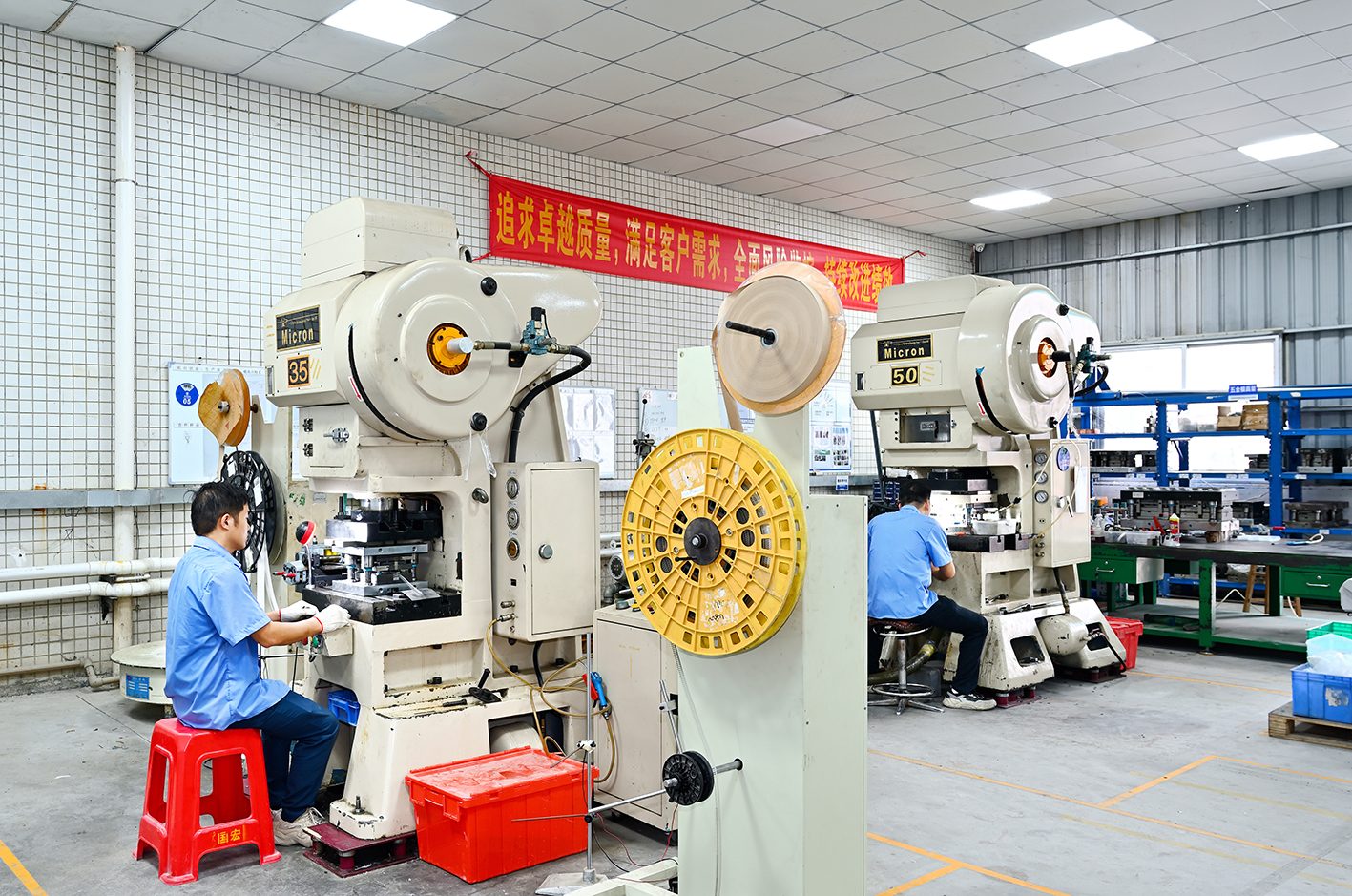
21 presses, 25–110T — up to 300 SPM with 0.005 mm positioning on the high-speed line.
In-House Quality Lab
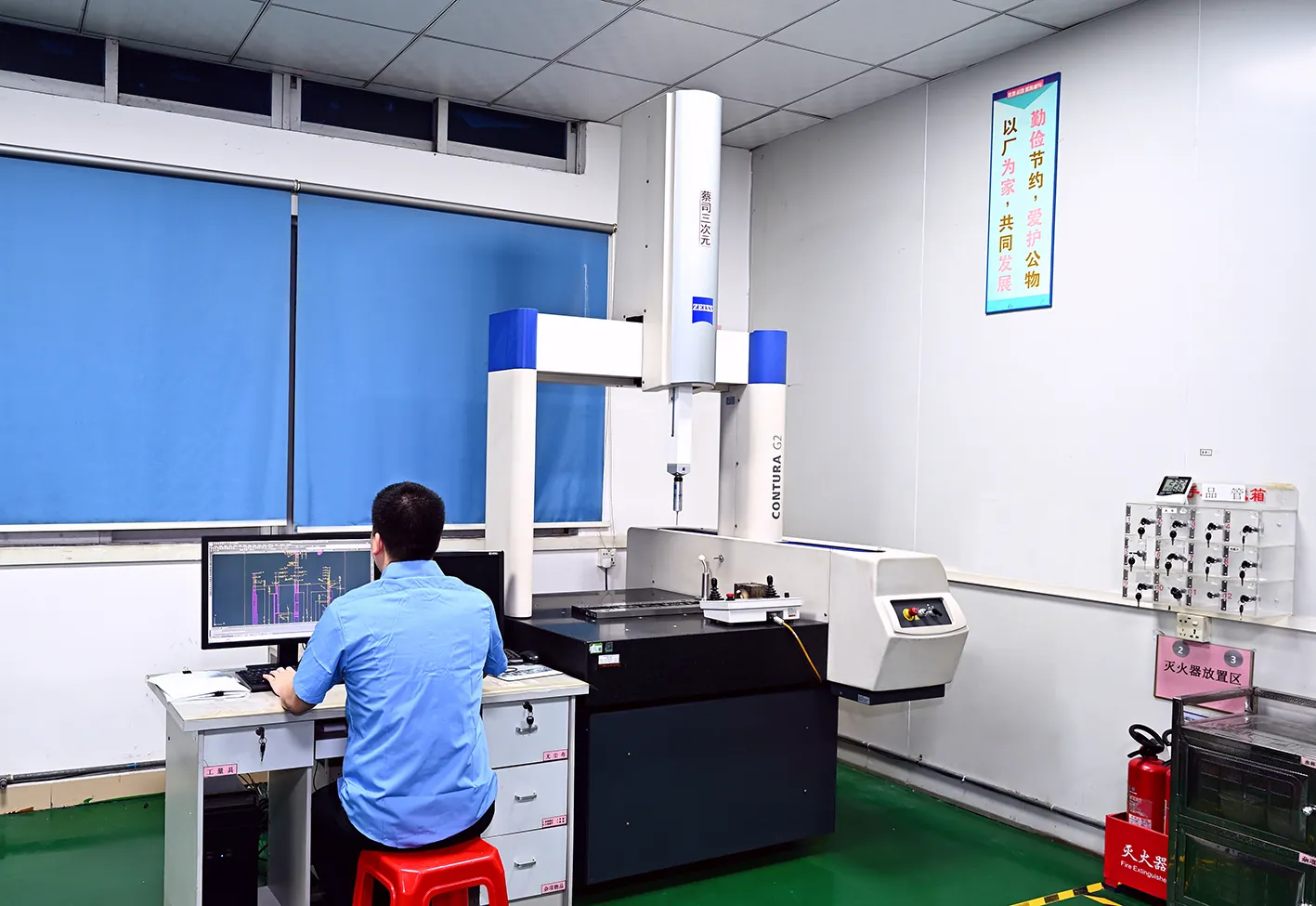
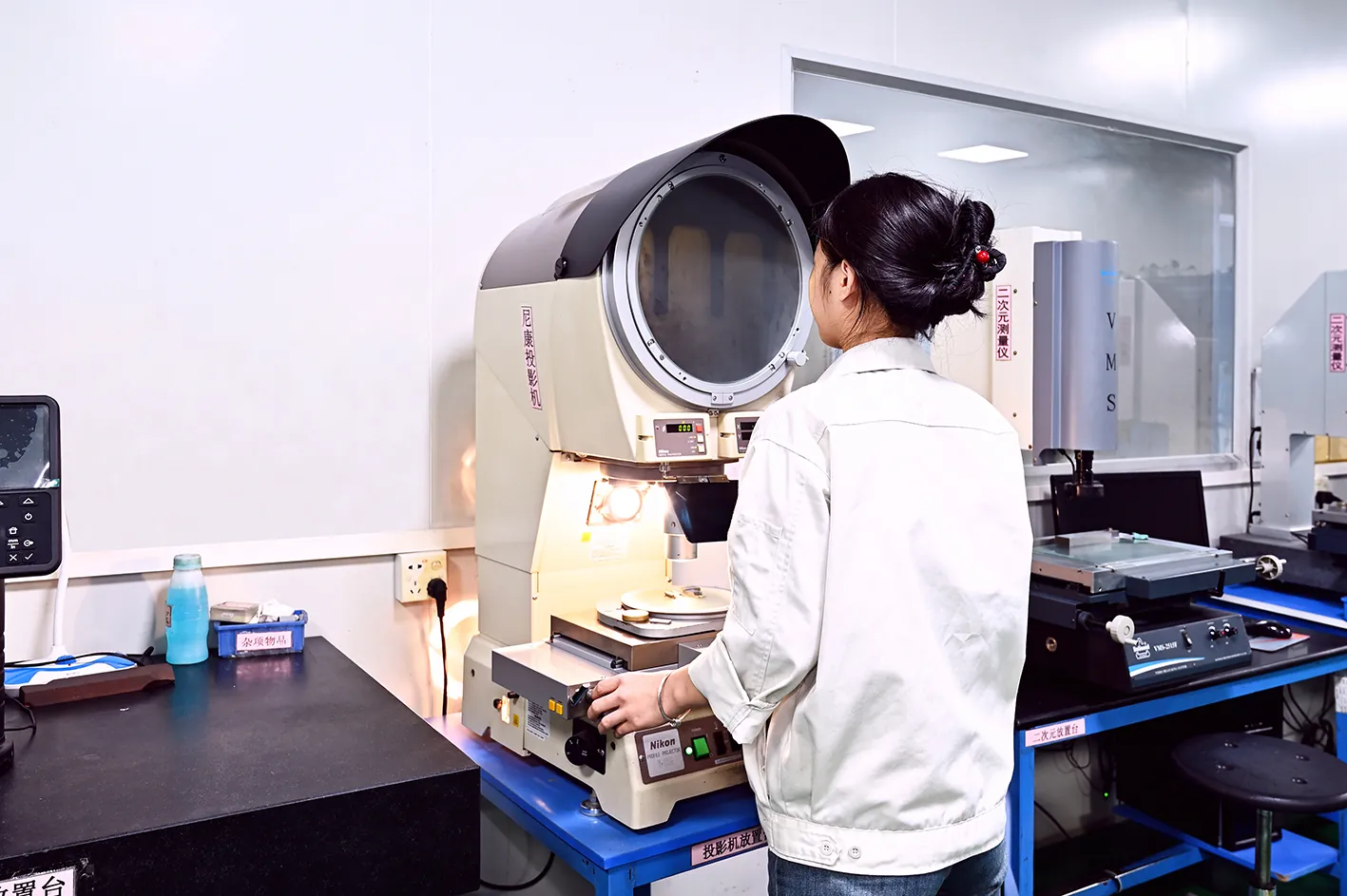
CMM and optical measurement verify critical features on every lot.
In-House Tool Room
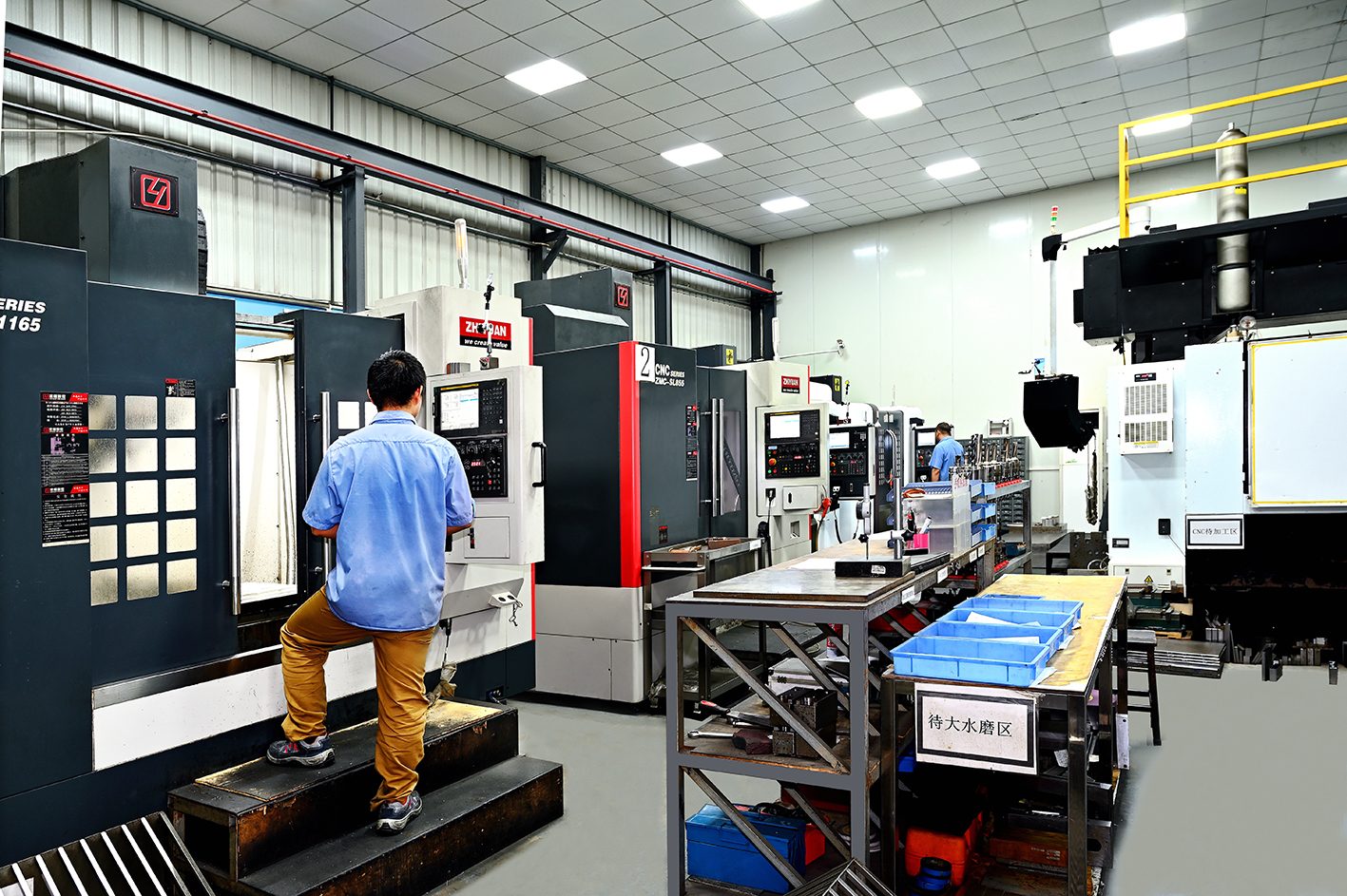
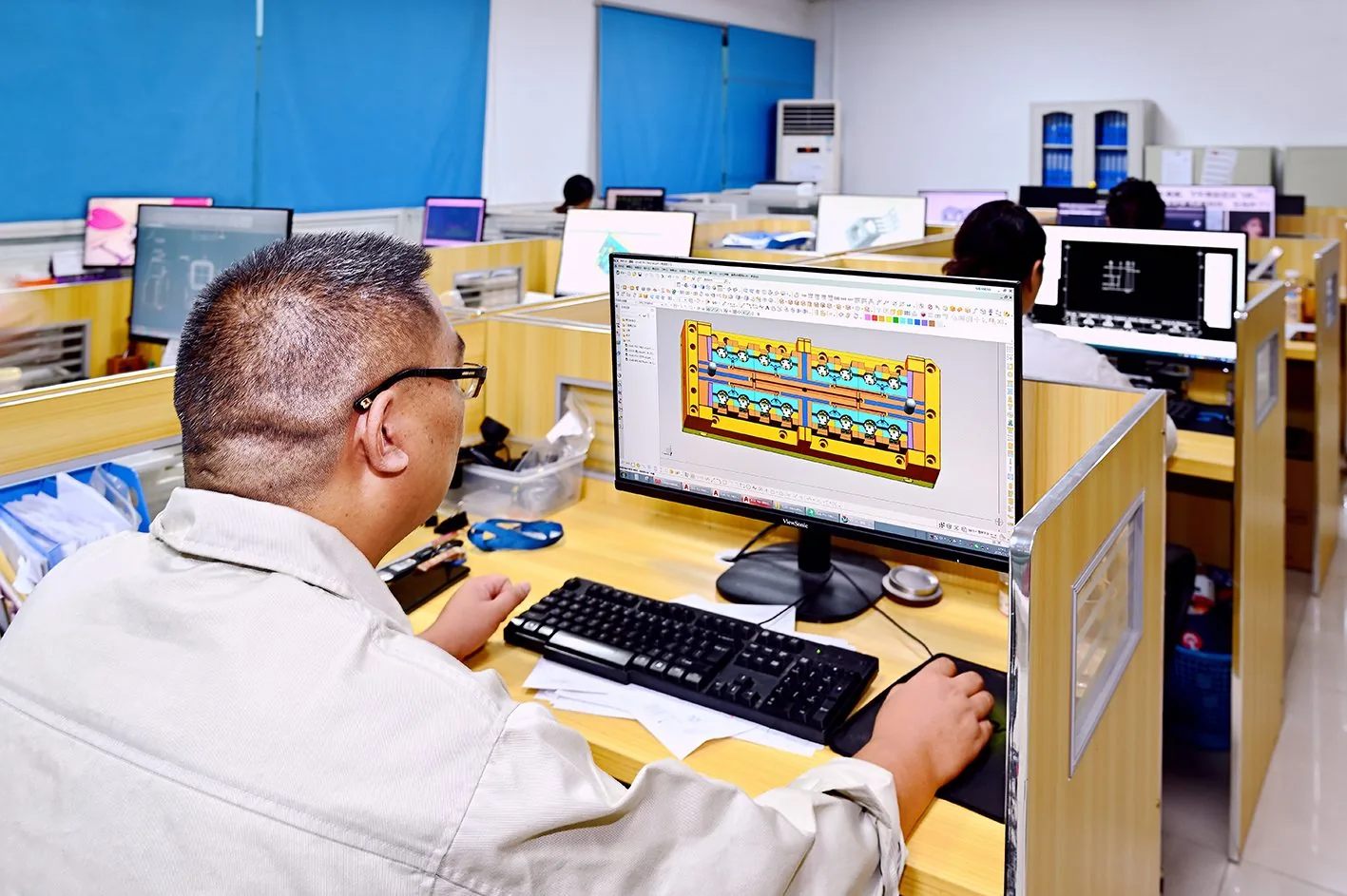
Wire EDM, CNC machining and optical profile grinding keep die design and build in one loop.
Reel-to-Reel Plating
Selective gold (2-8 µm), tin and zinc (5-12 µm) plating through approved partner lines for corrosion and conductivity.
APPLICATION & INDUSTRY SOLUTIONS
Metal Stampings for Electrical
Power distribution busbars
Stamped copper and aluminum busbars for power distribution - with precision-formed bends, plated contact areas and consistent conductivity.
Electrical contacts
High-precision stamped electrical contacts for relays, switchgear and control systems - with selective plating for reliable switching performance.
Control system terminals
Stamped terminals for industrial control systems, PLCs and automation hardware - tight tolerances for press-fit and screw-clamp connections.
Switchgear components
Durable stamped components for switchgear assemblies - from arc shields to mounting hardware - with materials suited to high-temperature service.
Electrical stamping
Electrical Stamping Components for Power Distribution
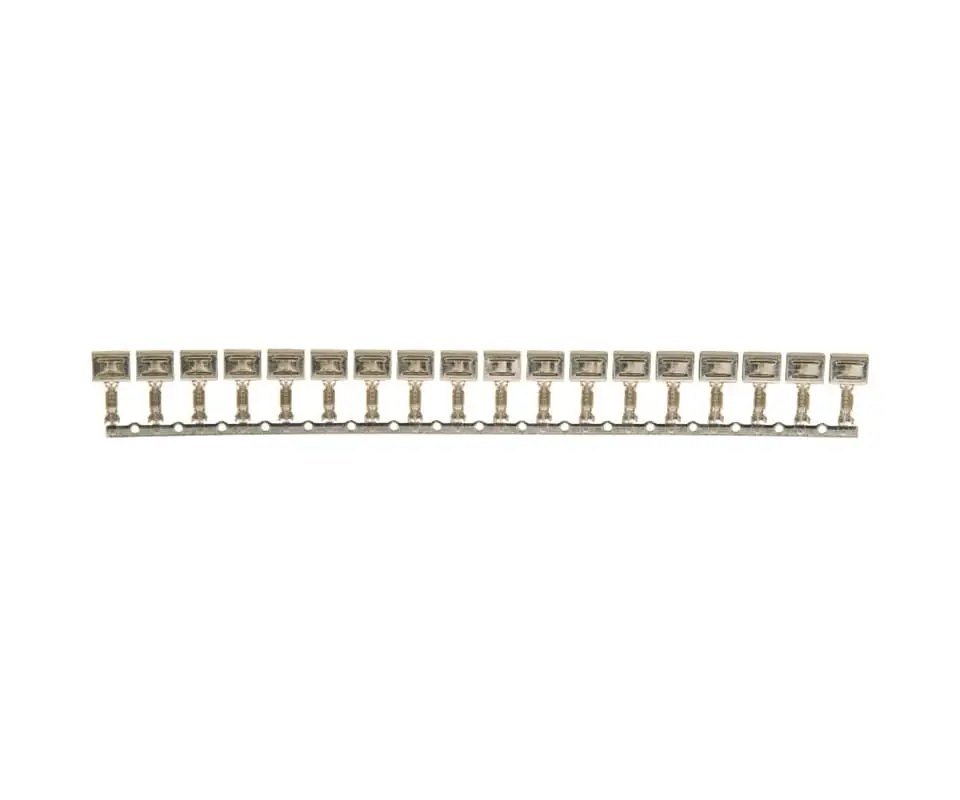
Power hardware we stamp daily includes distribution busbars and shunts, relay and contactor blades, switch contacts, fuse clips and press-fit terminals. Parts are struck from copper, brass and phosphor-bronze strip on 25-110 ton presses, with tin, nickel or silver plating applied on the contact faces only — conductivity where the current flows, spring where the contact has to flex.
- High-conductivity copper alloys with precision tolerances
- Selective plating for low-resistance contact surfaces
- In-house tooling for complex formed geometries
- Consistent quality for power, control and automation equipment
Electrical stamping
Conductive Stamping for Power Distribution and Control
Electrical current-carrying parts live or die by conductivity and contact resistance. For power distribution and control applications such as busbar connectors, relay blades, switch contacts, and fuse clips, we stamp precision components from high-conductivity copper alloys on coil-fed high-speed presses running up to 300 SPM, holding ±0.005 mm positional accuracy so mating surfaces stay aligned through thousands of duty cycles. Roll-to-roll selective plating — silver, gold, tin, or nickel — is deposited exactly where contact is made, stabilizing interface resistance and resisting corrosion while keeping material cost controlled. The result is a component engineered to carry rated current without thermal drift, vibration loosening, or arcing over its service life.
- Copper alloy coil-to-coil stamping from beryllium copper, brass, and phosphor bronze strip — burr-free contacts and terminals produced directly from coil for high-volume runs
- Roll-to-roll selective plating (gold, silver, tin, nickel) applied only on the contact zone to lock in stable contact resistance and cut precious-metal cost
- ±0.005 mm positional accuracy keeps mating surfaces aligned for repeatable electrical performance across millions of parts
- IATF 16949:2016 certified with full lot traceability from incoming coil to finished stamping, meeting automotive-grade electrical requirements
Electrical stamping
Busbar and Contact Materials: Conductivity Meets Spring
Power distribution stampings force a trade-off: conductivity wants copper, spring retention wants an alloy, and budget wants steel. C11000 copper and A1050/A6061 aluminum carry the busbar duty - stamped, formed and plated at the contact faces (tin, nickel or silver over the base metal) so the joint stays cool over load cycles. Where the part must both conduct and spring - relay contacts, battery terminals, fuse clips - C5191 phosphor bronze and C17200 beryllium copper hold force across millions of cycles, and C70250 nickel-silicon bronze answers the elevated-temperature case where copper alloys soften. SECC and SGCC steel takes enclosures, brackets and switchgear hardware. Every electrical stamping ships with material certification, and contact resistance, plating thickness and salt-spray performance are verified to the test class on the drawing.
- C11000 copper and 1050/6061 aluminum busbars, plated contact faces
- C5191 / C17200 / C70250 alloys for spring-and-conductivity duty
- Tin, nickel and silver plating through managed finishing partners
- ±0.005 mm positioning on 25-110 ton presses for press-fit hardware
INSIDE THE PLANT
Inside Our Electrical Stamping Line
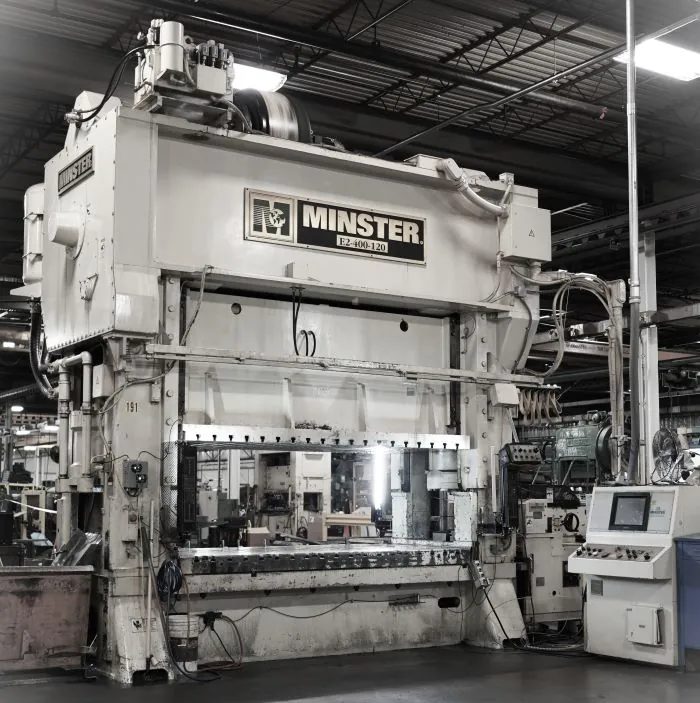
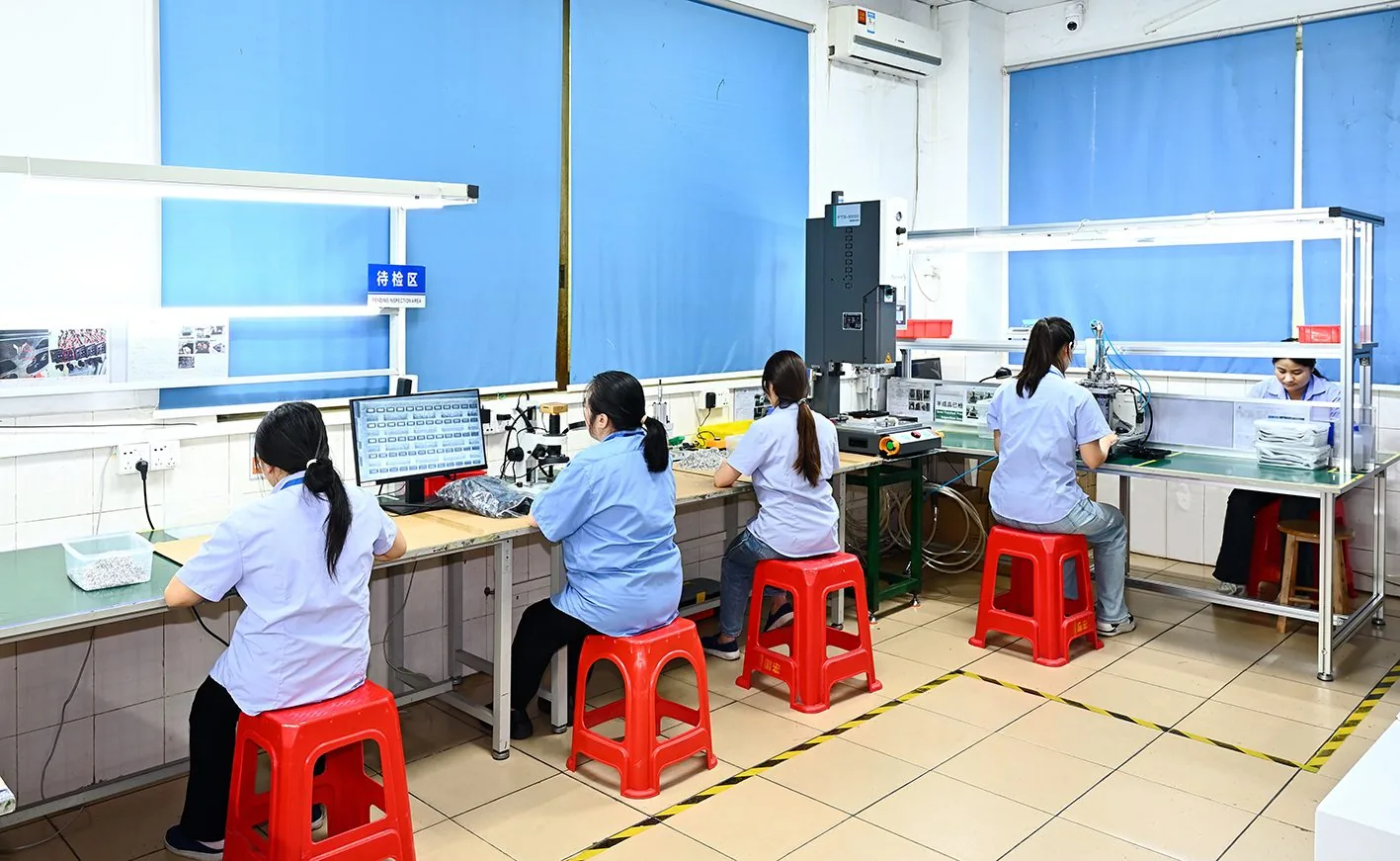
Real equipment and inspection floor from our Dongguan plant — 25–110T high-speed presses, in-house tool room, and a CMM lab running first-article inspection on every program.
MATERIALS & COMPLIANCE
Materials for Electrical Applications
Material certifications and compliance documents available on every lot.
Brass
Common Alloys
Finishing
Copper
Common Alloys
Finishing
Phosphor Bronze
Common Alloys
Finishing
Stamping on Your Alloy or Coating?
Send the grade, gauge and part drawing — we confirm stampability, die and feed design, and quote on 25–110T presses at ±0.005 mm.
MTC / CoC / RoHS available per lot
DFM & ENGINEERING SUPPORT
Design for Manufacturability for Electrical
We review material, tolerance, bend and volume economics before tooling starts.
What We Review
Power distribution busbars geometry
Current path — cross-section tolerance, edge quality against corona, and selective-plating zones.
Electrical contacts geometry
Contact geometry — mating tolerance, plating thickness for conductivity, and reel-feed orientation for in-line inspection.
Control system terminals geometry
Feature walk-through — material formability, bend radii, tolerance stack-up and plating compatibility for this part.
Switchgear components geometry
Mounting features — hole position and flatness under vibration, bend-radius margins on thin gauge.
What Our DFM Review Checks
Bend radii
Inside radius held at R≥1.0t on spring tempers; tighter bends flagged for anneal or grade change before die design starts.
Holes & cutouts
Hole diameter ≥0.8t, pushed to 0.6t only with hardened punch steel; thin-gauge cutouts checked for tear-out.
Burr & edge quality
Burr height held under 0.05 mm so parts mate flat in assembly and plating adheres at the edges.
Tolerance & plating impact
Critical features piloted to ±0.005 mm; plating thickness (gold 2-8 µm, tin/zinc 5-12 µm) compensated in die design.
Get a Free DFM Review
Send your drawing — receive engineering feasibility feedback, with pricing to follow.
STEP / IGES / X_T / DWG / PDF
QUALITY ASSURANCE & INSPECTION
IATF 16949:2016 Certified, Verified on Every Lot
CMM, optical measurement and 100% dimensional inspection at press speed.
 Inspection Hardware
In-House Quality Lab
- CMM & optical measurement for flat and 3D parts
- In-line vision systems inspecting at press speed
- SPC on critical features to catch drift as a trend
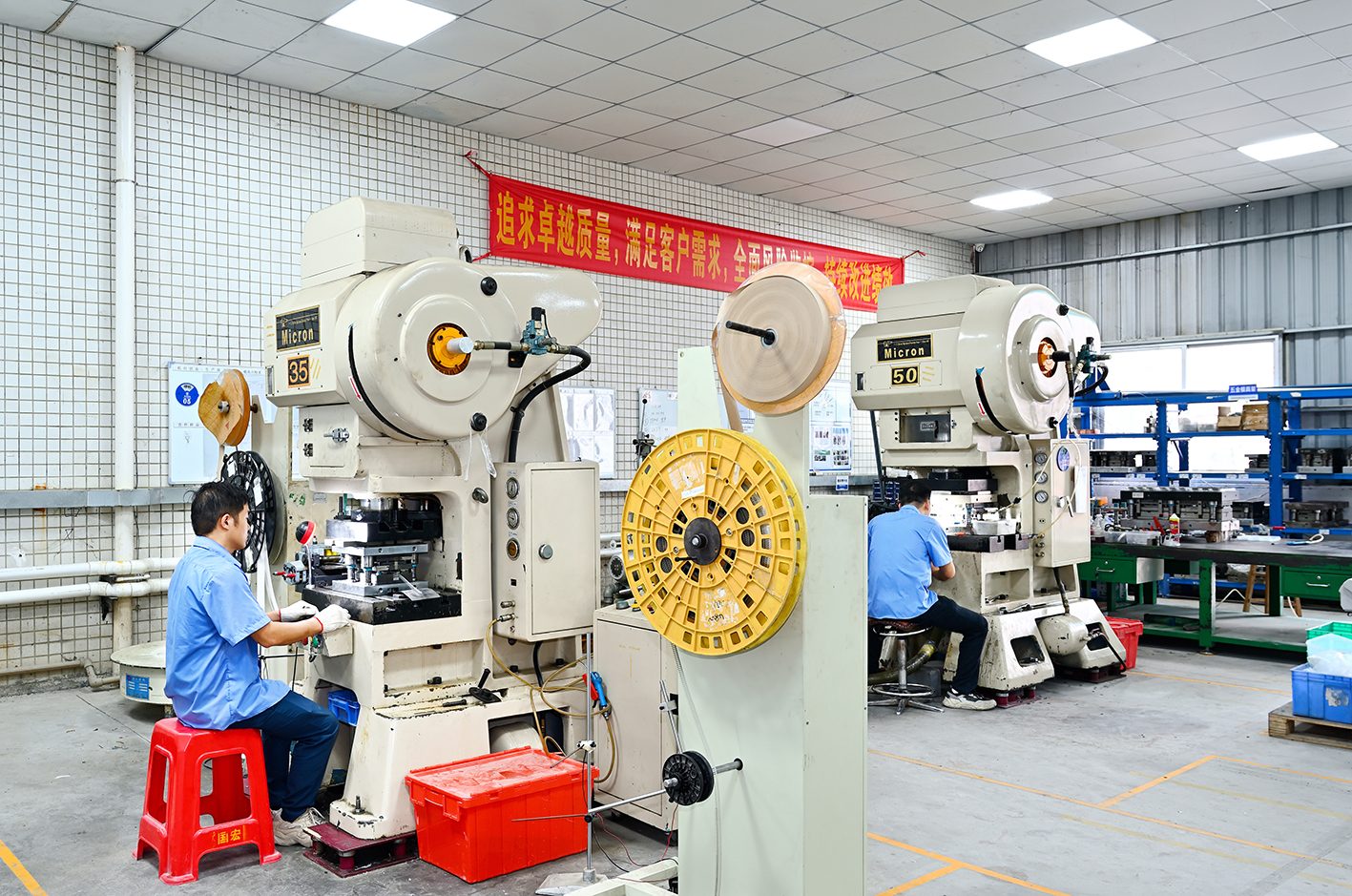 Quality Standards
IATF 16949:2016 Certified
- IATF 16949:2016 automotive quality management
- ISO 14001:2015 environmental management
- PPAP documentation for automotive & EV programs
 Traceability
Full Lot Traceability
- First-article inspection against the drawing
- Lot-level material traceability back to the coil
- Inspection records on every shipment
Talk to Our Engineers About Quality Documentation
Tell us what your project requires, and our team confirms which inspection and material documentation can be included with your quote.
In-House Tool Room
Made in Our Own Tool Room
Every progressive die behind our stamped parts is 100% in-house stamping tooling — design, machining, assembly and T1 trial all under our roof. That is why tooling issues get solved on the shop floor in hours, not by email exchange with an outside die shop.
±0.001 mm Achieved
Combined machining accuracy down to ±0.001 mm, Ra0.05 µm surfaces and Ø0.05 mm micro end mills for tight die features.
30 In-House Machines
30 die-making machines — wire EDM, CNC and precision grinding — keep every die build and repair on our own schedule.
2–5 Weeks for Stamp Dies
Typical stamping die delivery in 2–5 weeks, with T1 trials run on our own presses before you commit to volume.
One Accountable Chain
Self-designed progressive dies, machined in-house, run at 60–300 SPM with CCD inline inspection — no outsourced-die handoff where quality falls between suppliers.
CASE STUDIES
Electrical Case Studies
Oct 20 · 1 min read
Brass Terminals with In-Line Thread Tapping for Power Distribution
A switchgear components maker was buying terminals and a tapping service separately. Every late tapping job stopped the bus-bar assembly cell, and…

Oct 20 · 1 min read
Five Presses Relocated: Restoring a Broken Production Cycle in Weeks
During the supply disruptions of 2020, a large electrical-assemblies manufacturer lost its stamping route: the incumbent supplier's machines were…
Oct 20 · 1 min read
Egg-Crate Trays Ended a Tangling Problem Without Changing the Part
A regulator maker's stamped clips shipped in gridded trays, three per cell. In transit the clips shifted, nested, and tangled; operators picked up…
ORDERING & FAQ
How to Order Electrical Stampings & Frequently Asked Questions
From drawing to delivered parts: a four-step path with engineering review at the front and 100% dimensional inspection at the back — then the questions buyers ask us most.
Step 1
Submit CAD & Specs
Send 2D/3D drawings (STEP, DWG, PDF) with quantity, material, and tolerance requirements.
Step 2
DFM Feedback & Quotation
Our engineering team conducts DFM analysis and follows up with a competitive quote after the review.
Step 3
Precision Manufacturing
High-speed progressive die stamping, secondary forming, finishing, and surface treatment per your specifications.
Step 4
100% QC & Express Shipping
100% dimensional inspection, anti-corrosion packaging, and global express delivery.
What is the MOQ for Electrical metal stampings?
We support prototyping from 1 piece and mass production from roughly 100k pieces upward, depending on tooling economics.
How do you guarantee material authenticity and quality documentation?
Every batch comes with material certificates and inspection reports. Heat treatment and plating logs are provided upon request.
What packaging and anti-corrosion protection do you apply for international shipping?
All finished electrical metal stampings undergo ultrasonic cleaning, anti-rust treatment, individual protective sealing, and padded shockproof box packaging.
Can you stamp non-standard custom shapes or complex geometries?
Yes! We specialize in complex electrical metal stampings including deep-drawn forms, multi-bend geometries, micro features, and tight-tolerance profiles per CAD specs.
Ready to Start Your Precision Stamping Program?
Send your drawing today — engineering runs a free DFM review and detailed pricing follows the review.
100% Confidential | NDA Protected | 24H Response
WHERE TO NEXT
See What Else We Stamp
Same ±0.005 mm discipline, different parts. Pick the market closest to yours and see what we run there.
Electronics
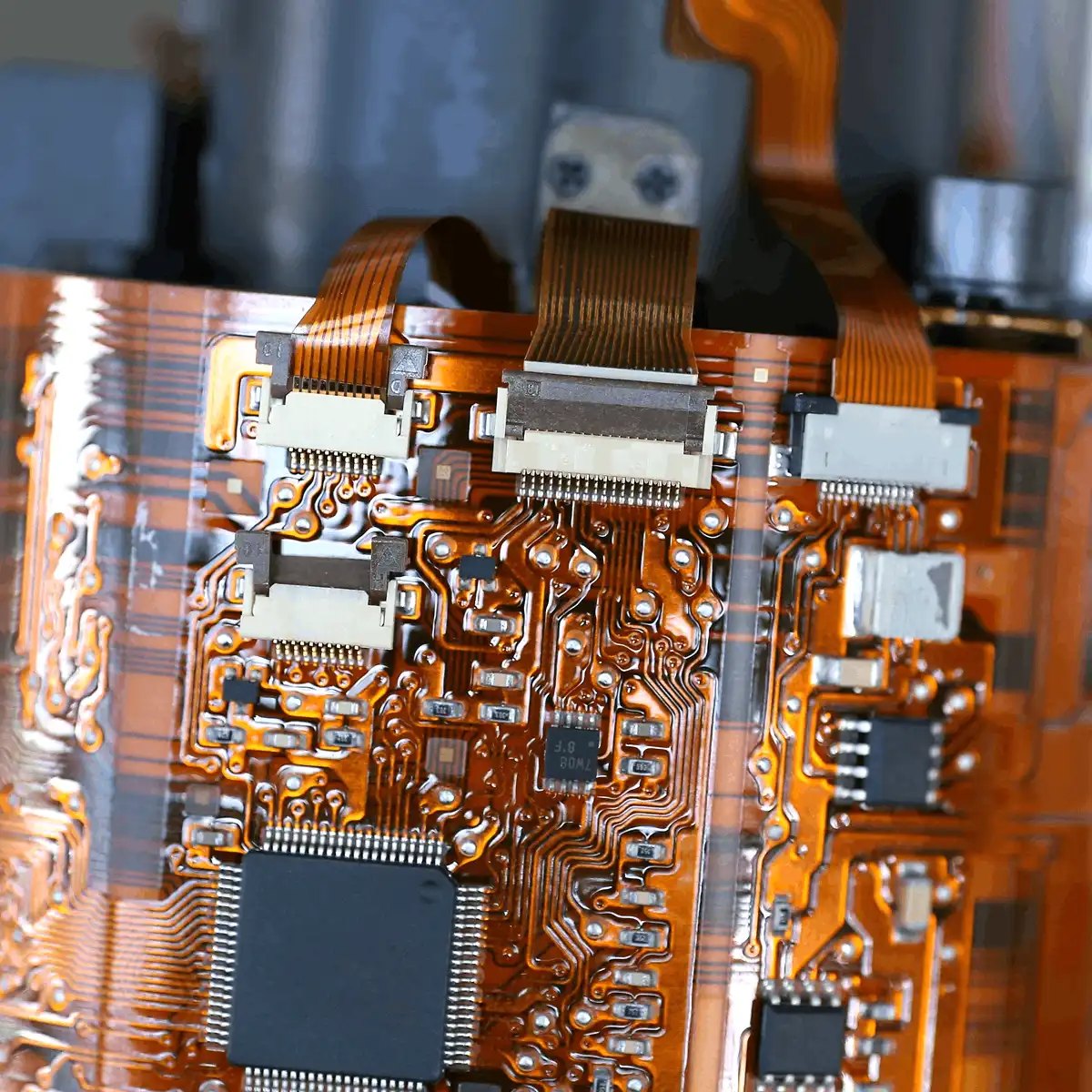
Hold micron features on lead frames and EMI cans with fine-pitch dies and in-line vision.
Explore Industry
Insert & Injection Molding
Combine stamped terminals and molded insulation into one supplied, one-tested component.
Explore Industry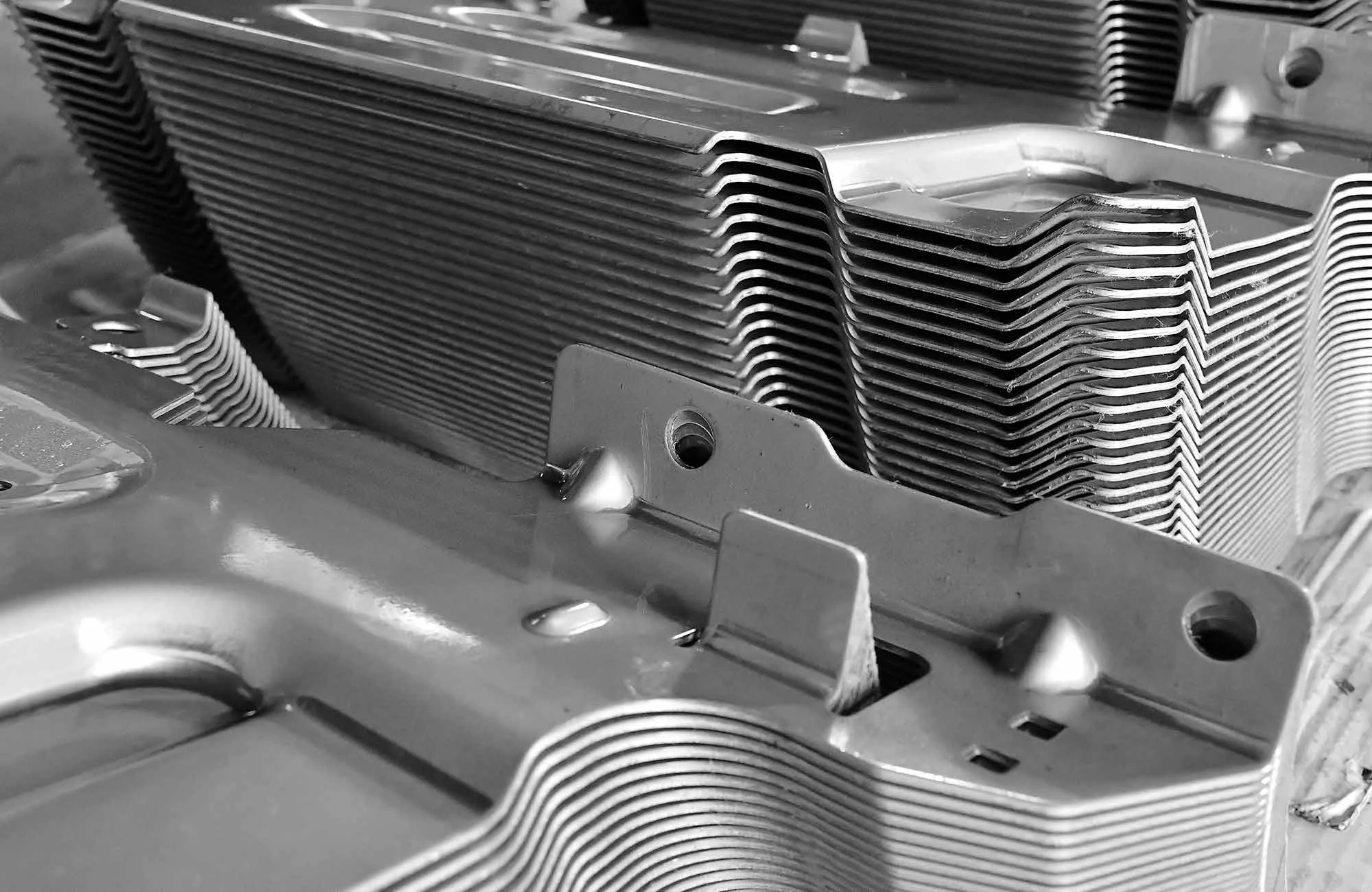
Lighting
Keep drivers cool and contacts tight through rated luminaire life with held heat paths.
Explore Industry