Brass Stamping — ±0.005 mm on 0.05–3.0 mm strip, up to 300 SPM
Progressive die stamping of brass terminals, eyelets, contacts and hardware — dies built in our own tool room, run on 21 presses from 25 to 110 tons at up to 300 SPM, held to ±0.005 mm on piloted features.
0.05–3.0 mm strip
±0.005 mm positional
up to 300 SPM
21 presses · 25–110 T
Fast Engineering ResponseNDA ProtectedSTEP / IGES / X_T / DWG
Brass gets specified for current-carrying parts, light contact springs and cosmetic hardware. These four families cover most of the brass metal stamped parts that run here, and each one carries its own die approach, plating route and inspection plan. On stamped brass parts the plating call-out usually decides the die layout, not the other way round.
Terminals, pins and eyelets
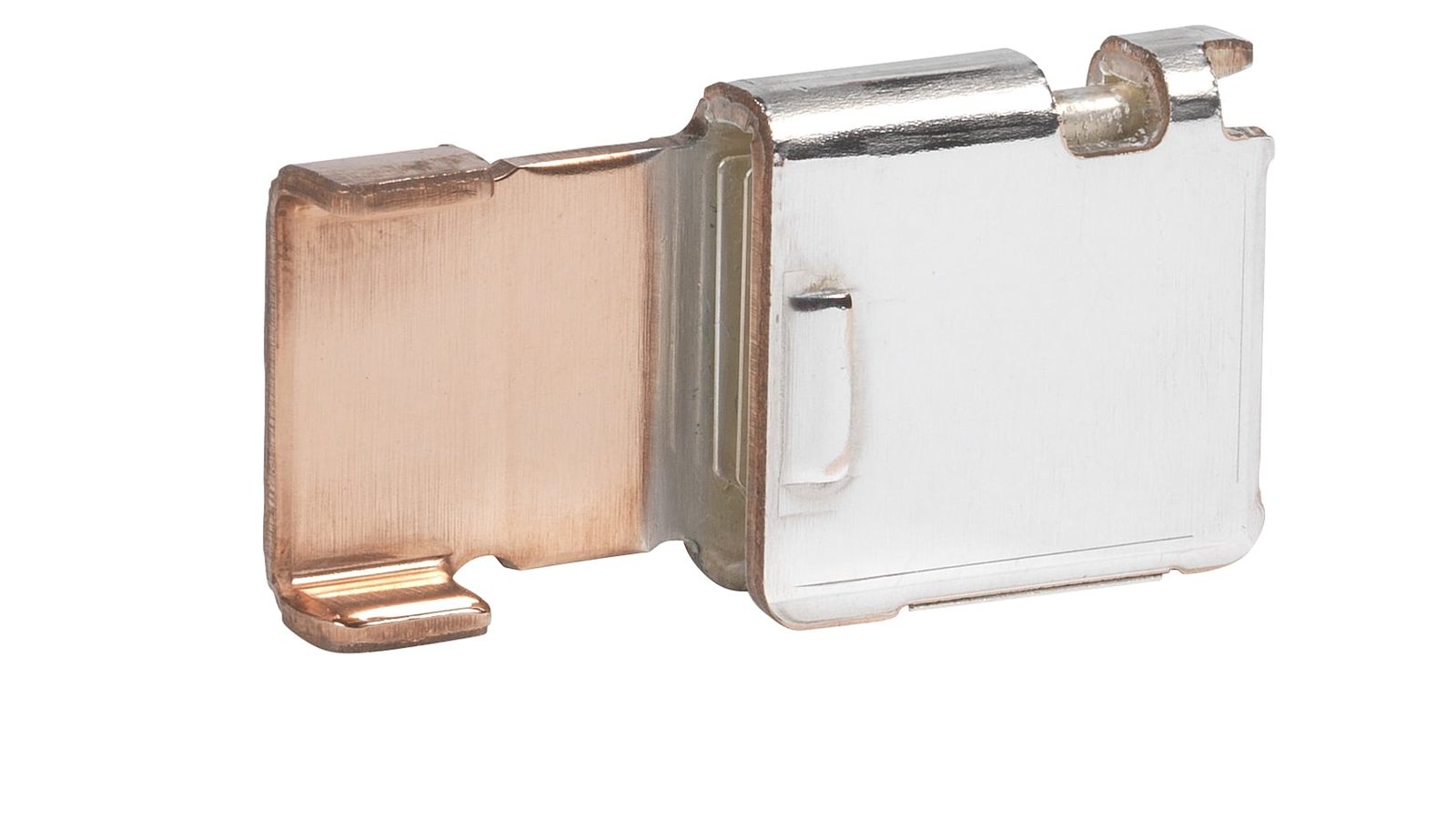
Ring and spade terminals, connector pins, eyelets, lugs and contact bridges from C26000 cartridge brass and C26800 yellow brass. Progressive dies carry piercing, forming and in-die tapping, so a tapped terminal leaves the press finished instead of going out for a second operation.
C26000C268000.2–1.0 mmtin / nickel
Contact springs and clips
Brass carries light contact force well, but it is not a spring alloy. Where a clip must hold force over millions of cycles we move the design to phosphor bronze or beryllium copper at DFM and say so — rather than quoting brass and letting the contact relax in the field.
hard temperbattery contactsswitch leaves
Shield cans, covers and housings
0.2–0.5 mm brass draws into shallow cans, covers and small enclosures with clean radii and predictable solderability. It is heavier than aluminum but easier to solder and holds tighter corners, which is why RF cans and hand-soldered assemblies still specify it.
0.2–0.5 mmsolderableEMI cans
Hardware, fittings and decorative parts
Escutcheons, trim rings, fasteners, plumbing fittings and small lock components — parts the customer and the end user both see. The visible face runs away from the stripper, the surface acceptance limit is agreed on the drawing, and plating or lacquer keeps the finish bright.
cosmetic facesplating / lacquerbuilding hardware
INSIDE THE PLANT
Brass Stamping Lines, Tool Room and Inspection Floor
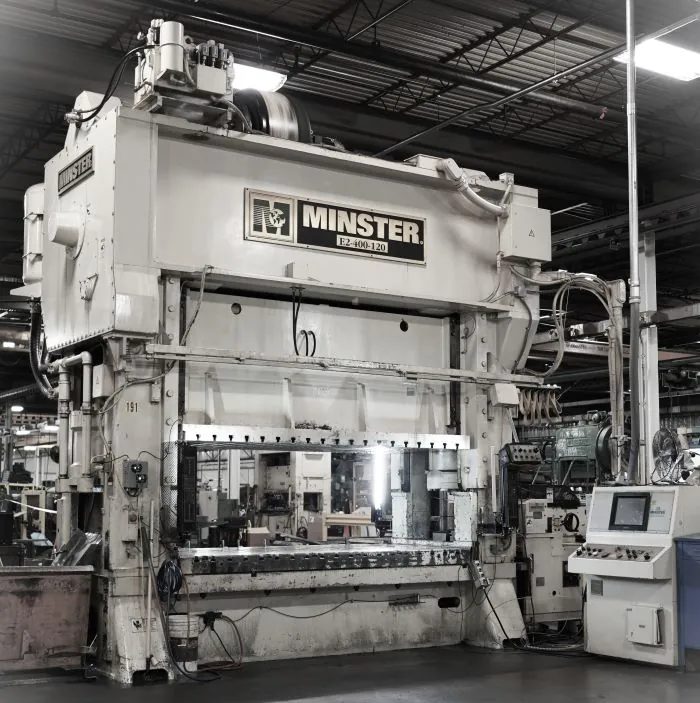
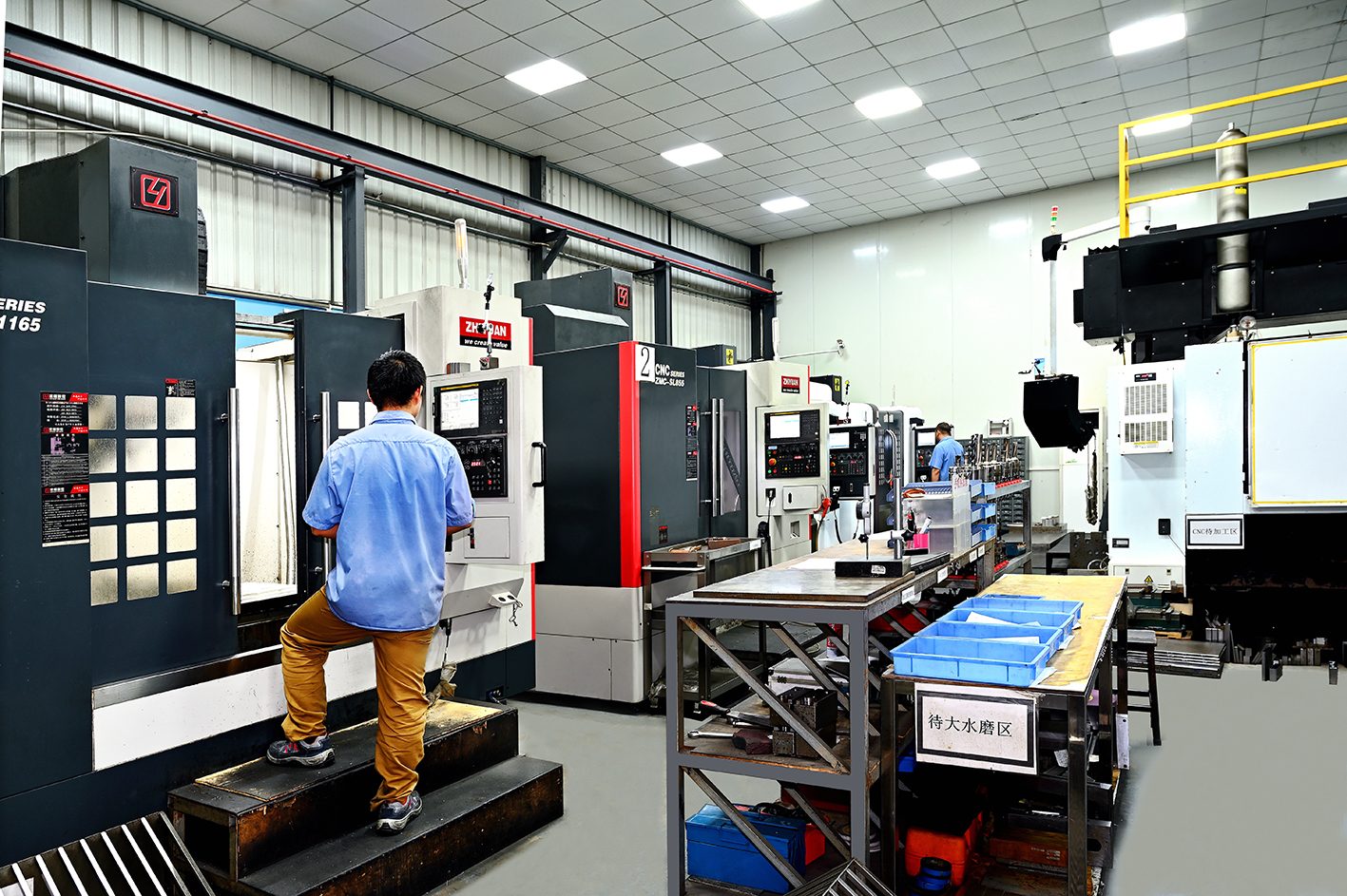
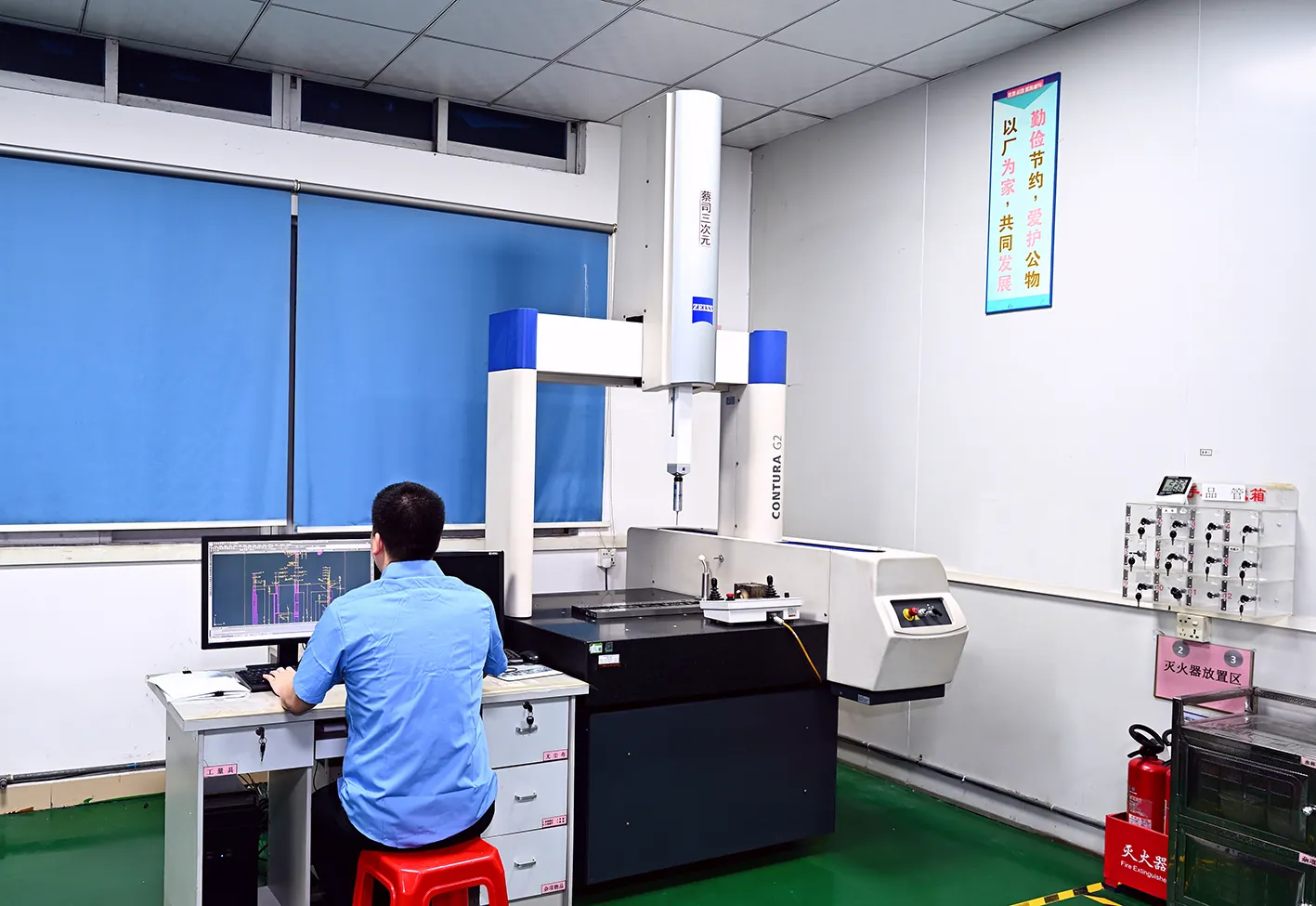
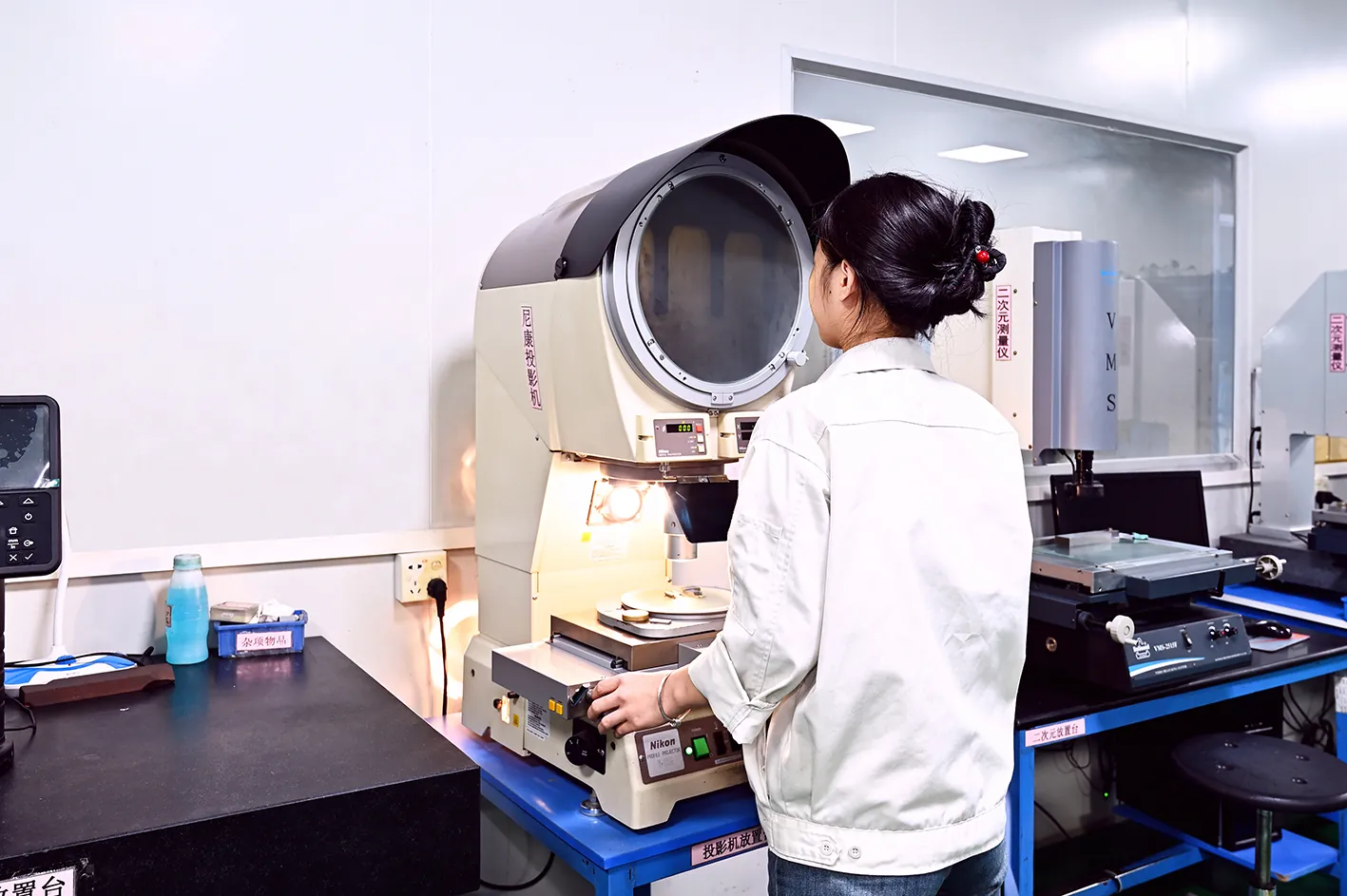
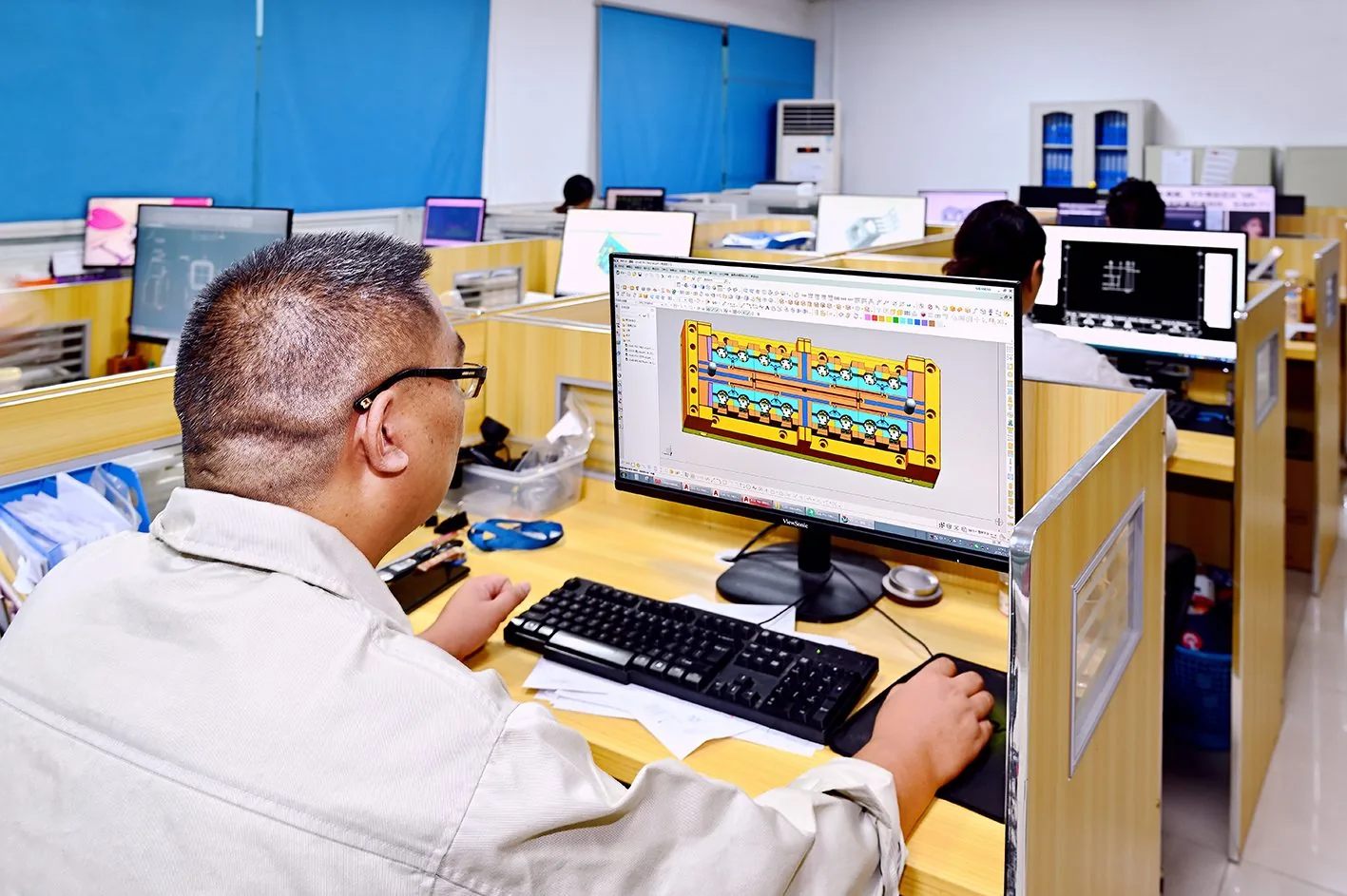
Real equipment and inspection floor from our Dongguan plant — 25–110T high-speed presses, in-house tool room, and a CMM lab running first-article inspection on every program.
WHERE BRASS GOES WRONG
What Makes Brass Harder to Stamp Than It Looks
Brass is forgiving on paper and unforgiving in a long run: temper drifts, thin edges burr, the surface tarnishes, the die starts to gall. These are the four failures we engineer out before the first production coil.
01
Springback moves with temper
The Challenge
Two coils of the same C26000 grade behave differently in the same die when the temper differs — soft brass overbends less and marks more easily, half-hard and hard spring back further and crack at tight radii. A die cut for one temper is not the die for the other.
Our Solution
The die is compensated for the temper named on the purchase order, and the first parts run on the actual production coil, not a sample. Formed angles are released only after a first-article CMM report; when a customer changes temper mid-program, the bend stations are re-checked rather than assumed.
02
Burr at 0.05–0.3 mm strip
The Challenge
On thin brass the die clearance is a fraction of strip thickness, and a worn punch shows up as a burr on the contact face long before it shows up as a dimensional failure — the part still measures in tolerance and still fails at the customer.
Our Solution
The burr side is fixed on the die layout, clearance is controlled per station, and punch sharpening runs on a counted-stroke schedule rather than on a reject. Burr allowance and break-to-shear ratio are agreed at DFM and measured in first-article inspection.
03
Tarnish and plating damage
The Challenge
Bare brass tarnishes, and a tarnished contact becomes a solderability and appearance complaint. Pre-plated strip and post-stamping plating are not interchangeable: one changes the die entry and forbids tumbling, the other needs the plating zone and masking defined before tooling.
Our Solution
The plating route comes from what the drawing needs, not from habit — pre-tinned or pre-plated strip where the die can be built gentle, post-plating with a qualified finisher and in-house inspection where the plating zone is selective. Silent drawings get a DFM question, not an assumption.
04
Die wear and galling
The Challenge
Brass galls against tool steel more readily than steel does. Galling caught late looks like a surface defect on the part and a dimensional drift on the station at the same time, so chasing it after the fact usually means scrapping a run.
Our Solution
Insert material and coating are chosen at die design, lubrication is matched to the strip surface, and forming stations are polished on a schedule. The same inspection loop watches surface and dimension, so the first sign of galling lands as a maintenance task, not a customer complaint.
HOW WE STAMP IT
What We Hold in Production
These are the values we quote and inspect against on brass work — no ranges invented for marketing, and nothing the press cannot hold.
Specification Parameter
What We Hold
How It Is Controlled
Strip thickness
0.05–3.0 mm
Coil certificate + in-process thickness check
Positional tolerance
±0.005 mm on piloted features
First-article CMM at 0.001 mm resolution
Stamping speed
up to 300 SPM
Press matched to the part, not to the calendar
Press fleet
21 presses, 25–110 tons
Thin contacts on high-speed frames, heavy brass on larger presses
Dies
100% designed and built in-house
30 machining machines behind the tool room
Quality system
IATF 16949:2016 · ISO 14001:2015
PPAP, material certificates, lot traceability
Inspection
20 inspection stations
CMM, optical and profile, in-line CCD on critical features
Plating
tin, nickel, silver, gold
Qualified finishers, incoming inspection in-house
TOOL ROOM
Die design and build
Progressive die design, machining and assembly under one roof — the place springback, burr and galling are actually solved.
PRESSES
21 presses, 25–110 tons
Thin brass contacts on the high-speed frames at up to 300 SPM; heavy brass from 1.5 to 3.0 mm on the larger presses.
INSPECTION
CMM, optical and CCD
First-article CMM at 0.001 mm, optical and profile for edges and radii, in-line CCD vision on the features the drawing controls.
FINISHING
Managed plating
Tin, nickel, silver and gold through qualified finishers, with incoming inspection and lot traceability kept in-house.
From Drawing to Production
01
DFM review
Strip grade, temper, bend radii, burr side, tolerance stack and plating route settled before a die is cut.
02
Die build
Progressive layout with piercing, forming and in-die tapping combined; die machined and assembled in our tool room.
03
Try-out and first article
Run on the production coil, formed angles verified on the CMM, PPAP documentation raised.
04
Production and SPC
Counted-stroke tool maintenance, in-line vision on critical features, SPC on the dimensions the drawing controls.
STRIP AND SUPPLY
Brass Strip: Tempers, Surfaces and Supply
We are a stamper, not a material distributor — we do not sell brass. What we do is pick the right strip form for the part and quote it as material plus conversion.
Tempers decide the die
Soft, quarter-hard, half-hard and hard all run here, but they are not interchangeable for the same part. Soft temper suits deep forms and cosmetic faces; hard tempers hold their own spring and resist denting. A temper change mid-program is a die change, not a substitution.
Mill finish or pre-plated
Mill finish, pre-tinned and pre-plated strip are all workable. Pre-plated avoids a post-stamping plating step and the handling damage that comes with it, but demands gentler die entry and no tumbling; post-plating gives more freedom on the plating zone.
You supply or we procure
Either you supply coil to your own specification, or we procure the grade, temper, width and surface you name and quote material plus conversion with the mill certificate on file. If the grade is still open, we recommend between C26000, C26800, C27200, C28000 and C38500 before tooling.
Grades we run
C26000C26800C27200C28000C38500
BEFORE YOU SEND THE DRAWING
DFM Checklist for Brass Stampings
Eight things worth checking on a brass drawing before brass progressive stamping — the ones that decide whether the part is cheap or expensive to run.
Bend radius: inside radius at 1× strip thickness or more for soft temper, 1.5× or more for half-hard and hard — tighter radii crack on the outside fibre.
Hole diameter: 1× strip thickness or larger for punched holes; below that the punch is fragile and the hole wall is rough.
Hole-to-bend distance: at least 2× strip thickness from hole edge to bend line, or the hole distorts as the bend forms.
Burr side: name the face where burr is acceptable. On contacts and mating surfaces it usually is not, so the die layout is fixed before quotation.
Bend line versus rolling direction: across the rolling direction gives a cleaner outside radius; along it raises edge cracking risk on hard temper.
Plating: state the plated zone, the masking, and whether pre-plated strip is acceptable — it changes both die design and handling route.
Tolerance stack: ±0.005 mm covers piloted positional features; formed dimensions accumulate angle and springback — call out which formed dimensions are critical.
Flatness and cosmetics: if one face is visible, say which, and give a surface acceptance limit — die marks and stripper rub are decided at layout, not at final inspection.
How to Order Brass Stampings & Frequently Asked Questions
From drawing to delivered parts: a four-step path with engineering review at the front and 100% dimensional inspection at the back — then the questions buyers ask us most.
Step 1
Submit CAD & Specs
Send 2D/3D drawings (STEP, DWG, PDF) with quantity, material, and tolerance requirements.
Step 2
DFM Feedback & Quotation
Our engineering team conducts DFM analysis and follows up with a competitive quote after the review.
Step 3
Precision Manufacturing
High-speed progressive die stamping, secondary forming, finishing, and surface treatment per your specifications.
Step 4
100% QC & Express Shipping
100% dimensional inspection, anti-corrosion packaging, and global express delivery.
01
Do you supply the brass, or do we?
Either. We are a stamper, not a metal distributor — we do not sell brass. You can supply coil to your own specification, or we procure the grade, temper, width and surface you name and quote material plus conversion, with the mill certificate on file.
02
Which brass grades do you run?
C26000 cartridge brass, C26800 yellow brass, C27200, C28000 and C38500 are the grades we run most. If the drawing names another grade, send the spec and we confirm stampability before quoting.
03
What is the thinnest brass you can stamp?
0.05 mm at the thin end of our range, up to 3.0 mm at the heavy end. Thin strip runs on the high-speed presses; heavy brass runs on the larger presses in the fleet.
04
Can you stamp pre-plated brass strip?
Yes. Pre-tinned and pre-plated strip removes the post-stamping plating step, provided the die is built for gentler entry and the parts are not tumbled afterwards. If the drawing's plating call-out and the pre-plated route conflict, we flag it at DFM.
05
What tolerance can you hold on a brass part?
±0.005 mm on piloted positional features, verified on a CMM at first article. Formed dimensions depend on bend count, radius and temper, so the critical formed dimensions are agreed at DFM and controlled with SPC in production.
06
Should a spring be brass or phosphor bronze?
If the part must hold contact force over millions of cycles, phosphor bronze or beryllium copper is the right answer and we say so at DFM. Brass with a hard temper is the cost-effective choice for light force and modest cycle counts.
07
Do you take on prototype brass stamping?
Yes. Prototype brass stamping runs from soft tooling or laser-cut blanks formed on a brake, enough to prove fit, finish and solderability before a die is committed. When volume is confirmed, progressive stamping brass moves the same part onto a hard die, with in-die tapping if the drawing needs a thread.
08
How fast can you stamp brass?
Thin brass contacts run at up to 300 SPM on the high-speed frames; at 1.5 to 3.0 mm the press sets the limit, not the material. Speed is chosen per part — the point is to stamp brass at a rate the die and the burr allowance can hold, not the biggest number on a spec sheet.
Ready to Start Your Precision Stamping Program?
Send your drawing today — engineering runs a free DFM review and detailed pricing follows the review.
100% Confidential | NDA Protected | 24H Response
We use cookies to understand how visitors use our site and to improve it. Choose what's fine with you — you can change your mind anytime.Cookie Policy