ISTAMPING

Aluminum Stamping — ±0.005 mm on 0.05–3.0 mm strip, up to 300 SPM

Progressive die aluminum metal stamping for heat sinks, brackets, housings and clips in 1050, 1060, 3003 and 5052 — aluminum sheet metal stamping with dies built in our own tool room, run on 21 presses from 25 to 110 tons at up to 300 SPM, held to ±0.005 mm on piloted features.

  • 0.05–3.0 mm strip
  • ±0.005 mm positional
  • up to 300 SPM
  • 21 presses · 25–110 T

Fast Engineering ResponseNDA ProtectedSTEP / IGES / X_T / DWG

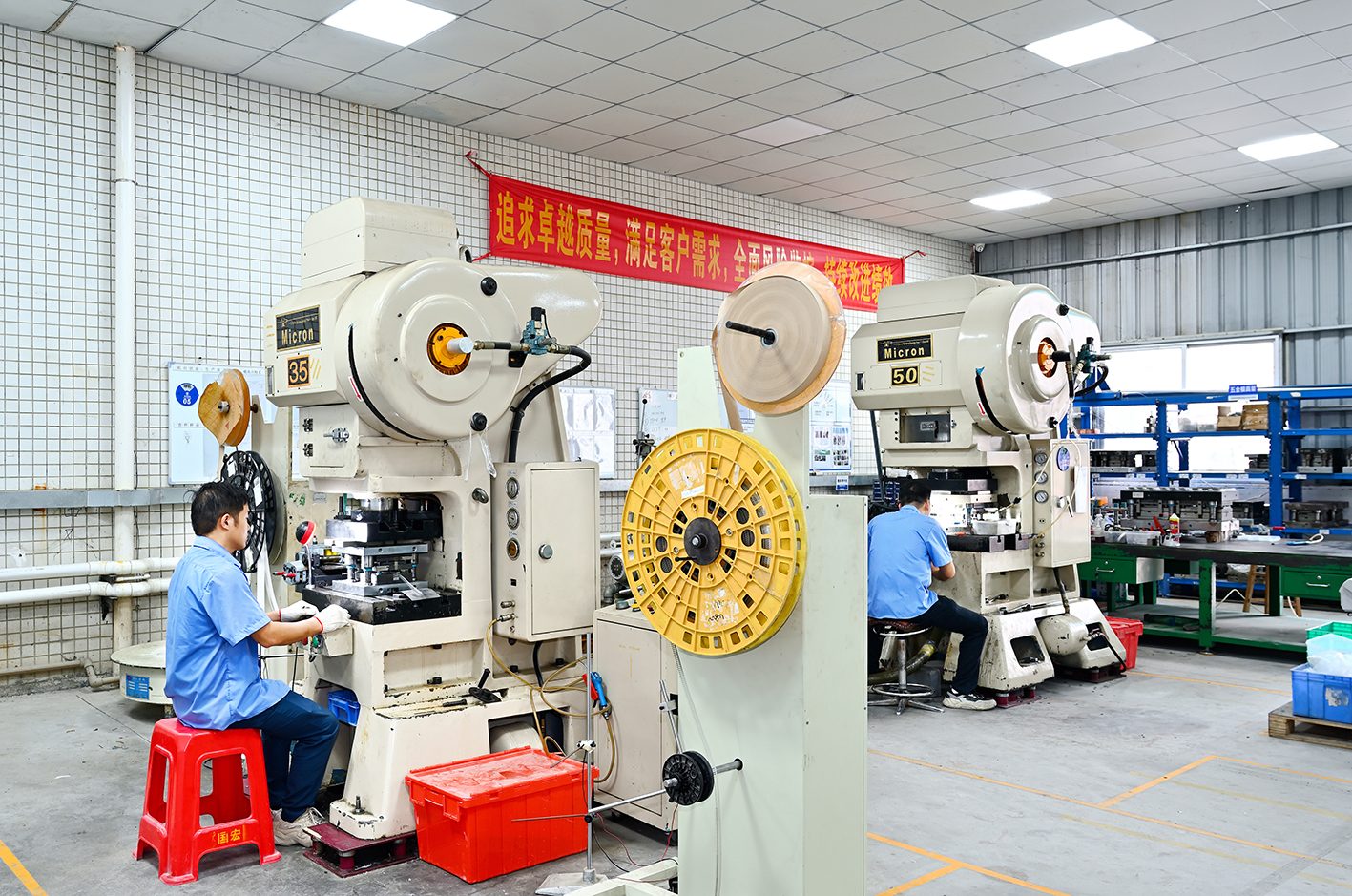
High-speed progressive press line stamping thin aluminum strip
Tolerance Control: ±0.005 mm
IATF 16949 Certified

Trusted Tier-1 & OEM Standards:

IATF 16949:2016 CertifiedISO 14001:2015PPAP DocumentationCMM + In-Line VisionFast DFM Feedback

PARTS WE STAMP

Aluminum Stamping Parts We Run

Aluminum lands on the parts where weight and heat matter: heat sinks, battery brackets, housings, covers and clips. These four families cover most of the stamped aluminum parts that run here, and each one has its own temper, die approach and finishing route. Alloy and temper are settled at DFM, because on aluminum the temper moves the bend, not the other way round.

Heat sinks and thermal plates

Stamped fin heat sinks, thermal spreaders, base plates and shield cans in 1050 and 1060 dead-soft, usually 0.5 to 2.0 mm. Fins are blanked and formed in the die, not machined, so fin height and spacing stay repeatable coil to coil. Flatness at the mounting face is the feature we inspect, because that is what sets thermal contact.

1050 / 1060 O0.5–2.0 mmblanked finselectronics
Battery brackets and busbar supports

EV brackets, module frames, busbar supports and mounting plates from 3003-H14 and 5052-H32, 1.0 to 3.0 mm. These are stiffness parts, so the die is built for bend accuracy rather than deep draw, and hole positions for fasteners are piloted so a stacked assembly still lines up.

3003-H145052-H321.0–3.0 mmEV / energy storage

Housings, covers and shields

Shallow drawn housings, enclosures, covers and EMI shields in 3003 and 5052 from 0.5 to 1.5 mm. Aluminum draws without the galling risk of stainless, but the soft surface marks easily, so the die entry is polished and the visible face runs away from the stripper. Anodizing is applied after stamping through a partner line.

3003 / 50520.5–1.5 mmanodizedEMI & enclosures

Clips, retainers and contact supports

Retaining clips, card guides, contact holders and small brackets in 5052 and 6061-T6. This is where we push back: aluminum is not a spring alloy, so a clip that must hold force over millions of cycles gets moved to stainless or phosphor bronze at DFM instead of quoted in aluminum and left to relax.

5052 / 6061-T6retainersnot a spring alloy

INSIDE THE PLANT

Aluminum Stamping Lines, Tool Room and Inspection Floor

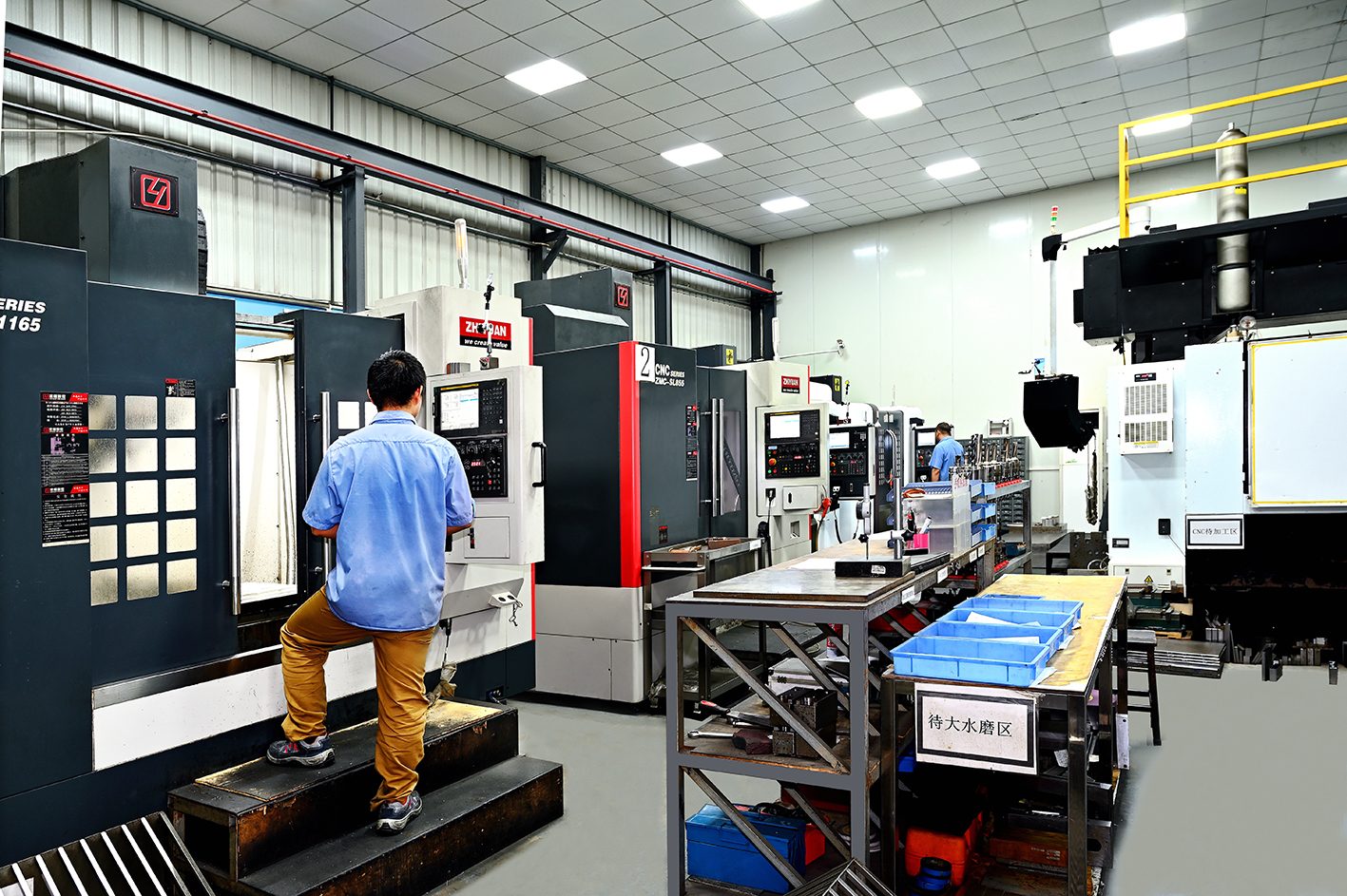
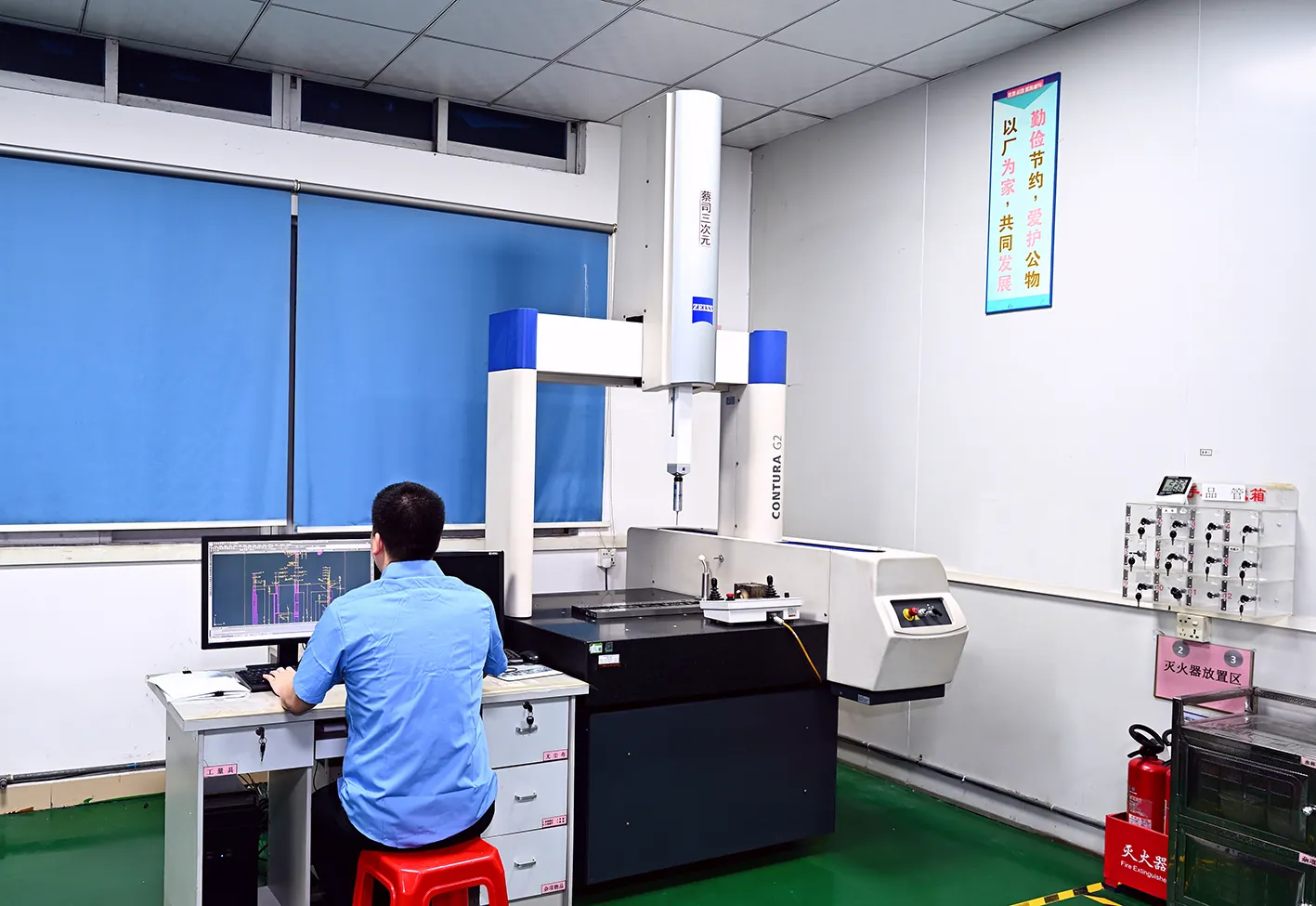
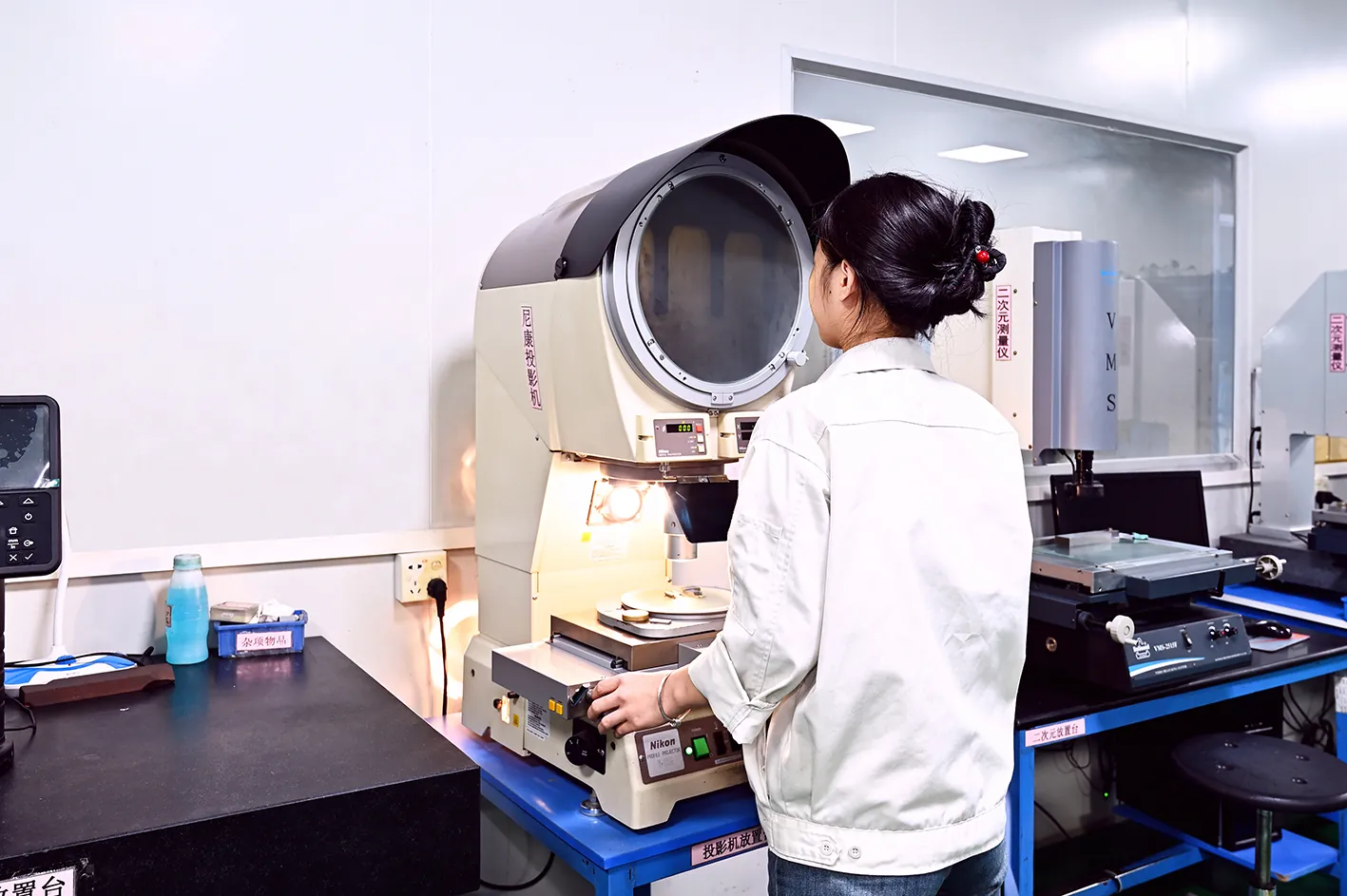
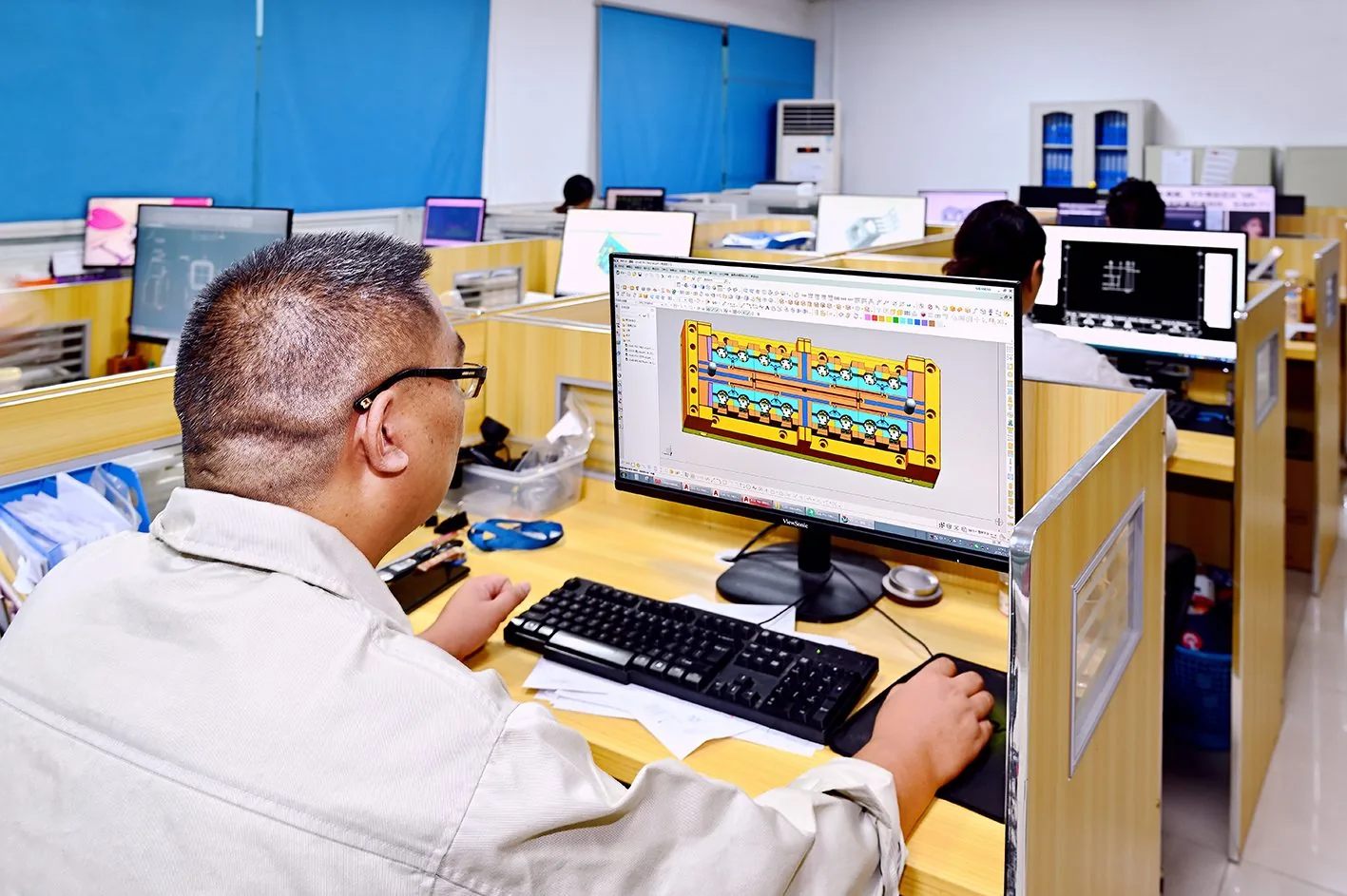
Real equipment and inspection floor from our Dongguan plant — 25–110T high-speed presses, in-house tool room, and a CMM lab running first-article inspection on every program.

Aluminum progressive die stamping running on a high-speed press
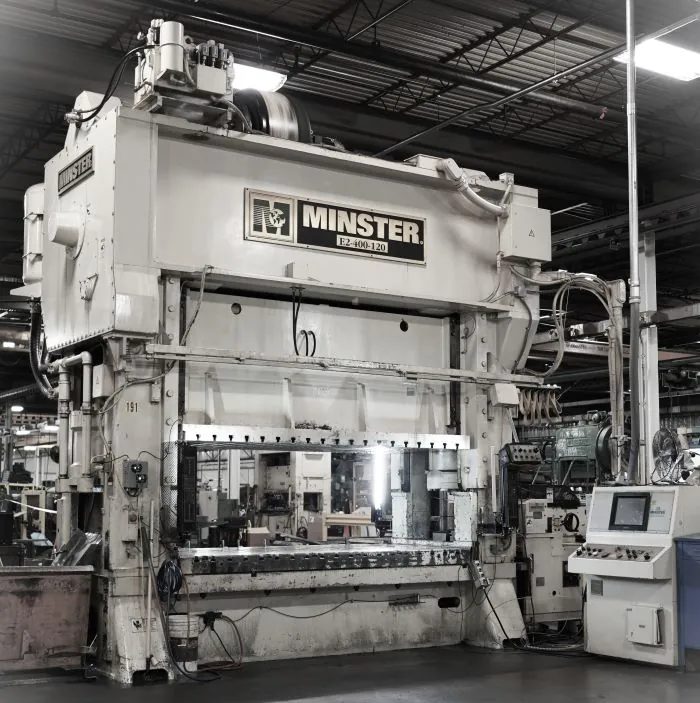
Aluminum Heavy gauge stamping press running progressive dies at the ISTAMPING plant
Aluminum In-house tool room machining progressive die components
Aluminum CMM measuring a stamped component in the in-house quality lab
Aluminum Optical comparator verifying fine blanking edge quality
Aluminum Engineers reviewing progressive die layout DFM before production

WHERE ALUMINUM GOES WRONG

What Makes Aluminum Harder to Stamp Than It Looks

Aluminum is soft, light and cheap to form, which is exactly why it fails quietly: temper drifts between coils, the surface picks up on tool steel, aluminum blanking at 0.05–0.5 mm rolls a burr instead of cutting one, and a heat sink base twists after forming. Four things we engineer out of custom aluminum stampings before production.

01

Springback tracks temper, not the drawing

The Challenge

Springback scales with yield strength over modulus, and aluminum's modulus is about 69 GPa as an industry figure — roughly a third of steel. Dead-soft 1050 and 1060 barely move, while 5052-H32 and 6061-T6 spring back enough to miss a 90° bend by degrees. Same die, same drawing, two tempers, two different parts.

02

Aluminum pickup and galling on the die

The Challenge

Soft aluminum smears onto tool steel, and the oxide that reforms in seconds is abrasive. Once pickup starts, every stroke drags the surface and the part comes out with score marks and a rising burr. On dead-soft 1050 the smear shows up in a few thousand strokes if the die is left bare.

03

Blanking thin soft strip

The Challenge

At 0.05 to 0.5 mm, aluminum shears differently from steel: it tears before it cuts cleanly, burr rolls over on the soft side and slugs pull back up through the die. A punch that is a fraction dull leaves a rolled edge that measures in tolerance and still jams the customer's assembly.

04

Flatness and surface after forming

The Challenge

A long heat sink base or a bracket with two bends does not come off the press flat by default: residual stress from blanking and overbending shows up as twist, and on a thermal part twist is a contact-resistance problem. Soft surfaces also mark at every transfer and in the deburr bowl.

HOW WE STAMP IT

What We Hold in Production

The values we quote on aluminum work and inspect against at first article — matched to what the alloy and temper can actually hold, part by part, not to a rounded number on a brochure.

Specification ParameterWhat We HoldHow It Is Controlled
Strip thicknessCoil certificate plus in-process thickness check
Positional toleranceFirst-article CMM at 0.001 mm resolution
Stamping speedThin-gauge aluminum on the high-speed frames
Press fleetLight heat sinks and covers on the fast frames, 3.0 mm plate on the larger presses
Dies30 machining machines behind the tool room
Quality systemPPAP, mill certificates, lot traceability
InspectionCMM, optical and profile, in-line CCD on fin and hole features
Surface and finishingAnodizing and chromate conversion coating through approved partner lines, first-article and lot checks
TOOL ROOM

Die design and build

Aluminum stamping dies designed, machined and assembled under one roof — where springback, pickup and burr are actually solved rather than blamed on the material.

PRESSES

21 presses, 25–110 tons

Thin aluminum heat sinks and covers on the high-speed frames at up to 300 SPM; brackets and plates from 1.5 to 3.0 mm on the larger presses.

INSPECTION

CMM, optical and CCD

First-article CMM at 0.001 mm, optical and profile for fin geometry and edges, in-line CCD on the features the drawing controls.

FINISHING

Deburr, clean and mark

Vibratory deburring, ultrasonic cleaning and laser marking in-house; anodizing, conversion coating and spray painting handled by approved partner lines.

From Drawing to Production

01

DFM review

Alloy and temper, bend radii, burr side, flatness call-out and finishing route settled before a die is cut.

02

Die build

Progressive layout combining blanking, forming and any straightening stations; die machined and assembled in our tool room.

03

Try-out and first article

Run on the production coil and temper, formed angles and flatness verified on the CMM, PPAP documentation raised.

04

Production and SPC

Counted-stroke tool maintenance, in-line vision on critical features, SPC on the dimensions the drawing controls.

STRIP AND SUPPLY

Aluminum Strip: Tempers, Surfaces and Supply

We are a stamper, not a metal distributor — we do not sell aluminum. Stamped aluminum is quoted as material plus conversion: we choose the alloy and temper the part needs, and the price is coil plus press time. Where a drawing lands as aluminum stamped parts with no grade on it, we ask before we quote.

Temper is the design decision

O, H14, H32 and T6 do not run the same way. Dead-soft 1050 and 1060 draw deep and mark easily — that is the deep-drawable aluminium strip call for housings and cans; 3003-H14 gives stiffness with moderate springback; 5052-H32 holds bends but cracks at tight radii; 6061-T6 resists forming. A temper change mid-program is a die change, not a substitution.

Mill finish or coated

Mill finish is the default when the part gets anodized or painted after stamping, because the finish goes on last and covers handling marks. A stamped aluminum sheet that will be anodized has to leave the press without a stripper rub, so the visible face runs away from the stripper. Pre-painted coil skips the paint line but the die has to protect the coating at every bend; where the part is fed from stamped aluminum sheets rather than coil, blanking and straightening are quoted as separate lines.

You supply or we procure

Either you supply coil to your own specification, or we procure the alloy, temper, width and surface you name and quote material plus conversion with the mill certificate on file. If the alloy is still open, we compare 1050, 1060, 3003, 5052 and 6061 against the bend and stiffness the part needs before tooling.

Grades we run

105010603003505260617075

BEFORE YOU SEND THE DRAWING

DFM Checklist for Aluminum Stampings

Eight checks worth making on custom aluminum stamping drawings before tooling — the ones that decide whether the part runs at rate or fights the die for a year.

  • Bend radius: inside radius at 1× strip thickness or more in O temper, 1.5× in H32 or T6 — soft aluminum tolerates tighter radii than most steel, but H temper cracks on the outside fiber.
  • Springback allowance: name the temper on the drawing, not just the alloy. O and H32 spring back differently enough that a die cut for one misses the other by degrees.
  • Burr side: say which face may carry burr. On heat sink mounting faces and contact flats it usually may not, so the die layout and the deburr route are fixed before quotation.
  • Hole diameter and edge distance: 1× thickness minimum hole, 2× from hole edge to bend line — thin aluminum distorts holes and tears at short edge distances.
  • Fin geometry: keep fin height relative to thickness and the gap between fins inside what a punch can survive, or plan a coined or machined alternative for deep, narrow gaps.
  • Flatness: call out flatness and twist on any base plate or long bracket, and mark the datum face — straightening in the die is a real process cost, not a note.
  • Finishing sequence: state anodize, chromate conversion or paint, and mask the zones that must stay conductive for grounding or contact. Anodizing is an insulator.
  • Dissimilar joints: where the part bolts to steel or carries current into a copper joint, say so — aluminum-to-copper contact needs a clad transition or a plated interface, not bare aluminum against copper.

ORDERING & FAQ

How to Order Aluminum Stampings & Frequently Asked Questions

From drawing to delivered parts: a four-step path with engineering review at the front and 100% dimensional inspection at the back — then the questions buyers ask us most.

Submit CAD & Specs

Send 2D/3D drawings (STEP, DWG, PDF) with quantity, material, and tolerance requirements.

DFM Feedback & Quotation

Our engineering team conducts DFM analysis and follows up with a competitive quote after the review.

Precision Manufacturing

High-speed progressive die stamping, secondary forming, finishing, and surface treatment per your specifications.

100% QC & Express Shipping

100% dimensional inspection, anti-corrosion packaging, and global express delivery.

01

Do you supply the aluminum, or do we?

Either. We are a stamper, not a metal distributor, so we do not sell aluminum. You can supply coil to your own spec, or we procure the alloy, temper, width and surface you name and quote material plus conversion.

02

Which aluminum grades do you stamp?

1050 and 1060 for deep thermal parts, 3003 for housings and brackets, 5052 where bends need strength, 6061-T6 in blank-and-form work, 7075 only in minimal-form blanks. Any other grade gets a stampability check first.

03

What is the thinnest aluminum you can stamp?

0.05 mm at the thin end of our range and 3.0 mm at the heavy end. Thin aluminum runs on the high-speed presses; plate thicknesses go on the larger presses in the fleet.

04

Can you anodize or add a conversion coating?

Anodizing, chromate conversion coating and painting run through approved partner lines; deburring, ultrasonic cleaning and laser marking stay in-house. We mask the zones the drawing calls conductive, because anodizing insulates and will break a ground path.

05

What tolerance can you hold on an aluminum part?

±0.005 mm on piloted positional features, confirmed on the CMM at first article. Formed dimensions carry springback and bend count, so the critical ones are agreed at DFM and held with SPC in production.

06

Should this part be aluminum instead of steel?

Choose aluminum for weight, thermal path or a corrosion-resistant exterior. Skip it where you need stiffness in a thin section, a real spring, or a conductive joint to copper — low modulus and low yield mean a thin aluminum bracket deflects where steel would not.

07

How do you compare with other aluminum stamping companies?

Judge the aluminum stamping suppliers you shortlist on three things: who builds the die, who signs the first-article report, and what happens when a temper drifts mid-coil. Here all three sit in one building, so a temper change is a die adjustment rather than a supplier argument — and the aluminum stamping supplier who quotes you is the one who runs the press.

08

Is it aluminium stamping or aluminum stamping?

The same process, two spellings. Aluminium stamping is what UK, EU and Commonwealth drawings say; aluminum stamping is the US spelling that dominates trade searches. Both land on the same die — the aluminium stamping parts we ship are held to the same tolerance either way.

09

Do you take on prototype aluminum stamping and short runs?

Yes. Prototype aluminum stamping runs from soft tooling or laser-cut blanks formed on a brake — enough to prove form, fit and finish before a progressive die is committed. Once volume is there, custom aluminum stamped parts move onto a hard die and run at rate.

10

Is aluminum progressive stamping the right route for heat sinks?

Most of the time. Progressive stamping aluminum suits parts that need blanking, fin forming and trim in one pass, because fin height and spacing stay repeatable coil to coil. On a simple bracket at low volume a compound die or a turret punch is cheaper and we say so. For aluminum metal stamping parts that combine a formed edge with a coined flat, the progressive route is usually the only one that holds flatness at rate.

Ready to Start Your Precision Stamping Program?

Send your drawing today — engineering runs a free DFM review and detailed pricing follows the review.

100% Confidential | NDA Protected | 24H Response