ISTAMPING

Beryllium Copper Stamping — ±0.005 mm on 0.05–3.0 mm strip, up to 300 SPM

Progressive die stamping of beryllium copper C17200 contact springs, battery blades and EMI grounding fingers, with dies built in our own tool room, run on 21 presses from 25 to 110 tons at up to 300 SPM, held to ±0.005 mm on piloted features and age hardened after forming.

  • 0.05–3.0 mm strip
  • ±0.005 mm positional
  • up to 300 SPM
  • aged AT/TD after forming

Fast Engineering ResponseNDA ProtectedSTEP / IGES / X_T / DWG

Beryllium copper battery contact and spring fingers stamped on a progressive die
Tolerance Control: ±0.005 mm
IATF 16949 Certified

Trusted Tier-1 & OEM Standards:

IATF 16949:2016 CertifiedISO 14001:2015PPAP DocumentationCMM + In-Line VisionFast DFM Feedback

PARTS WE STAMP

What We Stamp in Beryllium Copper

Beryllium copper is specified where a part must carry current and hold spring force at the same time. These are the four families that run here most often, each with its own temper call-out, age hardening route and inspection plan.

Battery and charging contacts

Spring-loaded battery blades, charging contacts and pogo-style pads from C17200 in the aged temper, mostly 0.1 to 0.8 mm. The forming happens in solution-annealed strip so the fingers can be drawn without cracking, then the part is aged to full spring, and the contact dome is nickel or gold plated only where it mates.

C17200AT aged0.1–0.8 mmgold on contact

EMI grounding fingers and shield tabs

Grounding fingers, gaskets and shield contact tabs from C17510 where the drawing needs lower force and better conductivity, and C17200 where the finger has to survive repeated deflection. Fingers are formed as one piece with the can or carrier so there is no secondary riveting, and deflection at assembly is checked at first article.

C175100.08–0.3 mmnickelEMI cans

Relay and switch springs

Relay leaves, snap-action springs and switch blades where the spring force has to stay inside a band for the life of the unit. C17200 at 1,200 MPa typical aged strength keeps that force through reflow, and the die is compensated for the grain direction so bend height does not drift from coil to coil.

C17200AT / TD0.1–0.5 mmreflow safe

Connector, micro-pin and probe terminals

Socket terminals, micro-pins and test-probe barrels down to 0.05 mm strip, where the contact has to take thousands of insertions without losing normal force. Small features are pierced in one hit with in-die sensing on the station, and burr is kept off the mating face so probe resistance stays stable.

C173000.05–0.4 mmselective goldtest probes

INSIDE THE PLANT

Beryllium Copper Stamping Lines, Tool Room and Inspection Floor

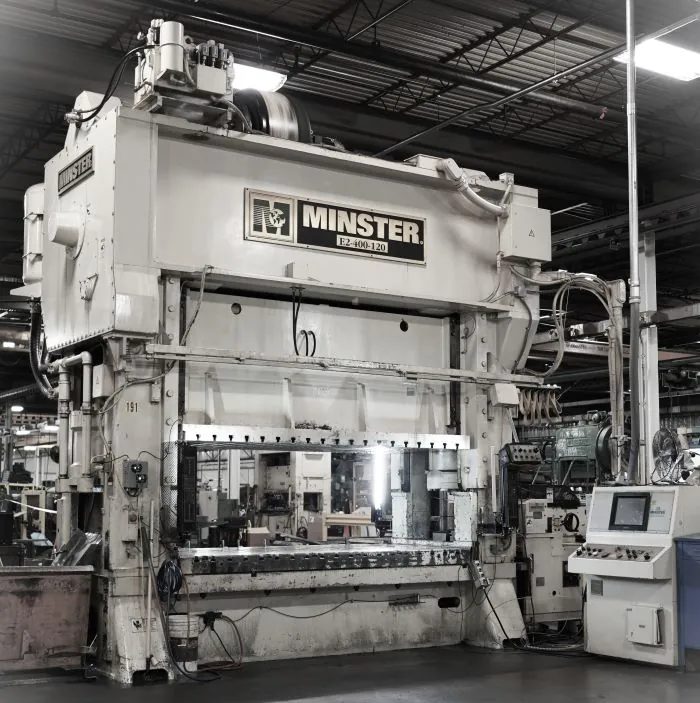
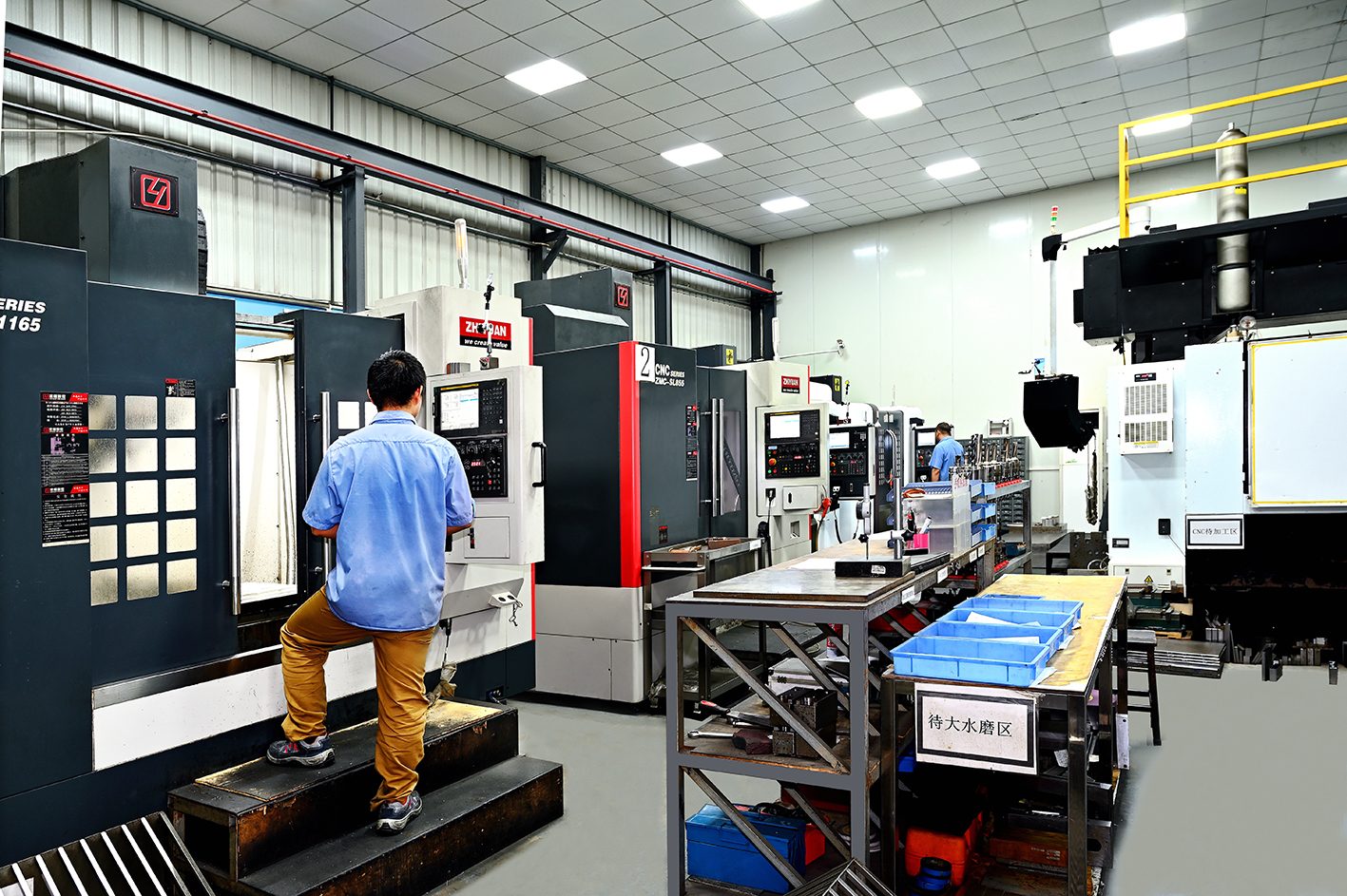
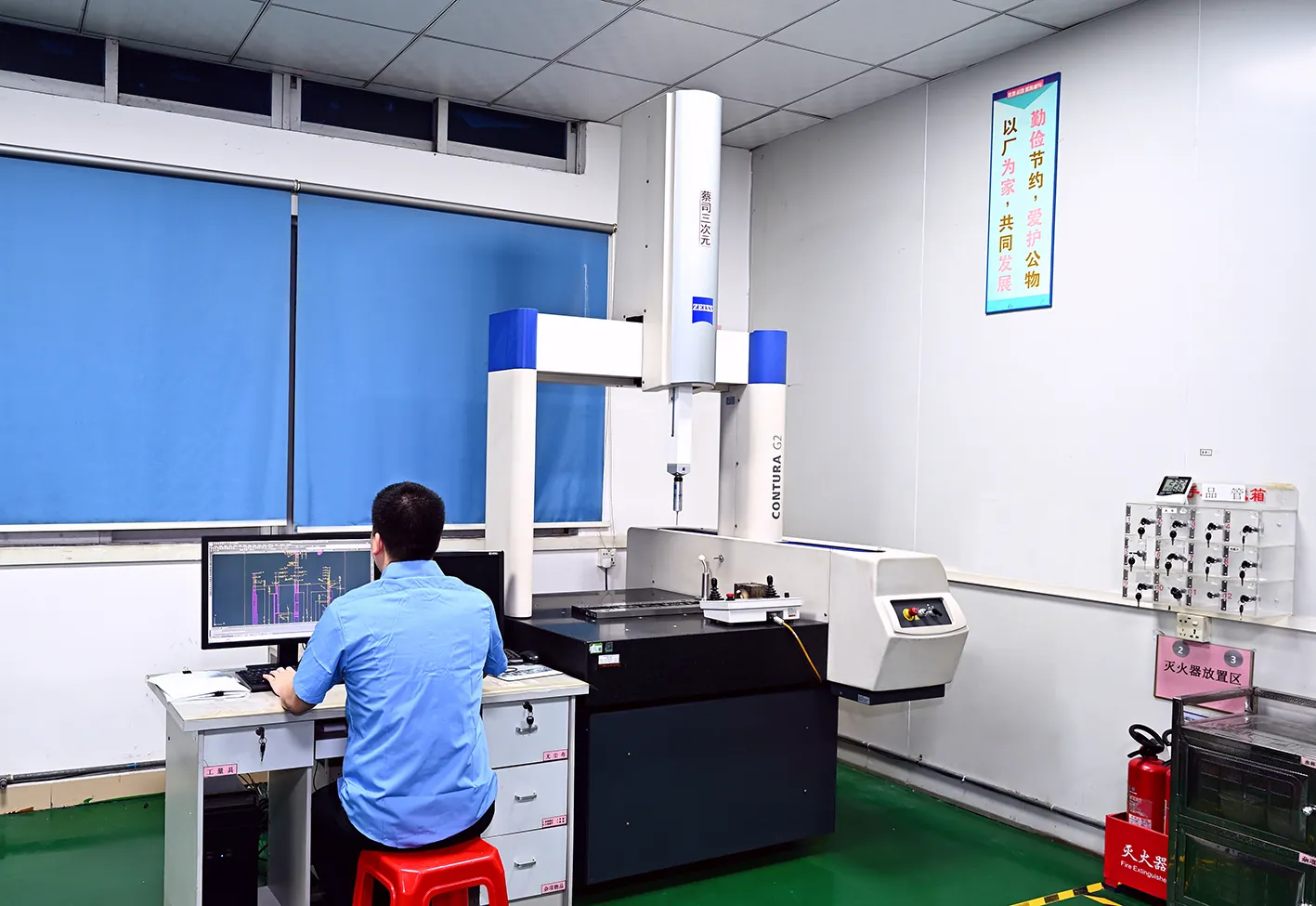
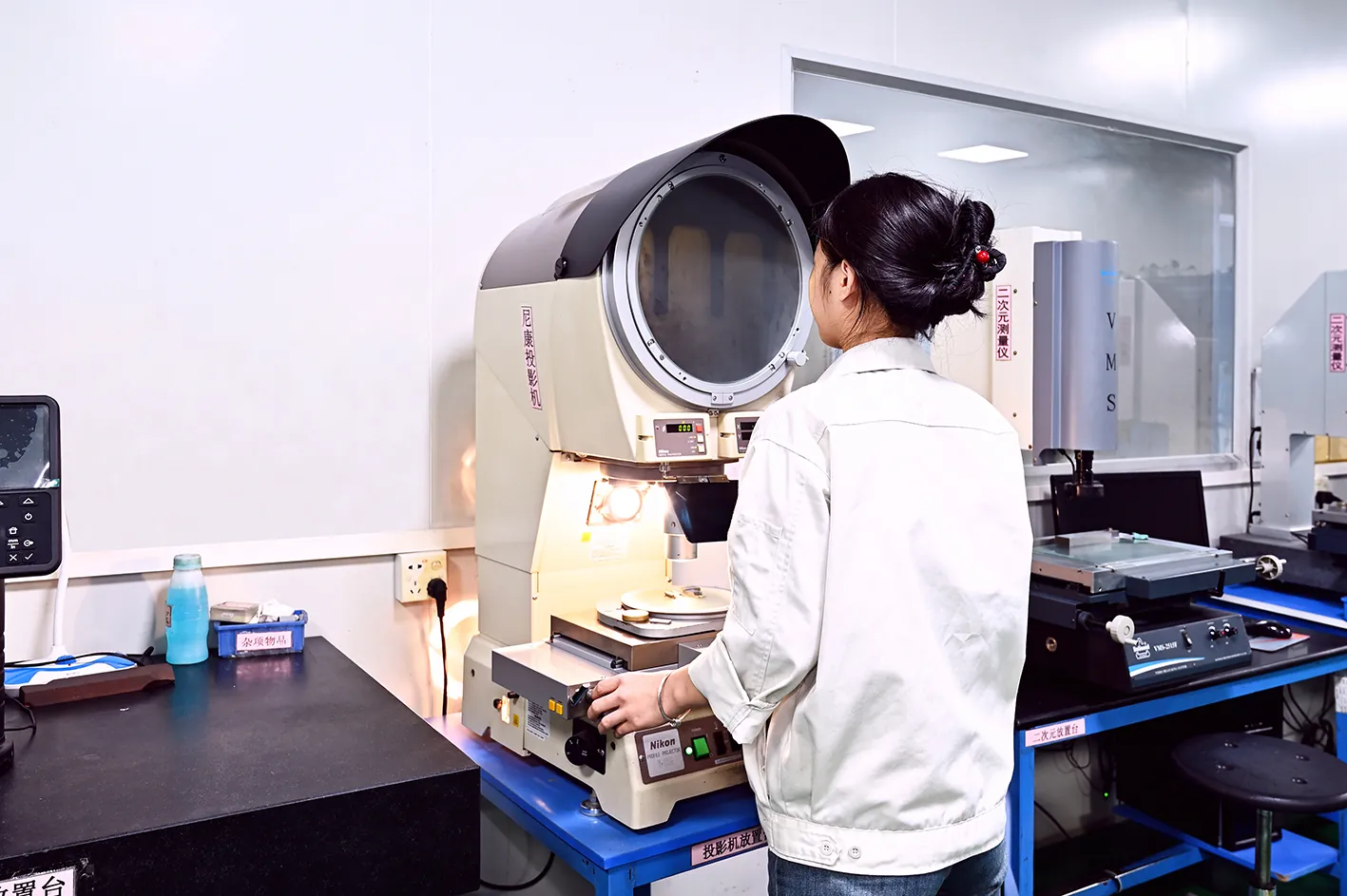
Real equipment and inspection floor from our Dongguan plant — 25–110T high-speed presses, in-house tool room, and a CMM lab running first-article inspection on every program.

Beryllium Copper progressive die stamping running on a high-speed press
Beryllium Copper Heavy gauge stamping press running progressive dies at the ISTAMPING plant
Beryllium Copper In-house tool room machining progressive die components
Beryllium Copper CMM measuring a stamped component in the in-house quality lab
Beryllium Copper Optical comparator verifying fine blanking edge quality
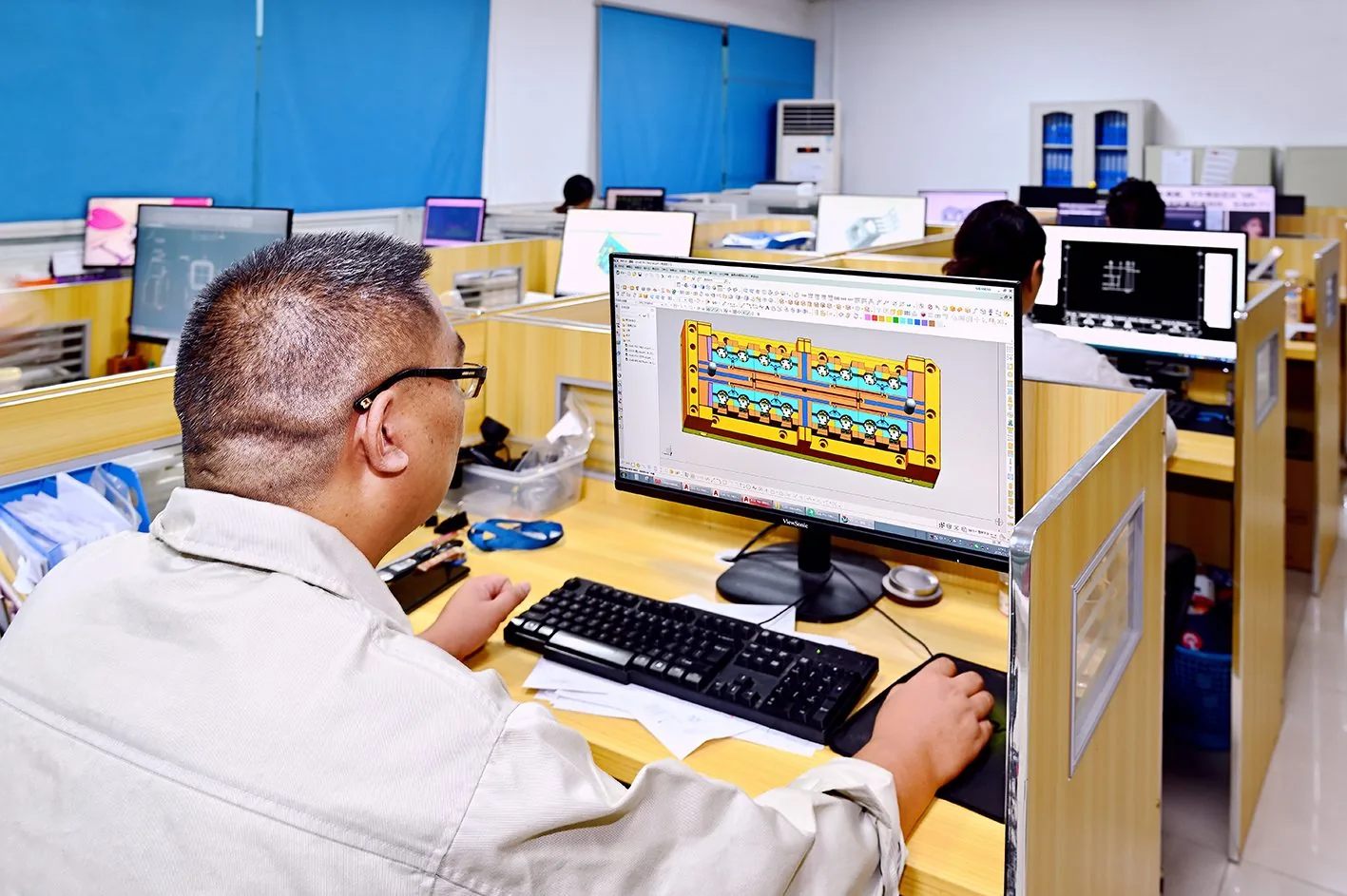
Beryllium Copper Engineers reviewing progressive die layout DFM before production

WHERE BERYLLIUM COPPER GOES WRONG

What Makes Beryllium Copper Harder to Stamp Than It Looks

Beryllium copper punishes a die built for phosphor bronze: it arrives soft, hardens only after aging, and moves dimension when it does. Add beryllium dust rules and a price that ends the argument early, and these are the four points we settle before tooling.

01

You cannot form it in the tempered state

The Challenge

Order C17200 in the AT or TD temper and try to form a 0.2 mm finger and the outside fibre cracks. The alloy is meant to be formed in the solution-annealed state, where it is soft and ductile, and hardened afterwards. Dies cut for aged strip fail, and so do bend radii borrowed from phosphor bronze.

02

Aging moves dimensions and hardness together

The Challenge

Age hardening at temperature is a heat treatment, not a bake: the part grows slightly, loses flatness if it is unsupported, and oxidizes on bare copper faces. Run the aging step loose in a basket and a 0.15 mm flat blade comes back bowed, with the critical formed height no longer inside the tolerance band.

03

Beryllium dust is the real hazard, not the strip

The Challenge

Solid beryllium copper strip is safe to handle, but grinding, sanding or dry machining it releases respirable beryllium particulate, and that is where the health risk sits. A shop that deburrs aged parts on a belt or touches up edges by hand creates the exposure, and the controls are not optional.

04

Aged strip eats punches and hides burr

The Challenge

C17200 at 1,200 MPa works the punch and die harder than brass or phosphor bronze, so clearance opens and edges round sooner than the toolroom expects. The measurement problem is worse: a worn punch shows up as burr on the contact face while the part still gauges inside ±0.005 mm.

HOW WE STAMP IT

What We Hold in Production

These are the values we quote and inspect on beryllium copper work, including the aging step that is not part of a phosphor bronze job.

Specification ParameterWhat We HoldHow It Is Controlled
Strip thicknessCoil certificate plus in-process thickness check
Positional toleranceFirst-article CMM at 0.001 mm resolution
Stamping speedPress and feed matched to the part, not to the calendar
Press fleetThin contacts on high-speed frames, heavier strip on larger presses
Dies30 machining machines behind the tool room
Quality systemPPAP, mill certificates, lot traceability through aging and plating
InspectionCMM, optical and profile, in-line CCD; hardness tested on every aged lot
Age hardeningQualified heat treat partner, flat fixtures, hardness report per lot
TOOL ROOM

Die design and build

Progressive die design, machining and assembly under one roof, with bend compensation set for annealed strip and the aging growth allowance built into the tool.

PRESSES

21 presses, 25–110 tons

Thin beryllium copper contacts on the high-speed frames at up to 300 SPM, heavier strip from 1.5 to 3.0 mm on the larger presses, all with in-die sensing.

HEAT TREAT

Age hardening, managed

Solution-annealed strip is formed here, then aged at a qualified partner line on flat fixtures, with hardness tested per lot and the report shipped with the parts.

INSPECTION

CMM, optical and CCD

First-article CMM at 0.001 mm, optical and profile on edges and radii, in-line CCD on the contact features, hardness testing after every aging cycle.

From Drawing to Production

01

DFM review

Strip state, temper, grain direction against the bend line, bend radii, burr side, tolerance stack, aging allowance and plating sequence settled before a die is cut.

02

Die build

Progressive layout with piercing, forming and in-die sensing combined, machined and assembled in our tool room, compensated for annealed strip rather than aged strip.

03

Try-out and first article

Run on production coil in the forming temper, aged, then measured: CMM on the formed features, hardness on the aged lot, PPAP documentation raised.

04

Production and SPC

Counted-stroke tool maintenance, in-line vision on contact features, SPC on the dimensions the drawing controls, hardness checked on each aging lot.

STRIP AND SUPPLY

Beryllium Copper Strip: States, Tempers and Supply

We are a stamper, not a metal distributor. What we do is buy the right state of strip for the forming step and quote material plus conversion, aging included.

State first, then grade

C17200 (1.9% Be) is the strength answer at 1,100 to 1,300 MPa aged; C17510 (0.4% Be) trades some of that for 45 to 60% IACS where the part also carries current; C17410 and C17460 are the lower-beryllium strip grades for volume contacts. Order in the annealed state.

Surface and pre-plate

Mill finish, nickel-pre-plated and selective-gold strip all run here, but the sequence matters: aging happens before plating, because the aging temperature oxidizes bare copper and can blister a pre-plate. A drawing that pre-plates and then demands a full-hard part gets a DFM question.

You supply or we procure

Either you supply coil to your own specification or we buy the grade, state, width and surface you name, with the mill certificate on file. Expect a real premium over phosphor bronze in both price and lead time, so we say so before tooling.

Grades we run

C17200 (1.9% Be, highest strength)C17510 (0.4% Be, higher conductivity)C17300 (free-machining BeCu)C17410 (low-beryllium strip)C17460 (low-beryllium strip)

BEFORE YOU SEND THE DRAWING

DFM Checklist for Beryllium Copper Stampings

Eight points worth settling on a beryllium copper drawing before tooling, starting with the one that decides the whole route: which state you form in.

  • Order strip in the solution-annealed state → forming a 1,100 to 1,300 MPa part in the aged temper cracks the outside fibre at any radius a spring actually needs.
  • Call out final temper and the aging step on the drawing → the stamper and the heat treater have to agree who ages the part and to what hardness.
  • Bend radius at 1× strip thickness or more in the annealed state → tighter radii work in soft strip but thin the outside of the bend and start orange-peel.
  • Bend line across the rolling direction → bending along the grain concentrates strain at the edge and shortens fatigue life on a vibrating contact.
  • Hole-to-bend distance of 2× strip thickness minimum → closer than that, the hole distorts as the bend forms and the pilot cannot locate it.
  • Name the burr-free face → on a contact or probe tip the burr is the electrical interface, and the die layout has to know before punches are cut.
  • Give the aging allowance on critical formed dimensions → the part grows in the aging cycle, so the tool has to aim at a soft-state number, not the print.
  • State the plating sequence and zone → aging before plating, gold only on the mating face, and no abrasive deburr after the part is hardened.

ORDERING & FAQ

How to Order Beryllium Copper Stampings & Frequently Asked Questions

From drawing to delivered parts: a four-step path with engineering review at the front and 100% dimensional inspection at the back — then the questions buyers ask us most.

Submit CAD & Specs

Send 2D/3D drawings (STEP, DWG, PDF) with quantity, material, and tolerance requirements.

DFM Feedback & Quotation

Our engineering team conducts DFM analysis and follows up with a competitive quote after the review.

Precision Manufacturing

High-speed progressive die stamping, secondary forming, finishing, and surface treatment per your specifications.

100% QC & Express Shipping

100% dimensional inspection, anti-corrosion packaging, and global express delivery.

01

Do you supply the beryllium copper, or do we?

Either. We are a stamper, not a distributor, so we do not sell metal. You can supply coil to your own spec, or we buy the grade, state and width you name and quote material plus conversion.

02

Which beryllium copper grades do you run?

C17200 is the one we see most, with C17510 for higher conductivity, C17300 where a machined feature is involved, and C17410 or C17460 where a lower-beryllium strip grade suits the volume. Send the spec and we confirm before quoting.

03

What is the thinnest beryllium copper you can stamp?

0.05 mm at the thin end, 3.0 mm at the heavy end. Thin fingers run on the high-speed presses and heavier strip moves to the larger frames, and thin parts need annealed stock plus tight burr control.

04

Can you work with pre-plated strip?

Sometimes, but the order matters. Aging runs before plating, because the aging temperature oxidizes bare copper and can blister a pre-plate. If the drawing pre-plates and also calls for full-hard properties, we raise it at DFM.

05

What tolerance can you hold on a beryllium copper part?

±0.005 mm on piloted positional features and ±0.01 mm on formed dimensions, verified on a CMM after aging rather than before. Aging moves the part, so critical formed dimensions are agreed at DFM and held with SPC.

06

Beryllium copper or phosphor bronze?

Phosphor bronze covers most spring contacts at a fraction of the price and lead time. Specify beryllium copper when the part needs over 1,000 MPa, has to survive solder reflow without relaxing, or carries current and force at once.

Ready to Start Your Precision Stamping Program?

Send your drawing today — engineering runs a free DFM review and detailed pricing follows the review.

100% Confidential | NDA Protected | 24H Response