
Waterjet Services
Waterjet services at ISTAMPING deliver fast, tool-free precision cutting of metal parts using high-pressure abrasive water. The cold process cuts nearly any material without heat-affected zones, making it ideal for prototypes, low-volume runs and thick materials that are difficult to stamp. Engineering support is included on every order.
- Wide material range
- Thick and hard material cutting
- Cold process edge quality
- Production-grade quality control
- Integrated plant and tooling support
Fast Response within 2 HoursNDA ProtectedSTEP / IGES / X_T / DWG
Trusted Tier-1 & OEM Standards:
SERVICE SCOPE & CAPABILITIES
Waterjet Services: What We Cover
Waterjet services at ISTAMPING deliver fast, tool-free precision cutting of metal parts using high-pressure abrasive water. The cold process cuts nearly any material without heat-affected zones, making it ideal for prototypes, low-volume runs, and thick materials that are difficult to stamp, with engineering support included on every order.
CORE CAPABILITIES
Capabilities
- Wide material range
- Thick and hard material cutting
- Cold process edge quality
- Production-grade quality control
- Integrated plant and tooling support
APPLICATIONS
Applications
- Prototype terminals and contacts
- Brackets and mounting plates
- Thick copper busbars and heat sink plates
- Gaskets, spacers, and structural details
- Pilot runs and replacement parts
DFM & ENGINEERING SUPPORT
Design for Manufacturability, Built In
Before tooling starts, our engineers review your drawing for material, tolerance, bend, and volume economics — and lock the process that will hold it across millions of strokes.
What We Review in Your Drawing
Edge taper on thick plate
The waterjet stream widens slightly as it passes through thick material, creating a small taper on the edge. Cutting speed, abrasive feed and nozzle control keep the taper within the part's tolerance band, and first articles are verified with optical measurement before the run is released.
Reflective and hard alloys
Copper, aluminum and hardened alloys defeat laser cutting but cut cleanly with abrasive water because erosion ignores reflectivity and hardness. The cold process also preserves the material's temper and leaves no heat-affected zone on thin sections.
Prototype-to-production transfer
A waterjet prototype only helps if it can become a stamped part. The engineering team reviews the geometry against progressive die constraints, bend radii, minimum feature sizes and tolerance capability, so the validated prototype is die-ready when volume justifies tooling.
DFM to Production Flow
Submit CAD geometry
Waterjet cutting starts from your CAD geometry, which carries the full part definition.
Generate the cutting program
The CAD file is converted into a cutting program for the waterjet table.
Cut with abrasive waterjet
A high-pressure stream of water mixed with abrasive garnet erodes the material along the programmed path.
Optimize the run layout
Thin sheet is stacked and cut in layers for efficient runs, while thick plate is cut in a single pass.
Deliver cold-cut parts
The cold process leaves no heat-affected zone, no thermal distortion, and no change to the metallurgy of the edge.
Get a DFM Review of Your Part
Send us your 2D/3D drawing — receive a free DFM analysis and quote within 24 hours.
STEP / IGES / X_T / DWG / PDF
TECHNICAL CAPABILITIES
Waterjet Services: Specifications & Equipment
Part Specifications
| Specification Parameter | Automotive & EV Standard | High-Precision Custom |
|---|---|---|
| Process | Abrasive waterjet cutting (cold process) | Per drawing |
| Materials | Nearly any material | Per drawing |
| Best For | Prototypes, low volume, thick materials | Per drawing |
| No Tooling | No die design or production required | Per drawing |
Press & Equipment
Pressure
High-pressure abrasive water
Integration
Complements stamping & prototyping
Production Process
Submit CAD geometry
Waterjet cutting starts from your CAD geometry, which carries the full part definition.
Generate the cutting program
The CAD file is converted into a cutting program for the waterjet table.
Cut with abrasive waterjet
A high-pressure stream of water mixed with abrasive garnet erodes the material along the programmed path.
Optimize the run layout
Thin sheet is stacked and cut in layers for efficient runs, while thick plate is cut in a single pass.
MATERIALS & COMPLIANCE
Materials We Stamp & Compliance Documents
Every program ships with material traceability and the quality documents buyers need for automotive and EV supply chains.
Brass
Common Alloys
Finishing
Copper
Common Alloys
Finishing
Phosphor Bronze
Common Alloys
Finishing
Need a Specific Alloy or Coating?
Tell us the material grade and finish — we confirm availability and certification before quoting.
🔒 MTC / CoC / RoHS available per lot
QUALITY ASSURANCE & INSPECTION
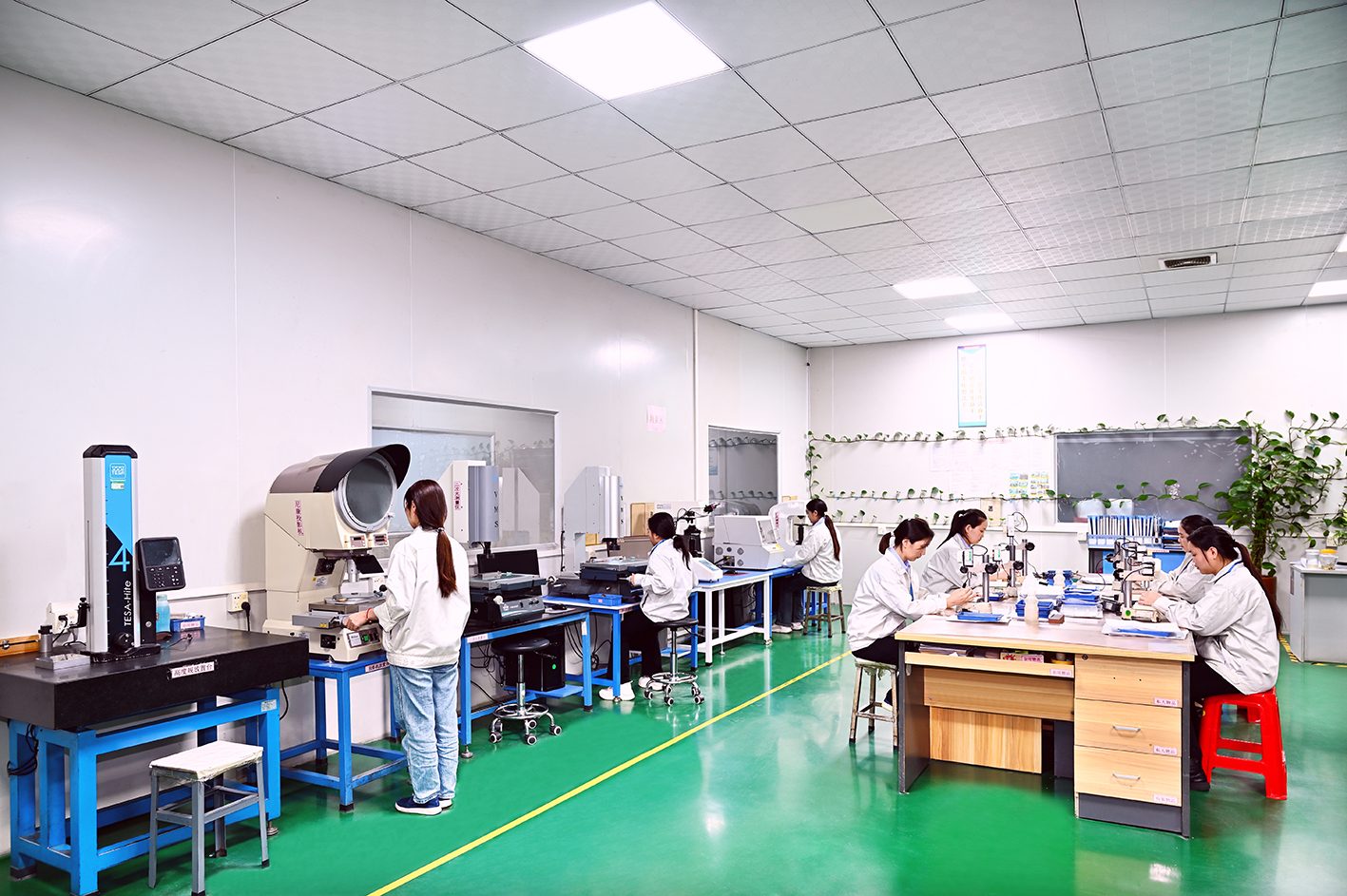
In-House Quality Lab, Verified on Every Lot
IATF 16949:2016 certified with CMM, optical measurement and in-line vision inspection at press speed.
 🔬 Inspection Hardware
In-House Quality Lab
- CMM & optical measurement for flat and 3D parts
- In-line vision systems inspecting at press speed
- SPC on critical features to catch drift as a trend
 🎯 Quality Standards
IATF 16949:2016 Certified
- IATF 16949:2016 automotive quality management
- ISO 14001:2015 environmental management
- PPAP documentation for automotive & EV programs
📜 TraceabilityFull Lot Traceability
- First-article inspection against the drawing
- Lot-level material traceability back to the coil
- Inspection records on every shipment
Download Sample Quality Control & Inspection Reports
Review our standard CMM inspection sheet, Material Composition Certificate, and RoHS report templates.
INDUSTRY CASES
Case Studies for Waterjet Services
EV Battery · Case Study
EV Busbar Case Study: Battery Pack Interconnects
High-volume busbar stamping for EV battery pack interconnects — tolerance, plating and delivery evidence.
Read the Case Study →Automotive · Case Study
Progressive Die Case Study: Automotive Terminal Program
A multi-million-piece terminal program run on progressive dies with SPC and PPAP evidence.
Read the Case Study →EV Charging · Guide
EV Charging Connector Stamping Guide
How precision stamping serves EV charging connector programs — materials, tolerances and plating.
Read the Case Study →ORDERING PROCESS & FREQUENTLY ASKED QUESTIONS
How to Order Waterjet Services & Frequently Asked Questions
📁 Step 1
Submit CAD & Specs
Send 2D/3D drawings (STEP, DWG, PDF) with quantity, material, and tolerance requirements.
⏱️ Step 2
24H DFM & Quotation
Our engineering team conducts DFM analysis and provides a competitive quote within 24 hours.
⚙️ Step 3
Precision Manufacturing
High-speed progressive die stamping, secondary forming, finishing, and surface treatment per your specifications.
✈️ Step 4
100% QC & Express Shipping
100% dimensional inspection, anti-corrosion packaging, and global express delivery.
What materials can waterjet cut?
Nearly any material. ISTAMPING cuts copper alloys such as C11000, C5191 and C5210 phosphor bronze, brass, aluminum, carbon and stainless steel, titanium and exotic alloys, in thicknesses from thin sheet to heavy plate. Because the process is cold, there is no heat-affected zone and no metallurgical change to the edge.
How is waterjet different from laser cutting?
Laser cutting introduces a heat-affected zone and reflects off copper and aluminum; waterjet is a cold abrasive process that cuts reflective and hard materials cleanly. Laser is faster on thin carbon steel, while waterjet handles thick sections and a wider material range with no thermal distortion.
Do I need tooling for waterjet parts?
No. Parts are cut directly from CAD geometry, so there is no die design, no tooling lead time and no tooling investment. That is what makes waterjet the fastest path to functional parts, design iterations and short production runs.
Can waterjet prototypes move into stamping production?
Yes, that is the standard flow. Validate the design with waterjet parts, then transition to progressive die stamping when volume justifies the tooling investment. ISTAMPING does both in one plant, so the geometry, the engineering team and the quality system stay the same.
What quality checks apply to waterjet parts?
The plant is certified to IATF 16949:2016. First articles are measured with CMM and optical systems in the quality lab, cut edges are checked against the drawing, and material certificates and inspection reports are delivered with the order.
What volumes make sense for waterjet?
Waterjet is most economical for prototypes, low-volume production and thick or hard materials where a die would never pay back. From single pieces to short series there is no minimum quantity penalty; when volume grows past the tooling break-even point, the same parts move to high-speed stamping.
Ready to Start Your Precision Stamping Program?
Send your drawing today for a free DFM review and detailed quotation within 24 hours.
🔒 100% Confidential | NDA Protected | 24H Response
RELATED PRODUCTS
Recommended for This Service
Brackets
Brackets are structural stamped components used to mount, support or secure parts in applications across buildings, automotive, electronics and appliances.
View Product Specs →Bent Busbars
Bent busbars are formed copper conductors with complex 3D geometry - multi-plane bends, offsets and twist forms that route power around obstacles in tight assemblies.
View Product Specs →Bus Bars
Busbars are flat conductive strips used to distribute electrical power within battery packs, power distribution units, inverters and charging infrastructure.
View Product Specs →