
Progressive Die High Speed Stamping
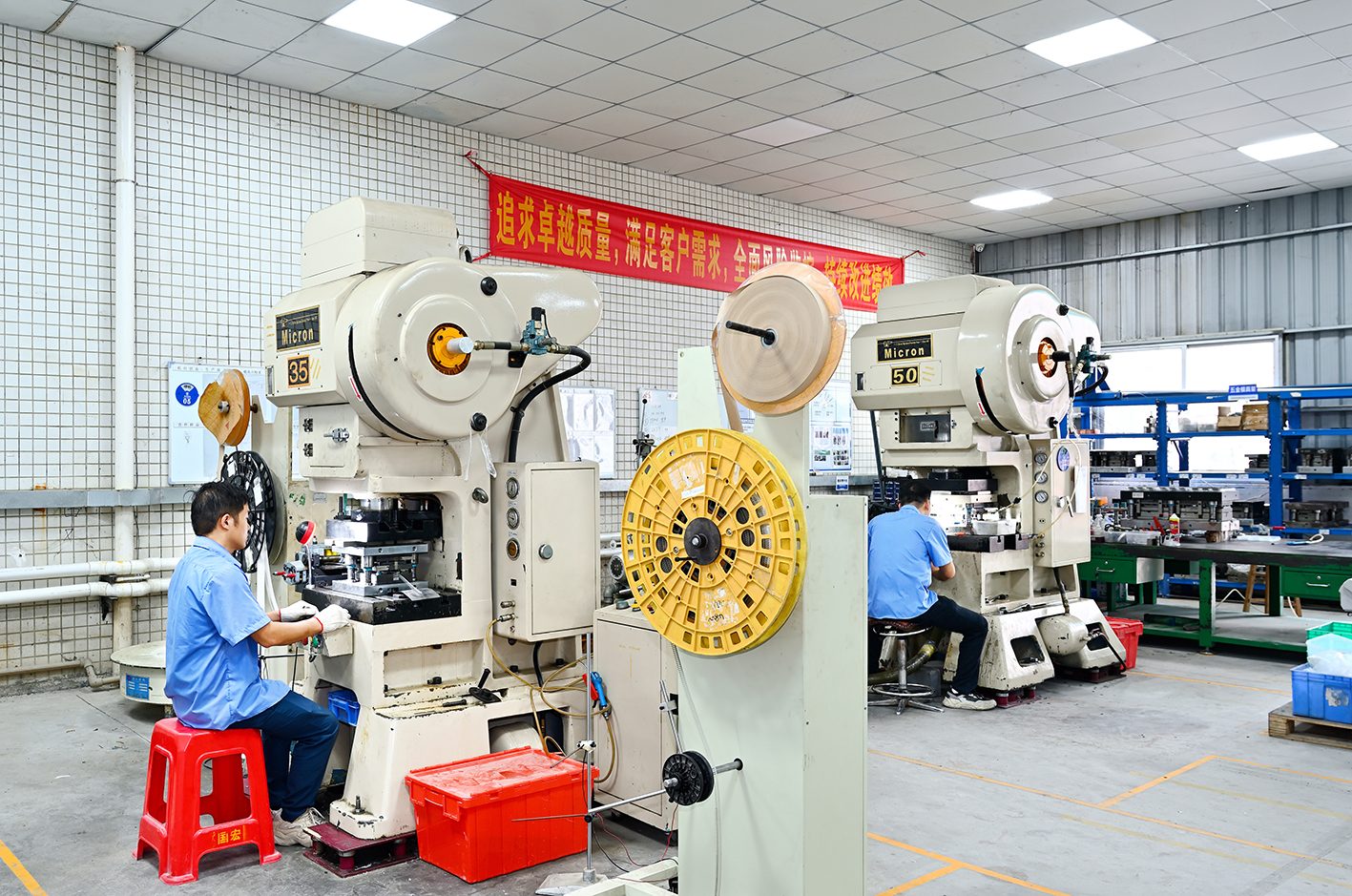
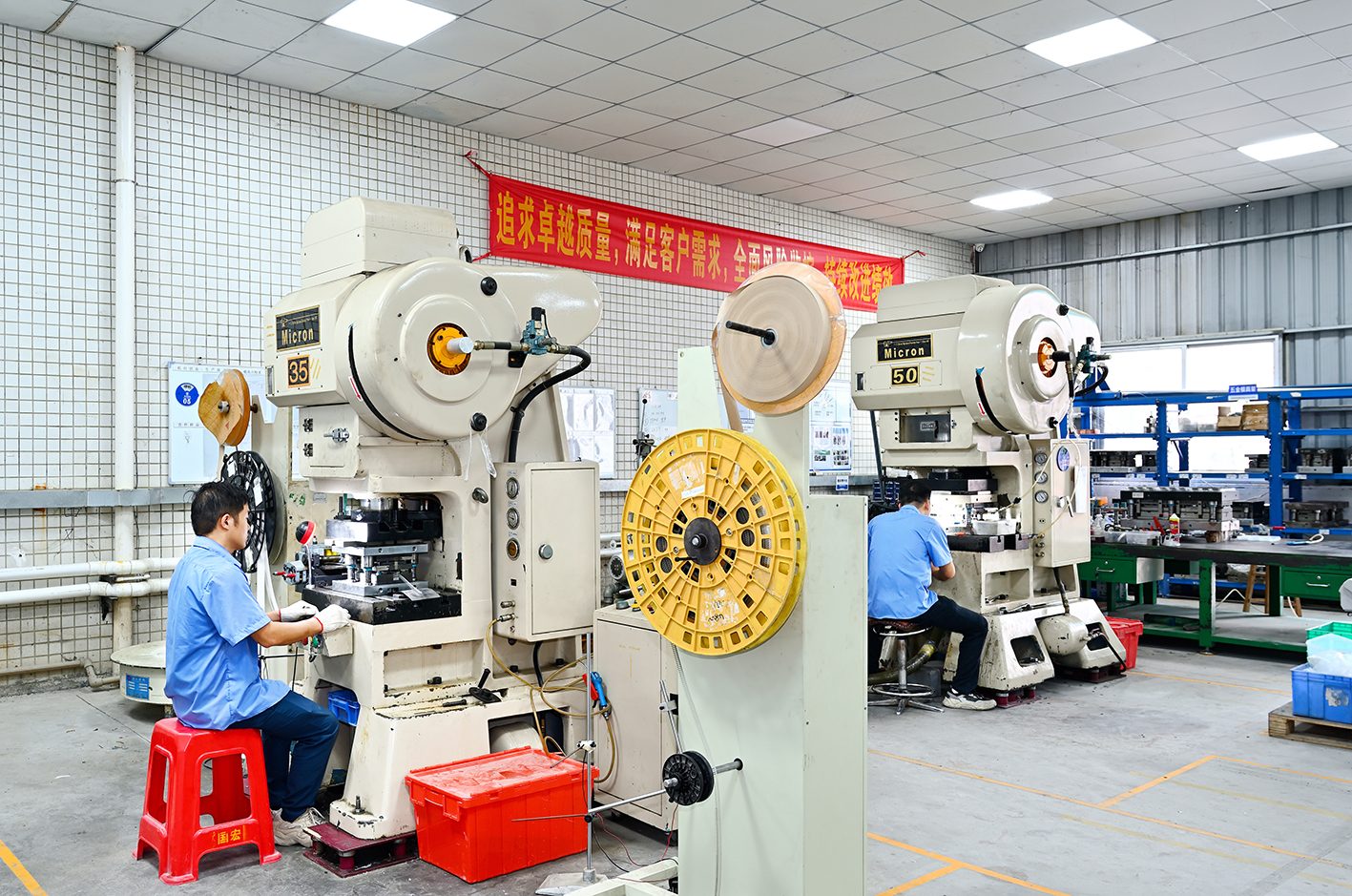
High-speed progressive die stamping delivers multi-million-piece precision metal parts at up to 300 strokes per minute on 25 to 80 ton Aida presses. ISTAMPING engineers, builds and runs every die in-house, stamping copper alloys, brass, aluminum, steel and exotic alloys from 0.05 mm to 3.0 mm strip.
- Wide material range
- Tight tolerance control
- High-speed press fleet
- In-die secondary operations
- In-line quality inspection
Fast Response within 2 HoursNDA ProtectedSTEP / IGES / X_T / DWG
Trusted Tier-1 & OEM Standards:
SERVICE SCOPE & CAPABILITIES
Progressive Die High Speed Stamping: What We Cover
High-speed progressive die stamping produces multi-million-piece precision metal parts at up to 300 strokes per minute on high-speed presses rated 25 to 110 tons, with ±0.005 mm positioning accuracy, automated coil feeding and fully in-house tooling.
CORE CAPABILITIES
Capabilities
- Wide material range
- Tight tolerance control
- High-speed press fleet
- In-die secondary operations
- In-line quality inspection
APPLICATIONS
Applications
- Automotive terminals
- Lead frames
- Shielding cans and EMI parts
- Connectors and contacts
- EV battery components
DFM & ENGINEERING SUPPORT
Design for Manufacturability, Built In
Before tooling starts, our engineers review your drawing for material, tolerance, bend, and volume economics — and lock the process that will hold it across millions of strokes.
What We Review in Your Drawing
Burr control on thin-strip parts
Precision die clearance and carbide tooling hold burr height under 10% of material thickness, verified with optical inspection.
Dimensional drift at 300 SPM
In-line vision inspection plus automatic die protection stop the press the moment a dimension drifts, protecting the tool and the batch.
Springback on formed features
Die compensation is tuned from first-article measurements, and coining steps lock critical angles on high-strength alloys.
Tool wear across millions of strokes
At 300 SPM a die accumulates strokes fast, and cutting edges dull as clearances open. Stroke-counted resharpen schedules, die maintenance records and in-line vision catch wear while it is still a trend, not a scrap batch.
DFM to Production Flow
Piloting
Pilot holes lock the strip position at the entry of the die so every later station references the same datum.
Piercing
Piercing stations cut holes and internal features while the strip stays captive in the die.
Blanking
Blanking trims the outer profile so the finished part is separated from the strip web.
Forming and coining
Bending, forming and coining shape bends, angles and embossed features in sequence before cutoff.
Cutoff and exit
Cutoff releases the finished part from the strip as it leaves the die, ready for reeling or downstream assembly.
Get a DFM Review of Your Part
Send us your 2D/3D drawing — receive a free DFM analysis and quote within 24 hours.
STEP / IGES / X_T / DWG / PDF
TECHNICAL CAPABILITIES
Progressive Die High Speed Stamping: Specifications & Equipment
Part Specifications
| Specification Parameter | Automotive & EV Standard | High-Precision Custom |
|---|---|---|
| Min Part Length/Width | 6.35 mm (0.25 in) | Per drawing |
| Max Part Length/Width | 177.8 mm (7 in) | Per drawing |
| Part Thickness | 0.05 mm – 2.3 mm | Per drawing |
| Tolerance | ±0.025 mm (±0.001 in) | Per drawing |
Press & Equipment
Press Rating
25 to 80 tons (Aida)
Press Speed
Up to 300 strokes/min
Precision
0.005 mm positioning
Feeding
Automated coil feeding
Production Process
Piloting
Pilot holes lock the strip position at the entry of the die so every later station references the same datum.
Piercing
Piercing stations cut holes and internal features while the strip stays captive in the die.
Blanking
Blanking trims the outer profile so the finished part is separated from the strip web.
Forming and coining
Bending, forming and coining shape bends, angles and embossed features in sequence before cutoff.
MATERIALS & COMPLIANCE
Materials We Stamp & Compliance Documents
Every program ships with material traceability and the quality documents buyers need for automotive and EV supply chains.
Brass
Common Alloys
Finishing
Copper
Common Alloys
Finishing
Phosphor Bronze
Common Alloys
Finishing
Need a Specific Alloy or Coating?
Tell us the material grade and finish — we confirm availability and certification before quoting.
🔒 MTC / CoC / RoHS available per lot
QUALITY ASSURANCE & INSPECTION
In-House Quality Lab, Verified on Every Lot
IATF 16949:2016 certified with CMM, optical measurement and in-line vision inspection at press speed.
 🔬 Inspection Hardware
In-House Quality Lab
- CMM & optical measurement for flat and 3D parts
- In-line vision systems inspecting at press speed
- SPC on critical features to catch drift as a trend
 🎯 Quality Standards
IATF 16949:2016 Certified
- IATF 16949:2016 automotive quality management
- ISO 14001:2015 environmental management
- PPAP documentation for automotive & EV programs
📜 TraceabilityFull Lot Traceability
- First-article inspection against the drawing
- Lot-level material traceability back to the coil
- Inspection records on every shipment
Download Sample Quality Control & Inspection Reports
Review our standard CMM inspection sheet, Material Composition Certificate, and RoHS report templates.
INDUSTRY CASES
Case Studies for Progressive Die High Speed Stamping
EV Battery · Case Study
EV Busbar Case Study: Battery Pack Interconnects
High-volume busbar stamping for EV battery pack interconnects — tolerance, plating and delivery evidence.
Read the Case Study →Automotive · Case Study
Progressive Die Case Study: Automotive Terminal Program
A multi-million-piece terminal program run on progressive dies with SPC and PPAP evidence.
Read the Case Study →EV Charging · Guide
EV Charging Connector Stamping Guide
How precision stamping serves EV charging connector programs — materials, tolerances and plating.
Read the Case Study →ORDERING PROCESS & FREQUENTLY ASKED QUESTIONS
How to Order Progressive Die High Speed Stamping & Frequently Asked Questions
📁 Step 1
Submit CAD & Specs
Send 2D/3D drawings (STEP, DWG, PDF) with quantity, material, and tolerance requirements.
⏱️ Step 2
24H DFM & Quotation
Our engineering team conducts DFM analysis and provides a competitive quote within 24 hours.
⚙️ Step 3
Precision Manufacturing
High-speed progressive die stamping, secondary forming, finishing, and surface treatment per your specifications.
✈️ Step 4
100% QC & Express Shipping
100% dimensional inspection, anti-corrosion packaging, and global express delivery.
What materials can you stamp on high-speed presses?
Copper alloys (C11000 ETP, C5191/C5210 phosphor bronze), brass, aluminum, carbon steel and exotic alloys on coil-fed strip from 0.05 mm to 3.0 mm thick.
What tolerances can high-speed stamping hold?
Standard ±0.025 mm (±0.001 in), with tighter control on critical dimensions verified by in-line vision inspection during production.
What is the typical minimum order quantity?
High-speed progressive die stamping is cost-effective from roughly 100k pieces upward; multi-million-piece runs maximize tooling amortization.
Do you design and build the progressive dies in-house?
Yes. Die design, CAD, build, try-out and maintenance are fully in-house, which shortens lead time and keeps tooling changes fast.
Can parts be plated or finished after stamping?
Reel-to-reel selective plating (gold 2-8 µm, tin, zinc 5-12 µm), heat treatment, inlay, coining and other secondary operations are available in-house.
How fast can you ramp up production?
Prototype/sample parts typically ship 2-4 weeks after DFM approval; mass production launch follows the PPAP schedule agreed at kickoff.
What parts are typical for high-speed progressive stamping?
Terminals, lead frames, shielding cans, connectors, contacts and eyelets for automotive, electronics, EV and telecommunications programs. These are high-quantity, tightly toleranced parts that run multiple-up in the die at up to 300 SPM.
When should I choose high-speed stamping over machining, etching or laser cutting?
Choose stamping when annual volume crosses the tooling break-even point, roughly 100k pieces upward. Machining suits complex 3D features and low volume, etching suits ultra-thin burr-free prototypes, and laser suits short runs and thick plate; stamping delivers the lowest per-part cost with the tightest part-to-part consistency.
Ready to Start Your Precision Stamping Program?
Send your drawing today for a free DFM review and detailed quotation within 24 hours.
🔒 100% Confidential | NDA Protected | 24H Response
RELATED PRODUCTS
Recommended for This Service
Terminals
Terminals are necessary to connect various circuits or systems. Sometimes called electrical connectors, these components are used to transfer electrical current from a power or grounding source to an electrical system.
View Product Specs →Lead Frames
Lead frames are precision stamped metal carriers used in semiconductor packaging - providing the electrical connection path between the die and the external circuit.
View Product Specs →Shields
Shields (EMI/RFI shielding components) protect sensitive electronics from electromagnetic interference and radio frequency interference.
View Product Specs →