High-Conductivity Copper Alloy Stamping — ±0.005 mm on 0.05–3.0 mm strip, up to 300 SPM
Progressive die stamping of lead frames, connector terminals, micro-pins and busbar contacts in high-conductivity copper alloys — dies designed and built in our own tool room, run on 21 presses from 25 to 110 tons at up to 300 SPM, held to ±0.005 mm on piloted features.
0.05–3.0 mm strip
±0.005 mm positional
up to 300 SPM
21 presses · 25–110 T
Fast Engineering ResponseNDA ProtectedSTEP / IGES / X_T / DWG
Copper alloys get specified where current density, spring force and heat have to share one part. These four families run here most often — each one carries its own grade, temper and die approach.
Lead frames and board-level terminals
C19400 and C19210 lead frames, dam bars, tie bars and board terminals come off progressive dies with the carrier intact, so the strip feeds the customer's placement line instead of a tray. Coplanarity of the lead tips is set by a coining pass in the die, not by a straightening step after it.
C19400C192100.1–0.5 mmlead frames
High-current connector terminals and micro-pins
C70250 and C7025 carry the current and hold the normal force in the same part, which is why EV and datacom connectors gravitate here. At 0.1–0.3 mm the punch is thin, so we use guided punch plates and shear-first stations to keep miniature contact features intact at speed.
C70250 / C70250.1–0.3 mmCu-Ni-SiEV connectors
Busbars and high-current contacts
Busbars and busbar contacts in C11000, C15100 and C19400 from 1.0 to 3.0 mm: blanking, corner cuts and both bends in one tool, so every stroke ejects a finished part. Bend angle is set in the die, which is why it does not drift across a coil.
Where conductivity matters less than force and wear, C72900 and C19900 hold spring load through reflow heat and millions of flex cycles. They are harder to form: tighter bend radii have to be opened up, and stress relief is built into the die sequence so the blade does not relax in service.
C72900 / C19900relay springsstrength-first
INSIDE THE PLANT
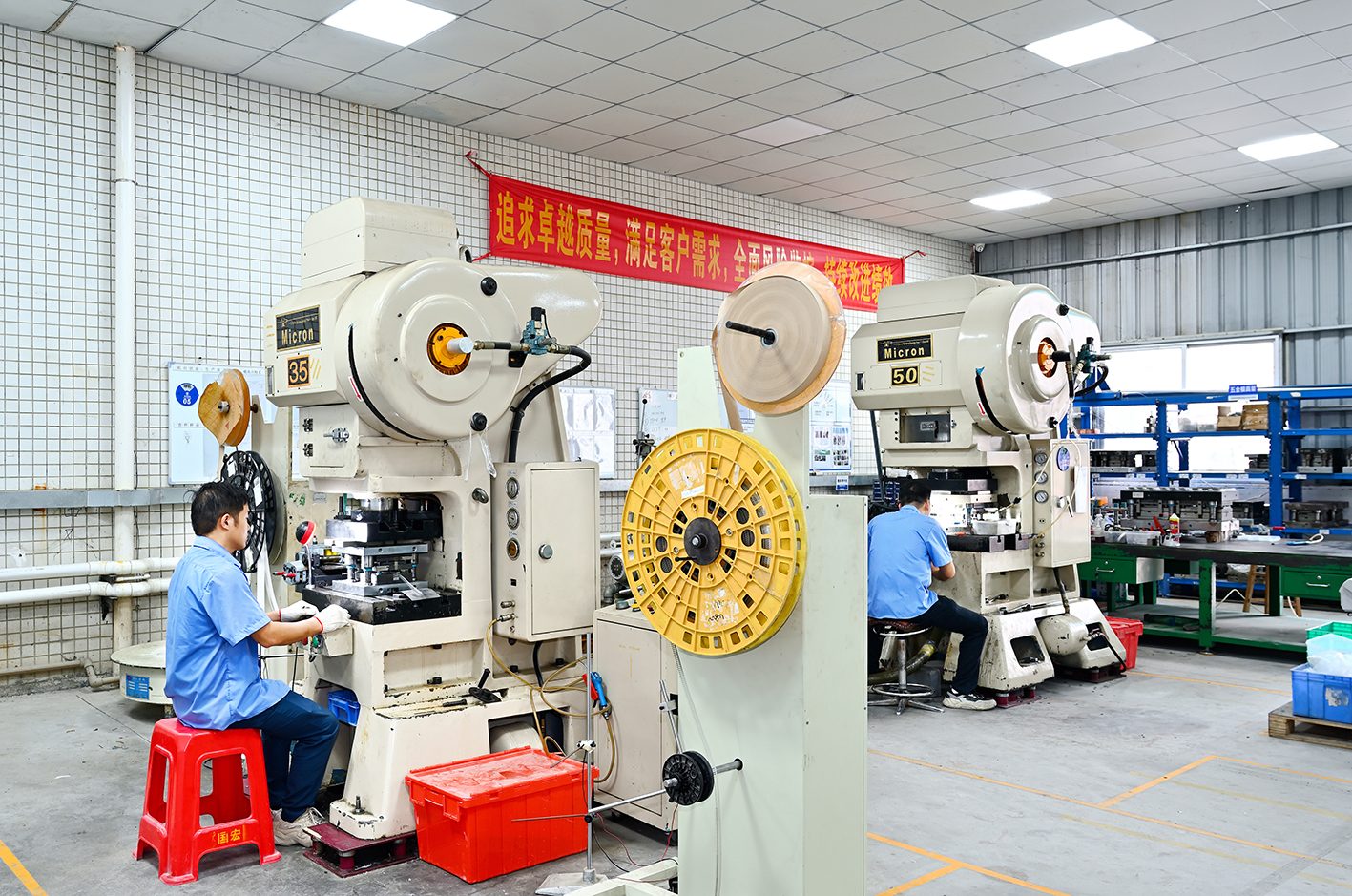
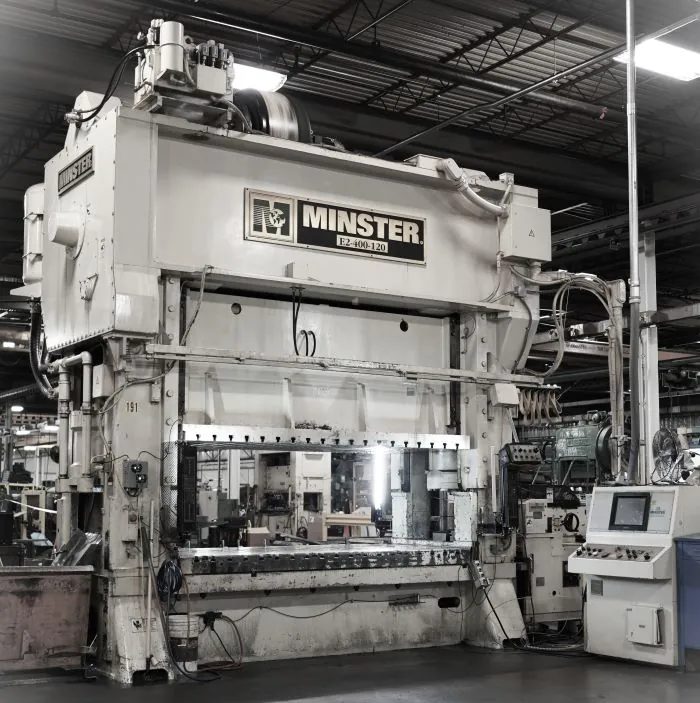
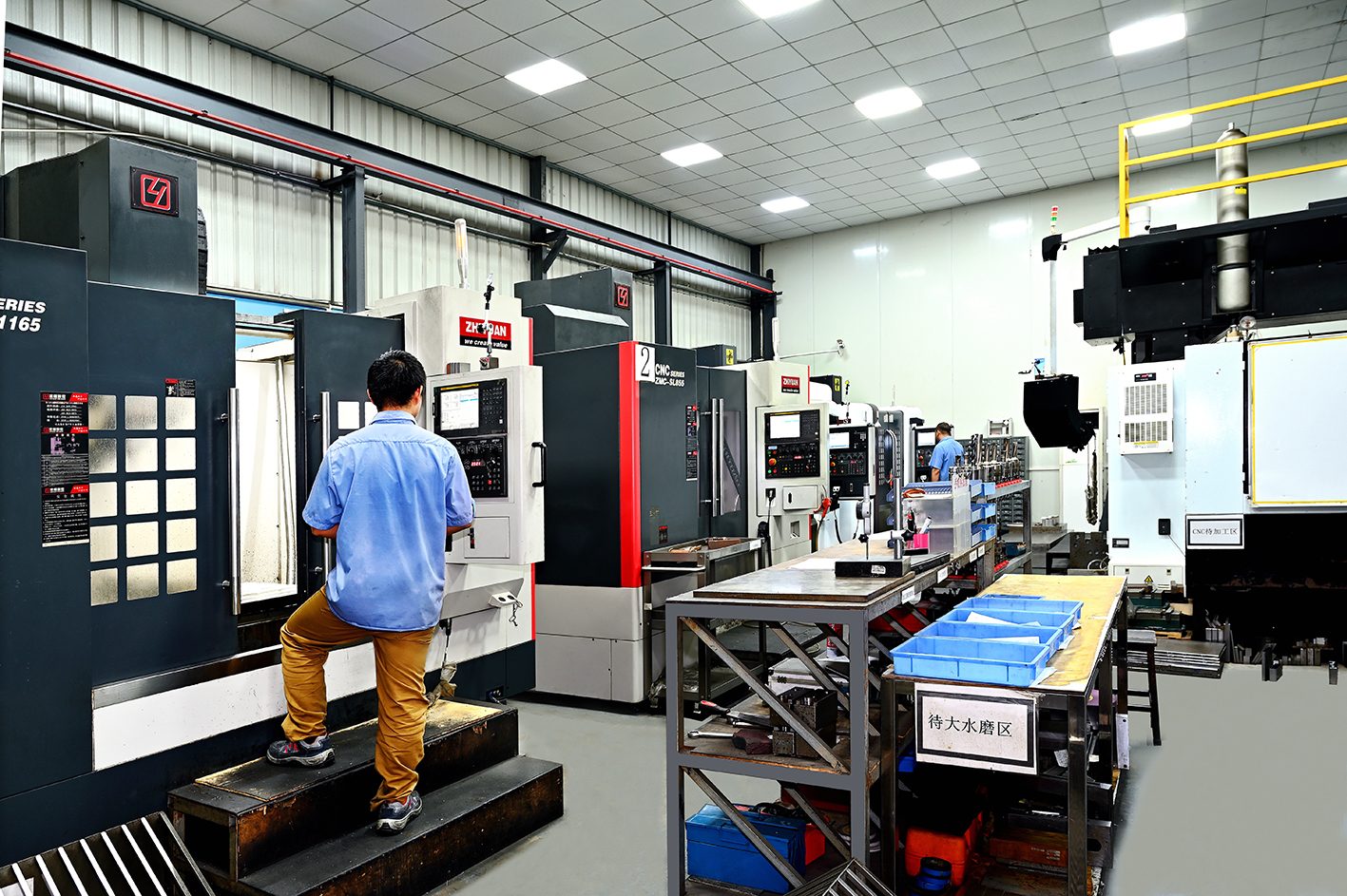
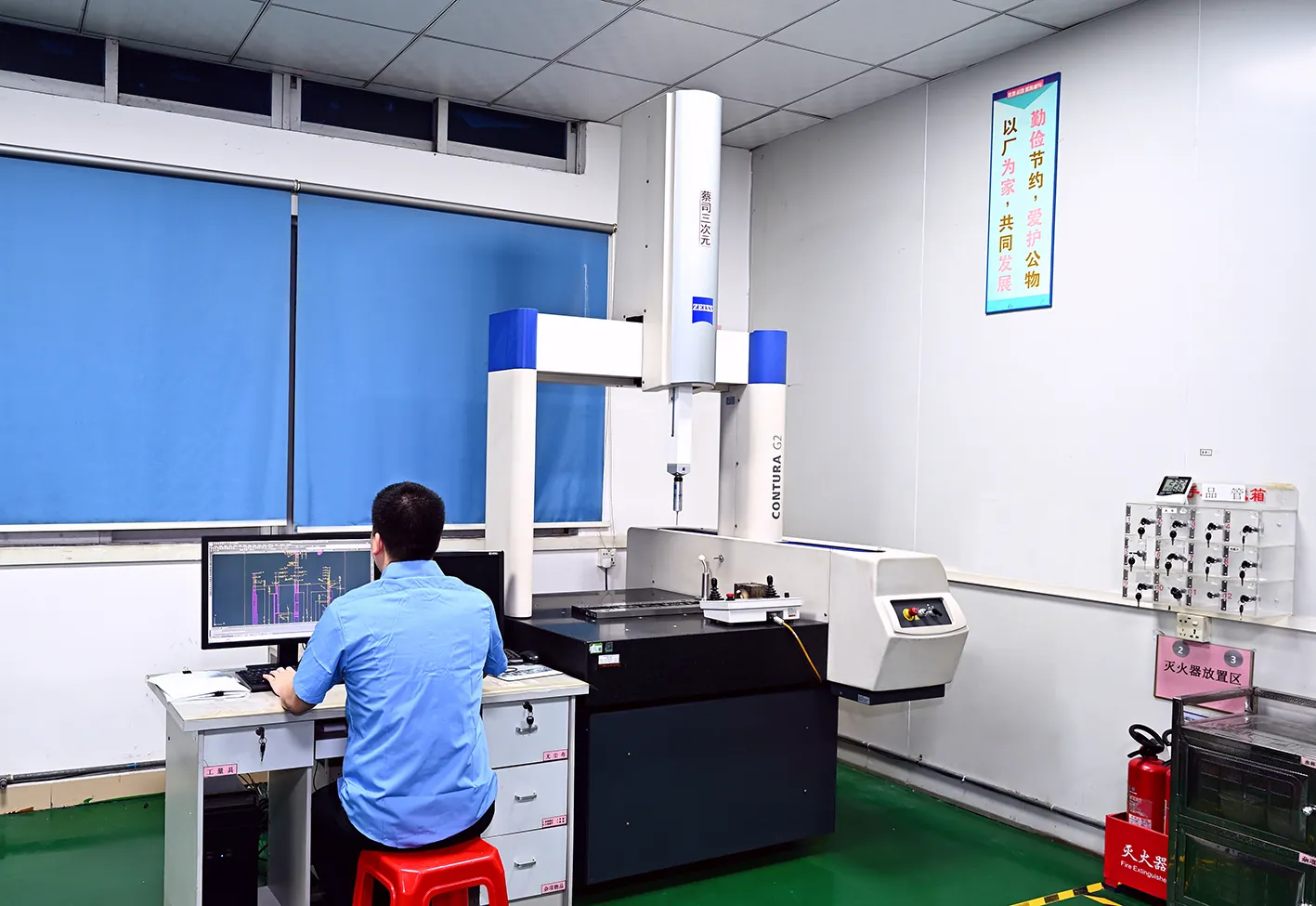
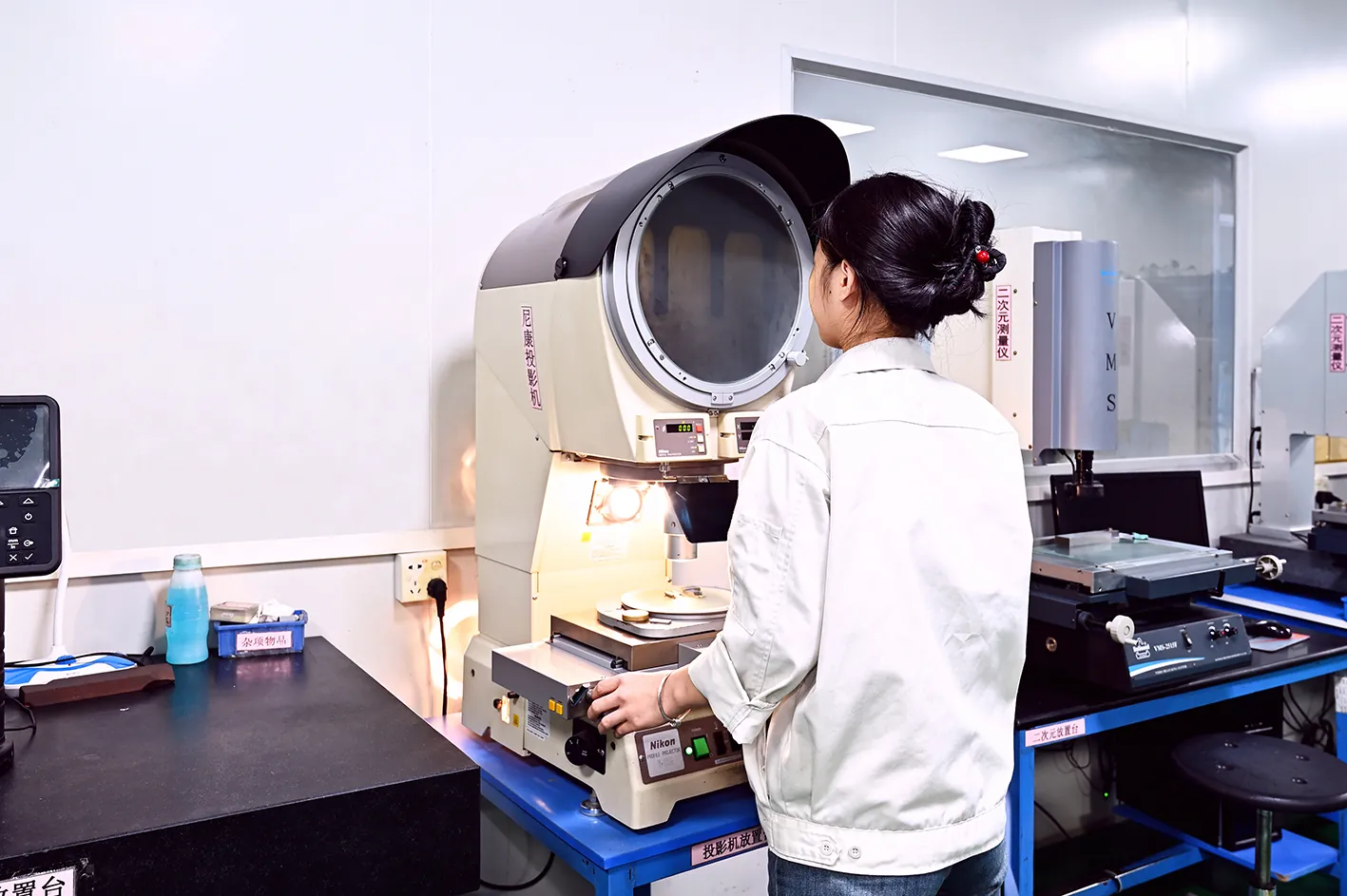
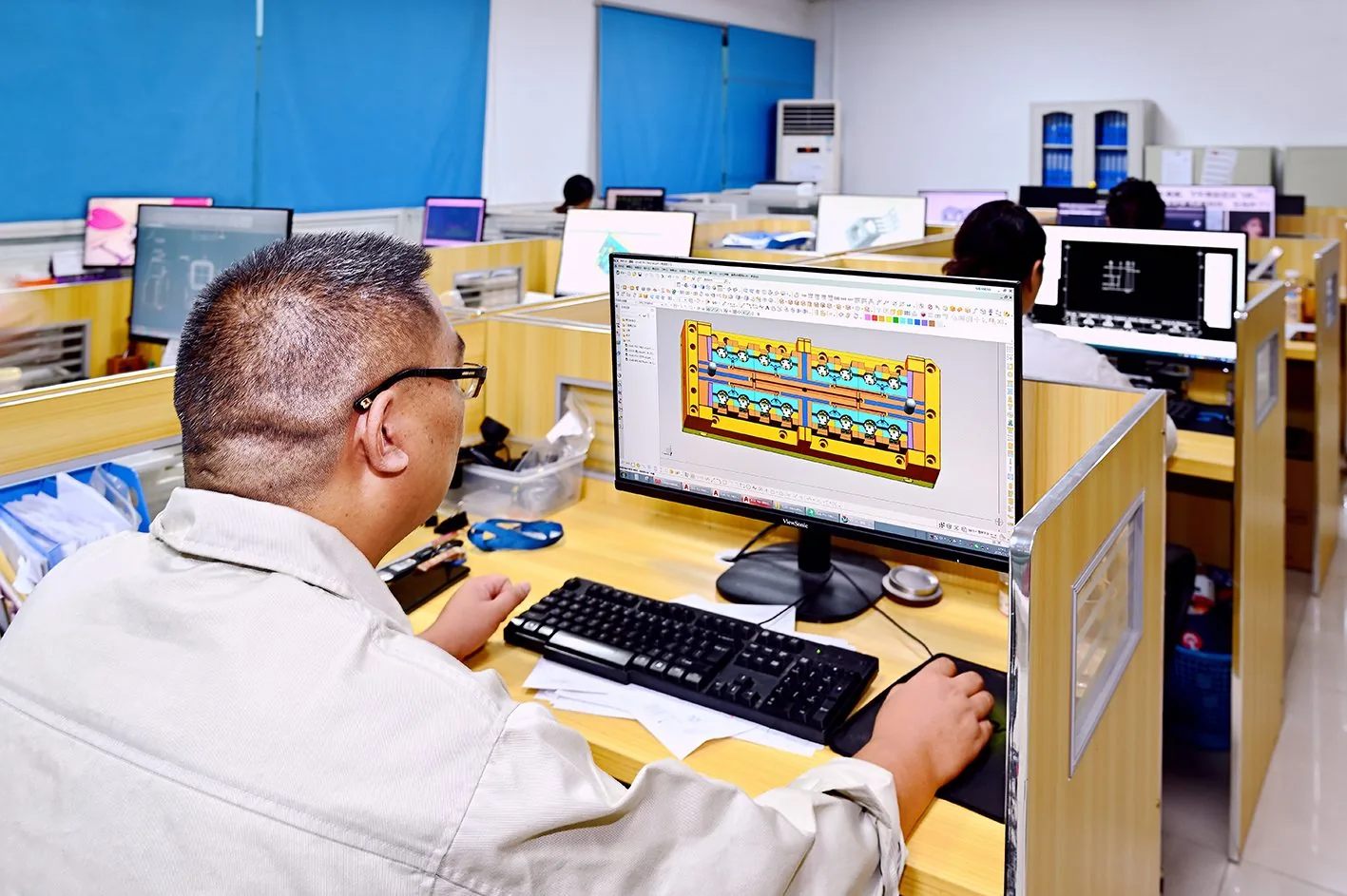
High-Conductivity Copper Alloy Stamping Lines, Tool Room and Inspection Floor
Real equipment and inspection floor from our Dongguan plant — 25–110T high-speed presses, in-house tool room, and a CMM lab running first-article inspection on every program.
WHERE COPPER ALLOYS GO WRONG
What Makes High-Conductivity Copper Alloys Harder to Stamp Than They Look
High-conductivity alloys trade strength against conductivity in the melt, and every point of strength costs formability on the press. These four problems show up on copper-alloy strip before anything else does.
01
Strength bought with formability
The Challenge
C19400, C70250 and C7025 reach their strength through iron, phosphorus or nickel-silicon additions, and the same chemistry narrows the ductile window. A radius that forms cleanly in annealed C11000 will edge-crack in a hard-temper Cu-Ni-Si grade, and the drawing rarely says which you are holding.
Our Solution
Bend radii are checked against the actual grade and temper, not against the family name, and the bend axis goes across the rolling direction where the drawing allows it. When a radius sits at the material limit, we propose a stress-relief anneal or a different temper before the die is cut.
02
Galling on the high-copper end
The Challenge
C11000 and C15100 are soft against tool steel. Under pressure the strip picks up on the die face, and the first symptom is a smear on a plated surface rather than a dimensional failure — parts keep passing the gauge while the customer rejects the finish.
Our Solution
Insert grade and coating are chosen at die design, forming faces are polished on a scheduled basis, and lubrication is matched to the strip surface and the plating. Surface and dimension are read in the same inspection loop, so pick-up lands as a tool-room job, not a field complaint.
03
Springback and coil camber
The Challenge
Cu-Ni-Si and Cu-Ni-Sn grades spring back hard, and coil camber carries straight through the die into the finished part. A bend cut to nominal leaves the part open, and a lead frame that bows along its length will not sit flat on a board no matter how it is clamped.
Our Solution
Bend stations are compensated against the measured springback of the production coil, and a coining or wipe station takes camber out before cut-off. Angles and flatness are released on the CMM at first article, then held with SPC instead of being corrected by the operator.
04
Plating and burr on a soft substrate
The Challenge
Pre-plated or selectively plated strip removes a post-stamping process, but soft copper scratches at die entry, and the burr side on a contact face changes contact resistance. Tumbling is out on pre-plated parts, so whatever damage the die does to the surface stays on the part.
Our Solution
The die is built for gentle entry with radiused edges on the strip side, the burr side is fixed on the layout, and pre-plated material runs without tumbling. Plated zones and masking are agreed at DFM; film thickness and adhesion are verified on incoming lots.
HOW WE STAMP IT
What We Hold in Production
We quote and inspect against these values on copper-alloy work. The conductivity and strength figures on this page are published alloy properties, not a claim about what our process adds.
Specification Parameter
What We Hold
How It Is Controlled
Strip thickness
0.05–3.0 mm
Coil certificate plus in-process thickness check
Positional tolerance
±0.005 mm on piloted features
First-article CMM at 0.001 mm resolution
Stamping speed
up to 300 SPM
High-speed frames reserved for thin contact strip
Press fleet
21 presses, 25–110 tons
Lead frames on high-speed frames, busbar stock on the larger presses
Dies
100% designed and built in-house
30 machining machines behind the tool room
Quality system
IATF 16949:2016 · ISO 9001:2015 · ISO 14001:2015
PPAP, mill certificates, lot traceability
Inspection
20 inspection stations
CMM, optical and profile, in-line CCD on contact features
Plating
tin, nickel, silver, selective gold
Qualified finishers, film thickness and adhesion checked on incoming
TOOL ROOM
Die design and build
Progressive die design, machining and assembly under one roof — the place springback, galling and burr are actually solved.
PRESSES
21 presses, 25–110 tons
Micro-terminals and lead frames on the high-speed frames at up to 300 SPM; busbar stock from 1.0 to 3.0 mm on the larger presses.
INSPECTION
CMM, optical and CCD
First-article CMM at 0.001 mm, optical and profile for edges and radii, in-line CCD on the contact features the drawing controls.
FINISHING
Managed plating
Tin, nickel, silver and selective gold through qualified finishers, with incoming verification and lot traceability kept in-house.
From Drawing to Production
01
DFM review
Grade, temper, bend radii, burr side and plating route settled against the alloy's real ductility before a die is cut.
02
Die build
Progressive layout with piercing, forming, coining and camber control combined; machined and assembled in our tool room.
03
Try-out and first article
Run on the production coil, springback measured, formed angles and flatness verified on the CMM, PPAP raised.
04
Production and SPC
Counted-stroke tool maintenance, in-line vision on contact features, SPC on the dimensions the drawing controls.
STRIP AND SUPPLY
Copper Alloy Strip: Grades, Tempers and Supply
We are a stamper, not a metal distributor — we do not sell copper alloy. What we do is match the grade and temper to the part, then quote it as material plus conversion.
Grade and temper decide the die
Two grades with the same conductivity number can behave nothing alike on the press. Cu-Ni-Si tempers are not interchangeable with the mill's annealed stock: the temper on the purchase order is the temper the die is cut for, and a mid-program change goes back through bend compensation.
Mill finish, pre-plated or selective
Pre-tinned and pre-plated strip skip a post-stamping plating step, at the cost of gentler die entry and no tumbling. Selective plating keeps gold or silver on the contact zone only, which cuts precious-metal volume, but the zone has to be defined before tooling.
You supply or we procure
Either you supply coil to your own specification, or we procure the grade, temper, width and surface you name and keep the mill certificate on file. If the grade is still open, we recommend between C11000, C19400, C19210, C70250 and C15100.
Grades we run
C11000C19400C19210C15100C70250C72900C19900
BEFORE YOU SEND THE DRAWING
DFM Checklist for High-Conductivity Copper Alloy Stampings
Eight things worth settling on a copper-alloy drawing before tooling — the ones that decide whether the part forms clean or cracks at the first stroke.
Grade and temper: name the UNS number and the temper, not just 'copper alloy' — conductivity and strength both hang off it, and the die is compensated for the temper you name.
Bend radius: 1× strip thickness or more for annealed C11000, 2× or more for hard-temper Cu-Ni-Si — under that the outside fibre edge-cracks.
Bend axis versus rolling direction: across the rolling direction where the drawing allows it; a bend along the grain raises cracking risk on every high-strength grade.
Hole diameter: 1× strip thickness minimum for punched holes, and larger on strength-first grades where the punch loads harder.
Hole-to-bend distance: at least 2× strip thickness from hole edge to bend line, or the hole distorts as the bend forms.
Burr side: state where burr is acceptable. On a contact face it moves contact resistance, so the die layout is fixed before quotation.
Plating: state the plated zone, the masking and whether pre-plated strip is acceptable — it changes die entry, handling and whether tumbling is allowed.
Flatness and coplanarity: give the limit for lead tips and busbar lands; camber comes out in the die, and a limit added later means a station added later.
How to Order High-Conductivity Copper Stampings & Frequently Asked Questions
From drawing to delivered parts: a four-step path with engineering review at the front and 100% dimensional inspection at the back — then the questions buyers ask us most.
Step 1
Submit CAD & Specs
Send 2D/3D drawings (STEP, DWG, PDF) with quantity, material, and tolerance requirements.
Step 2
DFM Feedback & Quotation
Our engineering team conducts DFM analysis and follows up with a competitive quote after the review.
Step 3
Precision Manufacturing
High-speed progressive die stamping, secondary forming, finishing, and surface treatment per your specifications.
Step 4
100% QC & Express Shipping
100% dimensional inspection, anti-corrosion packaging, and global express delivery.
01
Do you supply the copper alloy, or do we?
Either. We are a stamper, not a metal distributor and we do not sell strip. You can supply coil to your own specification, or we procure the grade, temper, width and surface you name, with the mill certificate on file.
02
Which copper alloy grades do you run?
C11000, C19400, C19210, C15100, C70250, C7025, C72900 and C19900 are the grades we see most. If the drawing names another UNS number, send the spec and we confirm stampability before quoting.
03
What is the thinnest copper alloy you can stamp?
0.05 mm at the thin end of our range, up to 3.0 mm at the heavy end. Thin lead-frame and micro-pin work runs on the high-speed presses; busbar stock runs on the larger presses.
04
Can you run pre-plated or selectively plated strip?
Yes, provided the die is built for gentle entry and the parts are not tumbled afterwards. Selective plating on the contact zone cuts precious-metal volume; the plated zone and masking have to be on the drawing before tooling starts.
05
What tolerance can you hold on a copper alloy part?
±0.005 mm on piloted positional features, verified on a CMM at first article. Formed dimensions depend on bend count, radius and temper, so the critical ones are agreed at DFM and held with SPC.
06
Should this part be pure copper or an alloy?
If the part only has to conduct, C11000 at roughly 100% IACS is the cheapest answer. If it must hold force or survive reflow heat, move to C19400 or C70250 and accept lower conductivity — that trade-off belongs to the alloy, not to our process.
Ready to Start Your Precision Stamping Program?
Send your drawing today — engineering runs a free DFM review and detailed pricing follows the review.
100% Confidential | NDA Protected | 24H Response
We use cookies to understand how visitors use our site and to improve it. Choose what's fine with you — you can change your mind anytime.Cookie Policy