Galvanized Steel Stamping — ±0.005 mm on 0.05–3.0 mm strip, up to 300 SPM
Progressive die stamping of SECC, SGCC and cold-rolled SPCC strip into brackets, enclosures, chassis plates and shield cans. The dies come out of our own tool room, run on 21 presses from 25 to 110 tons at up to 300 SPM, and zinc coverage is checked where the part is cut and bent.
0.05–3.0 mm strip
SECC · SGCC · SPCC
±0.005 mm positional
up to 300 SPM
Fast Engineering ResponseNDA ProtectedSTEP / IGES / X_T / DWG
Galvanized steel gets specified where a part needs carbon-steel strength and a zinc coating that keeps protecting after the paint is scratched. These four families cover most of the galvanized metal stamped parts that run here, each with its own coating class, die approach and edge treatment.
Brackets and mounting plates
Motor brackets, sensor mounts, joist hangers and mounting plates from SECC and SGCC, mostly 0.4–2.0 mm. Hole patterns are the functional dimension here, so they ride on pilots rather than on the strip edge, and the burr side is set away from the bolt face so the zinc is not scuffed during assembly.
SECCSGCC0.4–2.0 mmappliance / HVAC
Enclosures, cabinets and shield cans
Electrical enclosures, cover panels, EMI cans and back plates in 0.4–1.2 mm SECC, where a fine-grain electro-zinc surface takes paint and holds a ground contact. Forming stays on open bends and shallow draws; where a can gets deep we review the draw ratio before the die is cut, not after.
SECC0.4–1.2 mmEMI / groundingpaint-ready
Structural and frame parts
Frames, cross members, reinforcement channels and equipment bases from 1.5–3.0 mm SGCC, formed on the larger presses. Heavy hot-dip strip work hardens and springs back, so bend compensation is set from the first production coil and blank nesting is planned around the coil width you actually buy.
SGCC1.5–3.0 mmstructuralheavy gauge
Grounding, clips and hardware
Grounding straps, cable clips, retaining brackets and terminal supports — parts that must conduct as well as hold. Electro-zinc SECC is the right grade for these because the coating is thin and even, so a spot weld or a crimp reaches steel without burning through a heavy zinc layer.
SECCthin coatingspot weldgrounding
INSIDE THE PLANT
Galvanized Steel Stamping Lines, Tool Room and Inspection Floor
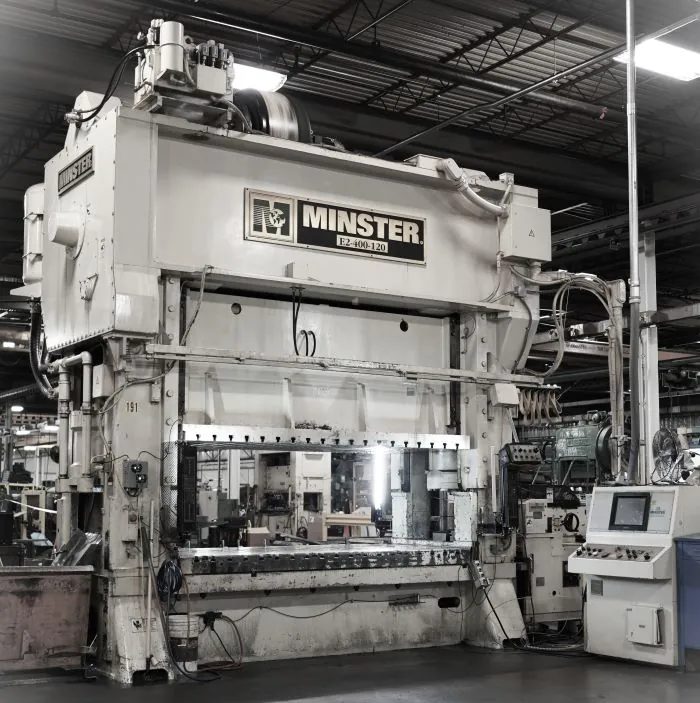
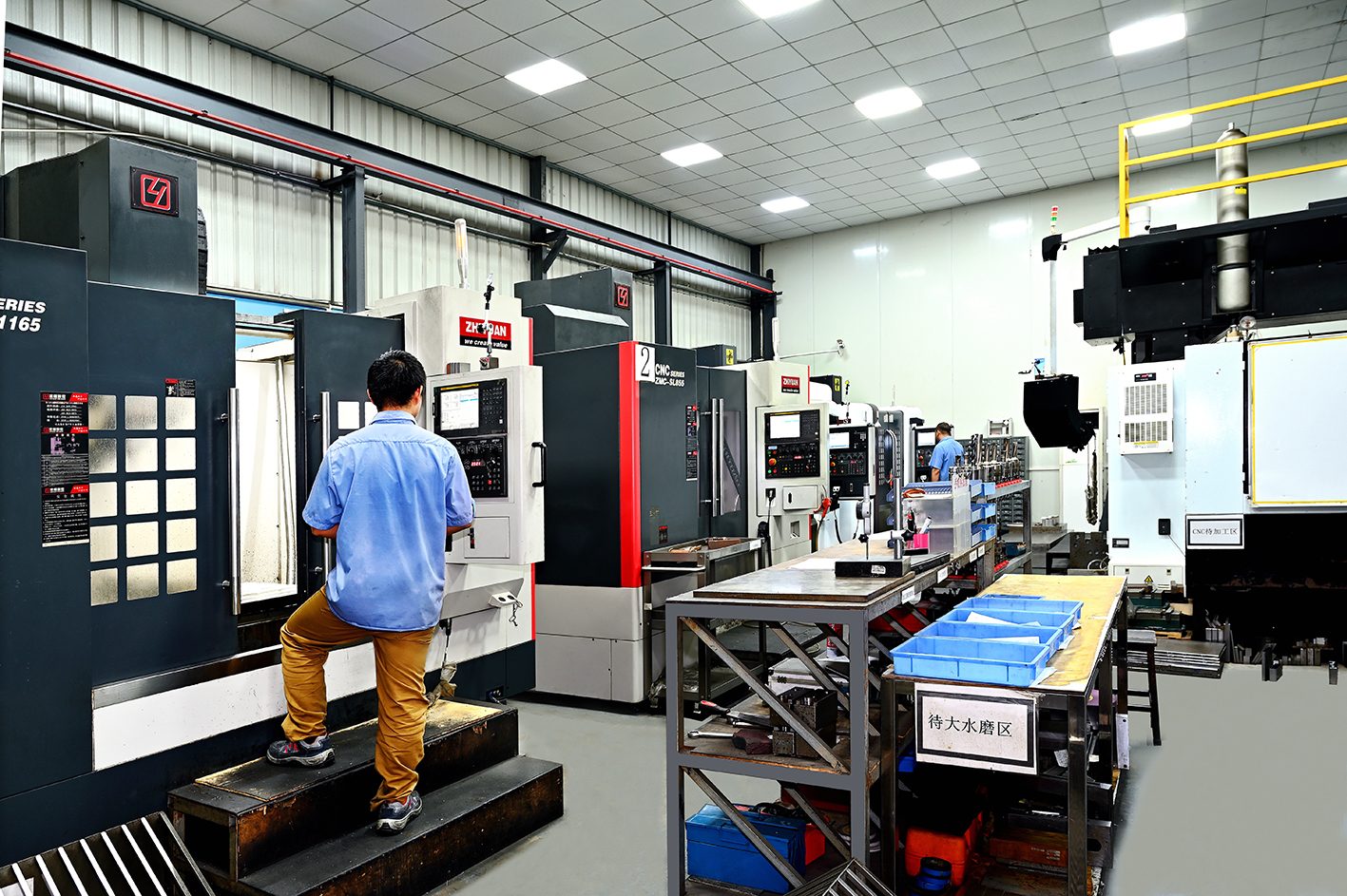
Real equipment and inspection floor from our Dongguan plant — 25–110T high-speed presses, in-house tool room, and a CMM lab running first-article inspection on every program.
WHERE ZINC FAILS FIRST
What Makes Galvanized Steel Harder to Stamp Than It Looks
Galvanized strip fails differently from bare steel: the zinc moves, flakes, cracks and burns before the steel underneath ever yields. These are the four coating problems that decide whether a part survives a salt-spray cabinet or rusts at the first sheared edge.
01
Zinc smears and builds up on the die
The Challenge
Zinc is softer than the steel under it, and it transfers. On draw and form stations the coating smears onto the punch, builds up, and starts pulling flakes off the part face. A die that ran clean on cold-rolled strip will mark galvanized strip within a few thousand strokes at speed.
Our Solution
Forming and drawing stations get polished radii and a coating that resists pick-up, clearance is set from the actual coating class rather than the nominal gauge, and lubrication is matched to the zinc surface. Stations are pulled and inspected on a counted-stroke schedule, so pick-up is removed as maintenance before it prints on parts.
02
The sheared edge has no zinc on it
The Challenge
A sheared edge carries no coating. Zinc protects that edge only by sacrificial action across a short distance, so a narrow flange or a small hole has less margin than the flat face the buyer measured. Salt spray run on flat coupons hides this completely; the same lot can fail on the real stamping.
Our Solution
Edge quality is treated as a corrosion dimension: die clearance and punch sharpening are held so the sheared face is clean rather than torn, hole-to-edge distances get a minimum in the DFM notes, and salt spray runs on stamped parts, not coupons. Where a spec needs more, we add zinc or nickel plating through partner lines.
03
Zinc cracks at tight bend radii
The Challenge
A hot-dip coating is thick and brittle compared with the steel under it, so a tight inside radius cracks the zinc on the outside of the bend and leaves bare steel sitting exactly where the part is most stressed. Electro-zinc survives a tighter radius, but the same bend still thins the coating.
Our Solution
Inside bend radius is set at one strip thickness or more, and 1.5× or more where a heavy hot-dip class is called out; the bend line runs across the rolling direction where the geometry allows. Bend-extreme zones are flagged at DFM, sampled on the CMM and checked under magnification after forming.
04
Welding and paint prep fight the coating
The Challenge
Zinc boils before steel melts. Spot welding through a heavy coating burns zinc away, contaminates the electrode and leaves a weld that fails peel tests; painted galvanized parts blister where the pretreatment was written for bare steel. Both are drawing decisions, discovered at the weld gun or in the paint oven.
Our Solution
We flag weld zones at DFM and keep the coating class thin, or the zone bare, where the joint is welded; electrode schedules and weld-nugget checks are agreed with the customer's welding line. Paint adhesion is quoted with the pretreatment route named — phosphate or conversion coating matched to zinc, then salt spray on finished parts.
HOW WE STAMP IT
What We Hold in Production
What we quote on galvanized work, and what the control plan inspects against — coating class and edge condition included, because on coated strip the surface is part of the specification.
Specification Parameter
What We Hold
How It Is Controlled
Strip thickness
0.05–3.0 mm
Coil certificate + in-process thickness check
Positional tolerance
±0.005 mm on piloted features
First-article CMM at 0.001 mm resolution
Stamping speed
up to 300 SPM
Press and stroke rate matched to the part and coating class
Press fleet
21 presses, 25–110 tons
Thin coated strip on high-speed frames, 1.5–3.0 mm SGCC on larger presses
Dies
100% designed and built in-house
30 machining machines behind the tool room
Quality system
ISO 9001:2015 · IATF 16949:2016 · ISO 14001:2015
PPAP, coil certificates, lot traceability from coil to carton
Inspection
20 inspection stations
CMM, optical and profile, in-line CCD on critical pierced features
Coating and surface
Coating class as ordered (Z designation)
Mill certificate per coil, salt spray on stamped parts, edges checked under magnification
TOOL ROOM
Die design and build
Progressive die design, machining and assembly under one roof — the place zinc pick-up, bend cracking and edge quality are solved rather than inspected in.
PRESSES
21 presses, 25–110 tons
Thin SECC enclosures on the high-speed frames at up to 300 SPM; 1.5–3.0 mm SGCC structural parts on the larger presses.
INSPECTION
CMM, optical and CCD
First-article CMM at 0.001 mm, optical and profile for sheared edges and bend radii, in-line CCD vision on the pierced features the drawing controls.
FINISHING
Coating checks and plating partners
Coil coating certificates verified on receipt, salt-spray testing on stamped parts, and additional zinc or nickel plating through qualified partner lines when the spec asks for it.
From Drawing to Production
01
DFM review
Grade (SECC, SGCC or SPCC), coating class, bend radii, burr side, weld zones and tolerance stack settled before a die is cut.
02
Die build
Progressive layout with piercing, forming and cut-off combined; stations polished and coated for zinc wherever the coating is at risk.
03
Try-out and first article
Run on the production coil, formed angles and sheared edges verified on the CMM, salt spray started on real parts, PPAP documentation raised.
04
Production and SPC
Counted-stroke tool maintenance, in-line CCD on critical pierced features, SPC on the dimensions the drawing controls.
STRIP AND SUPPLY
Galvanized Strip: Coating Class, Surface and Supply
We stamp galvanized strip, we do not sell it. Supply is quoted as material plus conversion, with the coating class, surface treatment and coil certificate fixed before the first production run.
SECC, SGCC or SPCC
Electro-galvanized SECC is thin, smooth and weld-friendly — the right call for painted enclosures, grounding contacts and small formed parts. Hot-dip SGCC carries a heavier zinc load for outdoor and humid service. Bare SPCC is the budget tier and needs a finish after stamping. Where the drawing only says 'galvanized', we recommend between them before tooling.
Coating class, not just 'galvanized'
SGCC is ordered by Z designation, which is coating mass in grams per square metre, and the class changes both die clearance and bend radii. A drawing that says only 'galvanized' gets a question from us: which class, and which surface — oiled, passivated or anti-finger — before anything is cut.
You supply or we procure
Either you send coil to your own material spec, or we buy the grade, coating class, width and surface you name and quote material plus conversion, with the mill certificate on file. If the grade is still open, we compare SECC, SGCC and SPCC on corrosion life and cost per part.
Grades we run
SECCSGCCSPCCSECC · JIS G3313SGCC · JIS G3302SPCC · JIS G3141
BEFORE YOU SEND THE DRAWING
DFM Checklist for Galvanized Steel Stampings
Eight checks that matter on a galvanized drawing before tooling — the ones that decide whether the coating survives the die and then survives the field.
Bend radius: inside radius at 1× strip thickness or more, and 1.5× or more on heavy hot-dip classes — tight radii crack the zinc on the outside fibre and leave bare steel at the highest-stress line.
Coating class: name the Z designation or the coating mass, not just 'galvanized' — it sets die clearance, minimum bend radius and how much edge margin the part really has.
Burr side: state which face may carry burr. A burr on a mating face or a grounding contact spoils the fit and drags zinc into the assembly.
Hole diameter: 1× strip thickness or larger for punched holes — smaller holes tear the coating at the rim and leave an unprotected, ragged edge.
Hole-to-bend and hole-to-edge distance: at least 2× strip thickness, or the hole distorts as the bend forms and the coating stretches with it.
Weld zones: mark where the part is spot-welded and ask for a thinner class or bare steel there — heavy zinc burns at the electrode and fails peel tests.
Paint system: state the finish and its pretreatment so phosphate or conversion coating is matched to zinc rather than to bare steel; paint over the wrong pretreatment blisters.
Tolerance stack: ±0.005 mm covers piloted positional features; formed dimensions accumulate springback and coating variation, so call out which formed dimensions are critical.
How to Order Galvanized Steel Stampings & Frequently Asked Questions
From drawing to delivered parts: a four-step path with engineering review at the front and 100% dimensional inspection at the back — then the questions buyers ask us most.
Step 1
Submit CAD & Specs
Send 2D/3D drawings (STEP, DWG, PDF) with quantity, material, and tolerance requirements.
Step 2
DFM Feedback & Quotation
Our engineering team conducts DFM analysis and follows up with a competitive quote after the review.
Step 3
Precision Manufacturing
High-speed progressive die stamping, secondary forming, finishing, and surface treatment per your specifications.
Step 4
100% QC & Express Shipping
100% dimensional inspection, anti-corrosion packaging, and global express delivery.
01
Do you supply the galvanized strip, or do we?
Either. We are a stamper, not a metals distributor. You can send coil to your own material spec, or we buy the grade, coating class and surface you name and quote material plus conversion with the mill certificate on file.
02
How is galvanized different from cold-rolled and pre-plated steel?
SPCC cold-rolled is bare steel with no coating: cheapest, and correct only inside a dry enclosure or under paint. Galvanized SECC and SGCC carry zinc that protects sheared edges by sacrificial action. Pre-plated tin strip is bought for solderability, not structural corrosion.
03
What is the thinnest galvanized steel you can stamp?
0.05 mm at the thin end of our range and 3.0 mm at the heavy end, though most galvanized work lands between 0.4 and 2.0 mm. Thin coated strip runs on the high-speed presses; heavy SGCC runs on the larger ones.
04
Will the zinc survive a salt-spray test?
It depends on the coating class, the edge quality, and whether the test runs on coupons or on real parts. We run salt spray on stamped parts, because a sheared edge is where coating margin disappears first, and report the hours per lot.
05
Can you weld and paint galvanized parts?
We stamp and form them; welding and paint are your processes or your suppliers'. What we do is keep weld zones clear of heavy coating, flag electrode wear at DFM and name the pretreatment route so paint bonds to zinc rather than blistering later.
06
What tolerance can you hold on a galvanized part?
±0.005 mm on piloted positional features, verified on a CMM at first article. Formed dimensions pick up springback and coating variation, so the critical formed dimensions are agreed at DFM and run under SPC in production.
Ready to Start Your Precision Stamping Program?
Send your drawing today — engineering runs a free DFM review and detailed pricing follows the review.
100% Confidential | NDA Protected | 24H Response
We use cookies to understand how visitors use our site and to improve it. Choose what's fine with you — you can change your mind anytime.Cookie Policy